• The Open Door and the New Name: Advent Hope from the Church in Philadelphia

    Revelation 3:7-13 (NKJV): 
    And to the angel of the church in Philadelphia write,
    ‘These things says He who is holy, He who is true, “He who has the key of David, He who opens and no one shuts, and shuts and no one opens”: “I know your works. See, I have set before you an open door, and no one can shut it; for you have a little strength, have kept My word, and have not denied My name. Indeed I will make those of the synagogue of Satan, who say they are Jews and are not, but lie—indeed I will make them come and worship before your feet, and to know that I have loved you. 10 Because you have kept My command to persevere, I also will keep you from the hour of trial which shall come upon the whole world, to test those who dwell on the earth. 11 Behold, I am coming quickly! Hold fast what you have, that no one may take your crown. 12 He who overcomes, I will make him a pillar in the temple of My God, and he shall go out no more. I will write on him the name of My God and the name of the city of My God, the New Jerusalem, which comes down out of heaven from My God. And I will write on him My new name.
    13 “He who has an ear, let him hear what the Spirit says to the churches.” ’

    Today’s message, we open with the Book of Revelation, written by the apostle John as he addresses the spiritual state of the church in Philadelphia. Morris Ashcraft (1972) writes: 

    “The city stood on a plateau near rich volcanic soil which supported rich agriculture.  Philadelphia became a city rich in commerce from the grapes grown in the surrounding area, in whose villages many of the people preferred to live rather than in the city. A major reason was the fear of earthquakes…”  

    Philadelphia obviously shared the same earthquake that leveled the city of Sardis (the ancient city recognized as the capital of the Lydian Empire). Philadelphia was severely damaged in the earthquake of 17 AD and was later rebuilt by the Emperor Tiberias, who financed the rebuilding of the city and gave it the new name ‘Neocaesarea,’ in his honor.  Philadelphia was a city of wealth, known for its grape industry, and therefore worshipped the pagan god Dionysus (god of wine). The worship of this pagan cult caused Philadelphia to receive the same condemnation as other cities that practiced rampant idolatry. 

    How does this passage relate to the Season of Advent? Seems a bit odd to jump right to the final chapter of the New Testament. Opening with verse 7, we assume that Jesus is speaking of Himself: “He who is holy, He who is true, ‘He who has the key of David…” It’s this part of the passage here that connects us to the Advent Season. 

    In Luke 2:11-12 (NKJV)

    11 For there is born to you this day in the city of David a Savior, who is Christ the Lord. 12 And this will be the sign to you: You will find a Babe wrapped in swaddling cloths, lying in a manger.”

    And in Matthew’s gospel 1:1, the genealogy of Jesus says: 

    1 The book of the genealogy of Jesus Christ, the Son of David, the Son of Abraham:

    Jesus, as traced through the human lineage of David, appears in the Book of Revelation bearing the “key of David.”  As Christ in human form descended from David and Abraham, HE TRULY IN HIMSELF IS THE STORY OF SALVATION—GOD’S SAVING GRACE.

    He is the promise to the church, and is still part of a timeless message:

    BEHOLD, I AM COMING QUICKLY!

    People today often take these words for granted. Many modern Bible scholars will point out today that the early church had to reconcile with the problem that many people at the time of Christ believed they would see the second coming of Christ in their lifetimes. Whereas the second generation of Christians had to acquire a way of balancing, or rightly interpreting these texts.

    Justin Martyr, who wrote in the year 160 A.D. stated: “Two advents of Christ have been announced. In the first one, He is set forth as suffering, inglorious, dishonored, and crucified.  However, in the other advent, He will come from heaven with glory, when the man of apostasy…speaks strange things.”

    Almost a hundred years later, in the year 250, Cyprian wrote: “Already His second coming draws near to us.” And, so we have a little over two hundred years later, Cyprian’s writing shows that hope still remains for Christ’s return. Therefore, what I find significant about all of this is that by citing words from the early church fathers, this goes to prove the endurance of the timeless message that Jesus Christ is coming.

    Part of our human weakness is our lack of patience, lack of endurance, and our unwillingness to suffer long. We may note that the people of ancient Israel longed for a Messiah to come. I would have liked to have known the minds of the people who heard first from the prophet Isaiah:

    Isaiah 7:13–14 (NKJV)

    13 Then he said, “Hear now, O house of David! Is it a small thing for you to weary men, but will you weary my God also? 14 Therefore the Lord Himself will give you a sign: Behold, the virgin shall conceive and bear a Son, and shall call His name Immanuel.

    It would be over 700 years later before these words would be fulfilled. We can only imagine the generations of people who abandoned the promise. That is probably why the people, if they were looking for any Messiah to come at all, were looking for a conquering ruler. They were looking for a conqueror and not a Savior! 700 years before this was fulfilled, so we should not be bothered that we have been waiting 2,000 years for Christ’s return. 

    As part of God’s plan, the first advent introduces the world to a Redeemer. The second advent of Christ introduces the people of the world to a Ruler and that Christ will bring an end to the world that we presently know. 

    This means change! 

    Many of us are like old light bulbs hanging in a chandelier. Even when a bulb burns out, we don’t allow for it to be changed because Grandma Jones installed that light bulb in 1927.  Furthermore, that light bulb hasn’t even be dusted since Mrs. Jones died in 1947.  Since Grandma is no longer with us, we have chosen that light bulb (which is now that burned out, old dusty, light bulb) as a means to remember her. There’s a plaque on the wall over there, that has an arrow pointing to that light bulb. Under the arrow reads, “Light bulb donated in memory of Mrs. Hilda Madeline Mae Jones.”

    The unwillingness to change is a demonic concept and part of a plan the devil uses to keep the church from moving forward. Every Christian should know that true conversion means change.  I would hate to think that any of us were told by some preacher, or parishioner,  “God loves you the way you are. You don’t ever have to be sorry.  So, therefore, just live your life the way you want to!”

    The Biblical message commands us to change the way we are living. Are we not supposed to be GROWING in our faith? How can one grow and still stay the same? Furthermore, have we forgotten that the very first message Jesus preached was: “Repent, for the kingdom of heaven is at hand.” (Matthew 4.17)

    Change is an ongoing reality.  And, especially when one begins to discuss what will occur in the last days. The words spoken to the church at Philadelphia are completed in a greater scope at the end of the book of Revelation. The New Jerusalem will be revealed. New things, heaven and earth, will come to pass. There will be a new kind of existence for Christians, who will be given new bodies. With all things that are new, Jesus says,  “And I will write on him…MY NEW NAME.”

    With this we already know that Jesus has many names.  The prophet Isaiah foretold in Isaiah 9.6 (NKJV): 
    6 For unto us a Child is born,
    Unto us a Son is given;
    And the government will be upon His shoulder.
    And His name will be called
    Wonderful, Counselor, Mighty God,
    Everlasting Father, Prince of Peace.
    In the New Testament’s gospel of Matthew we learn about Jesus from Matthew 1.20-23 (NKJV): 
    20 But while he thought about these things, behold, an angel of the Lord appeared to him in a dream, saying, “Joseph, son of David, do not be afraid to take to you Mary your wife, for that which is conceived in her is of the Holy Spirit. 21 And she will bring forth a Son, and you shall call His name Jesus, for He will save His people from their sins.”
    22 So all this was done that it might be fulfilled which was spoken by the Lord through the prophet, saying: 23 “Behold, the virgin shall be with child, and bear a Son, and they shall call His name Immanuel,” which is translated, “God with us.”

    Wonderful, Counselor, Mighty God, Everlasting Father, Prince of Peace, Immanuel, Lord, the Son of God–Jesus.  How many more names could Jesus be known by?  It is not for the human imagination to say.

    During this special season, Christ’s message to the church in Philadelphia speaks to us. We are called to persevere, to hold fast to God’s Word. We are called to be alert; to be expectant, knowing that Christ came once, and Christ will come again. When Christ comes, there will be new things.  

    When we think of the gifts we will open up, ones that we receive from friends and loved ones, there is no gift that can be given that will measure what God will give to those who stand strong in faith. However, let the newness of our gifts remind us of the new things God will bring us…

    THAT ON OUR HEARTS WILL BE WRITTEN A NEW NAME

  • The Dawn of God’s Mercy: Zechariah’s Prophecy and the Hope of Advent (Luke 1:67–80)

    Luke 1:67-80 (KJV): 

    67 And his father Zacharias was filled with the Holy Ghost, and prophesied, saying, 
    68 Blessed be the Lord God of Israel; for he hath visited and redeemed his people,
    69 And hath raised up an horn of salvation for us in the house of his servant David;
    70 As he spake by the mouth of his holy prophets, which have been since the world began:
    71 That we should be saved from our enemies, and from the hand of all that hate us;
    72 To perform the mercy promised to our fathers, and to remember his holy covenant;
    73 The oath which he swore to our father Abraham,
    74 That he would grant unto us, that we being delivered out of the hand of our enemies might serve him without fear,
    75 In holiness and righteousness before him, all the days of our life.
    76 And thou, child, shalt be called the prophet of the Highest: for thou shalt go before the face of the Lord to prepare his ways;
    77 To give knowledge of salvation unto his people by the remission of their sins,
    78 Through the tender mercy of our God; whereby the dayspring from on high hath visited us,
    79 To give light to them that sit in darkness and in the shadow of death, to guide our feet into the way of peace.
    80 And the child grew, and waxed strong in spirit, and was in the deserts till the day of his shewing unto Israel.

    Luke 1:67-80, known as the Canticle of Zechariah or the Benedictus, is a significant hymn found in the Gospel of Luke. Many people recognize this text for its liturgical value; for the common reader, the text is a celebration or a story of a prophet coming forth. Unlike many prophets in the Old Testament who made proclamations that they never saw fulfilled during their lifetime, this prophet will live to see One coming after him. 

    My New Testament professor in college said, The Bible is its own best interpreter.Here, Luke (the author) assumes his readers are already familiar with the plan of salvation God has for His people in Israel. He cites the holy prophets, stating that God will preserve us from our enemies and fulfill his holy covenant. 

    This time of year, we begin to focus on the small baby in the manger. The spotlight shines on Joseph, Mary, and Jesus, the holy family. We see these figures placed in many nativity scenes while driving around our community. Next, we see the wise men, the shepherds, and sometimes a few farm animals or camels. Rarely do we acknowledge the others in this story; Zacharias, Elisabeth, and John. However, this isn’t so much of a surprise since John the Baptist often sought to lower himself and remain humble even in his birth narrative. 

    The message of salvation is a dominant theme in this passage. It is easy to see why people misunderstood Christ’s mission. Some might wonder why God wouldn’t just remove everything that is frightful and evil and take away sin entirely to restore righteousness, justice, and peace to the world. It’s likely that the people during Christ’s time also thought like this. They might have envisioned getting ready to take up arms, to be delivered from their enemies of oppression during the Roman world the way God led their ancestors into battle; they were ready to fight. With this mindset, it’s surely that many were also disappointed when they were told thirty years later to love their enemies instead. 

    We are reminded of the words of Isaiah 9:6 (KJV), “for unto us a child is born, unto us a son is given: and the government shall be upon his shoulder: and his name shall be called Wonderful, Counsellor, The mighty God, The everlasting Father, The Prince of Peace.

    We see this child as the Prince of Peace. But then we become confused when we hear Jesus saying:

    Think not that I am come to send peace on earth: 
    I came not to send peace, but a sword.
    Matt 10:34 (KJV)

    What does Jesus mean here? Does He bring peace or not? We begin to theologize that He must have some kind of Peace that we don’t know about because in John 14:27 (KJV), he says, “Peace I leave with you, my peace I give unto you: not as the world giveth, give I unto you. Let not your heart be troubled, neither let it be afraid.

    However, today, with tragedy reported hourly, we wonder, “Where is there peace?”

    Turning back to verse 76-79: 

    76 And thou, child, shalt be called the prophet of the Highest: for thou shalt go before the face of the Lord to prepare his ways;
    77 To give knowledge of salvation unto his people by the remission of their sins,
    78 Through the tender mercy of our God; whereby the dayspring from on high hath visited us,
    79 To give light to them that sit in darkness and in the shadow of death, to guide our feet into the way of peace.

    The child was going to be called “the prophet of the Highest…” He was going to: 

    1. He was going to prepare the way of the Lord.
    2. He was going to give knowledge of salvation to the people.
    3. He was going to demonstrate the tender mercy of God.
    4. He was going to give light to the ones who were in darkness…

    He was going “to guide our feet into the way of peace.”

    When is there peace?

    The Bible always brings up a point “if there’s a will, there is a way.” From the book of Judges: And the priest said unto them, Go in peace: before the LORD is your way wherein ye go. Judges 18:6 (KJV).

    From Proverbs: There is a way which seemeth right unto a man, but the end thereof are the ways of death. Prov 14:12 (KJV)

    The way of life is above to the wise, that he may depart from hell beneath. Prov 15:24 (KJV)

    From the gospel of Matthew: Enter ye in at the strait gate: for wide is the gate, and broad is the way, that leadeth to destruction, and many there be which go in thereat: Because strait is the gate, and narrow is the way, which leadeth unto life, and few there be that find it. Matt 7:13-14 (KJV)

    From the gospel of John: Jesus saith unto him, I am the way, the truth, and the life: no man cometh unto the Father, but by me. John 14:6 (KJV)

    Today’s gospel states that there is a “way of peace.”

    I have to conclude that this does not mean that there will be peace on earth. Not as long as the forces of darkness remain will there be peace on earth.

    But the way of peace says something much different. It means that there is a lifestyle of peace. There is an attitude of peace. There is a possibility for someone to have peace in the midst of suffering and turmoil. There is a rest in peace that may mean something far more literal and spiritual than what is printed on tombstones. There is a peace that passes all understanding. There is a peace that comes to those who seek God. And only His peace will sustain those who pray to live in peace in a troubled world.

    When is there peace? 

    There is always a great possibility for peace. Truly, we must recognize Christ as the Prince of Peace. When His peace comes to satisfy, His peace is everlasting. I HOPE TODAY YOU RECEIVE PEACE. 

    Resources: 

    Bibleinterpretation.org. “Luke 01:67-80 The Canticle of Zechariah”  

  • Hope in a Hopeless World: Discovering Christ in the First Week of Advent

    Today, we begin the season of Advent. With this beginning, we are reminded that this season is a time of hope. Yet with this season of hope, we also find ourselves thinking about those who have none.

    To start today’s message, I’d like to share a passage from the Apocrypha—The Wisdom of Solomon. This book, also known as The Book of Wisdom, is not part of the Protestant Old Testament but is included in the Deuterocanonical books recognized by the Catholic and Eastern Orthodox traditions.

    Before Jesus’ time, Jewish people used two main versions of Scripture: the Hebrew Bible, used in Israel, and the Greek Septuagint, used by Jews living in Greek-speaking regions. The Wisdom of Solomon was written in Greek about a century before Christ and was included in the Septuagint, but not in the Hebrew Bible.

    Early Christians often read from the Septuagint, so The Wisdom of Solomon was familiar and respected in the early church. After the Temple was destroyed in 70 CE, Jewish leaders recognized only the Hebrew Scriptures as their official Bible, which did not include this book. During the Protestant Reformation in the 1500s, church leaders such as Martin Luther chose to follow the Hebrew version of the Old Testament. They saw The Wisdom of Solomon as valuable reading but not inspired Scripture. The Catholic Church, however, officially retained it in 1546 at the Council of Trent.

    Even though this text isn’t part of the Protestant Bible, it still carries a valuable message. That’s why I’m including it in today’s reflection.


    Wisdom of Solomon 2:1–5 (NRSV)

    1 For they reasoned unsoundly, saying to themselves,
    “Short and sorrowful is our life,
    and there is no remedy when a life comes to its end,
    and no one has been known to return from Hades.

    2 For we were born by mere chance,
    and hereafter we shall be as though we had never been,
    for the breath in our nostrils is smoke,
    and reason is a spark kindled by the beating of our hearts;

    3 When it is extinguished, the body will turn to ashes,
    and the spirit will dissolve like empty air.

    4 Our name will be forgotten in time,
    and no one will remember our works;
    our life will pass away like the traces of a cloud
    and be scattered like mist
    that is chased by the rays of the sun
    and overcome by its heat.

    5 For our allotted time is the passing of a shadow,
    and there is no return from our death,
    because it is sealed up and no one turns back.”


    Understanding the Passage

    At the start of chapter 2, the author (King Solomon) describes a group of people who “reasoned unsoundly,” meaning they think and live without God. These are not specific individuals but rather a mindset: people who see life only through human reason and earthly experience.

    They have no faith, no belief in God, and no hope in life after death. They live as though there is no God, no judgment, and no eternal truth. They believe death is final—“no one has been known to return from Hades.” This perspective aligns with an ancient form of atheism or materialism—the idea that humans are merely biological matter, not created by God: “We were born by mere chance.”

    From such a mindset flows hopelessness: “Our name will be forgotten.” They deny divine justice and eternal life, saying, “There is no return from our death.”

    Sound familiar?

    Sadly, many of us know people like this—people who see life as limited to what happens on this earth. How do we bring them to Christ? How do we offer hope to someone who has none?

    The truth is, we never fully know another person’s spiritual journey. I’ve heard people say, “So-and-so was a lost cause—died without knowing Jesus.” But the reality is, we have no idea where that person’s heart or spirit was in their final moments.

    Our purpose is not to dwell on what we don’t know, but to lift others up with hope.

    We see people walking through life without hope—especially during this time of year. We see them rushing through shopping malls, cutting ahead in line, or grumbling about prices. They may complain that they’re “shopping to death,” frustrated about buying gifts for people they barely know.

    The commercial side of this season easily distracts us from its true meaning. Though Advent is a season filled with hope, few truly find it.


    The Source of Hope: Romans 15:7–13 (NKJV)

    7 Therefore receive one another, just as Christ also received us, to the glory of God.
    8 Now I say that Jesus Christ has become a servant to the circumcision for the truth of God, to confirm the promises made to the fathers,
    9 and that the Gentiles might glorify God for His mercy, as it is written:
    “For this reason I will confess to You among the Gentiles,
    And sing to Your name.”
    10 And again he says:
    “Rejoice, O Gentiles, with His people!”
    11 And again:
    “Praise the LORD, all you Gentiles! Laud Him, all you peoples!”
    12 And again, Isaiah says:
    “There shall be a root of Jesse;
    And He who shall rise to reign over the Gentiles,
    In Him the Gentiles shall hope.”
    13 Now may the God of hope fill you with all joy and peace in believing, that you may abound in hope by the power of the Holy Spirit.

    In this text, Paul reminds us of Isaiah’s prophecy: “There shall be a root of Jesse; and He who shall rise to reign over the Gentiles, in Him the Gentiles shall hope.”

    Jesus came for both Jews and Gentiles. The “root of Jesse” refers to Jesse, the father of King David. Jesus comes from this family line, fulfilling God’s promise that the Messiah would come from the house of David (2 Samuel 7:12–16). The term “root” suggests that Jesus is not a branch but the very source of David’s line.

    “In Him the Gentiles will find hope” shows that Jesus brings hope and salvation to everyone. God’s promise is inclusive—open to all who believe, not just to those with Jewish heritage.

    Romans 15:12 confirms that Jesus is the promised Messiah from Jesse’s line. His kingdom is for all nations. Everyone—Jew or Gentile—can find hope, salvation, and belonging in Him.


    The Creed and the Christmas Story

    As we enter this season, we celebrate the incarnation of Christ—God made flesh. We witness the fulfillment of ancient prophecies and continue to proclaim our faith through the Apostles’ Creed:

    I believe in God, the Father almighty,
    Creator of heaven and earth.
    I believe in Jesus Christ, his only Son, our Lord.
    He was conceived by the power of the Holy Spirit 
    and born of the Virgin Mary…

    This part of the creed is especially meaningful today. Hope is found in a belief system rooted in the truth of Christ, born of the Virgin Mary. The Christmas story must be believed in its entirety. If we abandon any part of it, we weaken the very message that brings us hope.

    If Christ were not born of the Virgin Mary, we would have to question whether He came into the world at all. And if Jesus did not come into the world, how could anyone claim Him as the One who brings hope?


    Where Is the Hope?

    Hope is found in Jesus Christ.
    We read about it. We sing about it.

    Edward Mote expressed it beautifully in his hymn:

    My hope is built on nothing less
    than Jesus’ blood and righteousness.
    I dare not trust the sweetest frame,
    but wholly lean on Jesus’ name.

    On Christ, the solid rock, I stand;
    all other ground is sinking sand.

    As Paul wrote to the Romans:

    “Now may the God of hope fill you with all joy and peace in believing, that you may abound in hope by the power of the Holy Spirit.” (Romans 15:13)

    Paul knew that there is peace in believing. God is the source of all hope, and joy and peace come through the power of the Holy Spirit.

    May we find hope in Jesus Christ today.
    May that hope strengthen us through the holiday season and carry us into a new year.


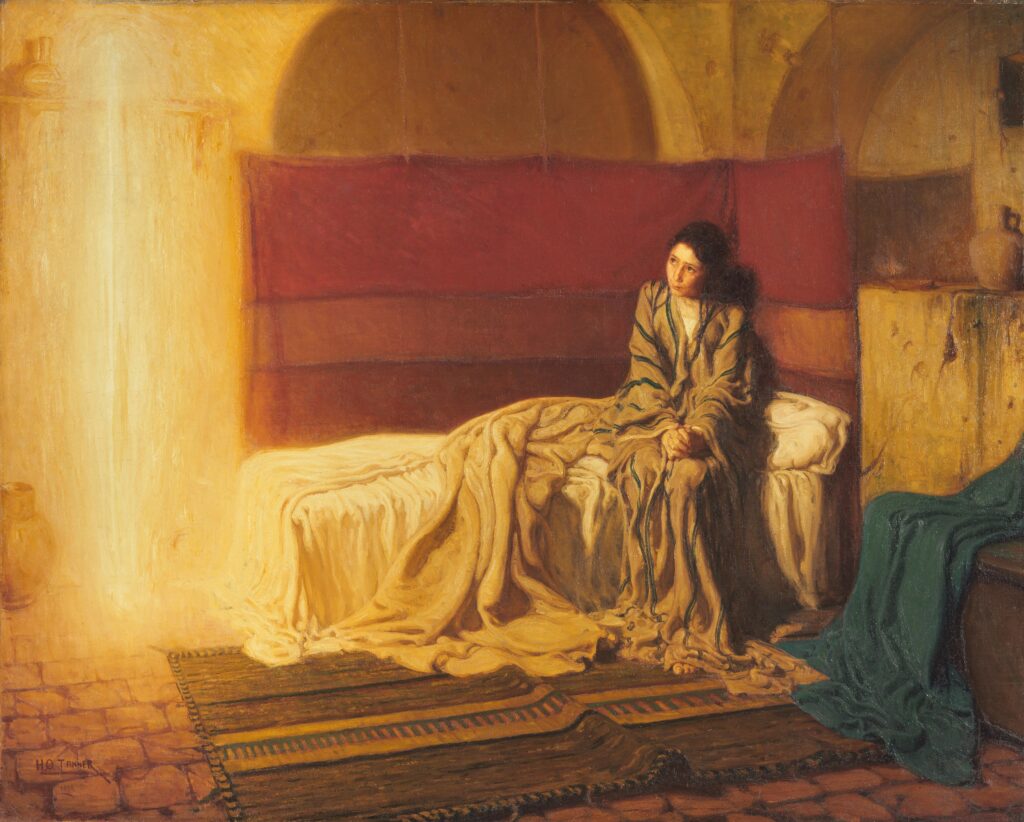
    About The Art: The Annunciation (1898) by Henry Ossawa Tanner

    The Annunciation (1898) is one of Henry Ossawa Tanner’s most celebrated works, offering a fresh and intimate interpretation of the moment the angel announces to Mary that she will bear Christ. Instead of portraying the angel in human form, Tanner uses a glowing column of light, emphasizing the holiness of the moment while keeping the scene grounded and realistic. His subdued colors, gentle lighting, and focus on Mary’s expression highlight the humility, awe, and humanity of this encounter.

    Tanner—born in 1859 and the first African American painter to gain international recognition—often drew on his Christian faith in his art. His move to Paris allowed him to escape racial prejudice in the United States and refine his style within the European art tradition. The Annunciation reflects both his spiritual depth and his artistic mastery, capturing a sacred moment with emotional honesty and reverent beauty.

  • Thanksgiving and Grace: Giving Thanks for God’s Unmerited Favor (Romans 5:12–21)

    Romans 5:12-21 (NKJV)
    2 Therefore, just as through one man sin entered the world, and death through sin, and thus death spread to all men, because all sinned--
    13 (For until the law sin was in the world, but sin is not imputed when there is no law.14 Nevertheless death reigned from Adam to Moses, even over those who had not sinned according to the likeness of the transgression of Adam, who is a type of Him who was to come. 15 But the free gift is not like the offense. For if by the one man's offense many died, must more the grace of God and the gift by the grace of the one Man, Jesus Christ, abounded to many. 16 And the gift is not like that which came through the one who sinned. For the judgment which came from one offense resulted in condemnation, but the free gift which came from many offenses resulted in justification. 17 For if by the one man's offense death reigned through the one, much more those who receive abundance of grace and of the gift of righteousness will reign in life through the One, Jesus Christ.) 
    18 Therefore, as through one man's offense judgment came to all men, resulting in condemnation, even so through one Man's righteous act the free gift came to all men, resulting in justification of life. 19 For as by one man's disobedience many were made sinners, so also by one Man's obedience many will be made righteous. 20 Moreover, the law entered that the offense might abound. But where sin abounded, grace abounded much more, 21 so that as sin reigned in death, even so grace might reign through righteousness to eternal life through Jesus Christ our Lord. 

    Where would we be without grace? 

    This week, many of us will gather around a table with our loved ones; we will pause and think about what we have to be thankful for. We may be thankful to God that we have been able to pay bills, the little miracles that occur in our checkbook, or at least the rubber checks that haven’t bounced. We may be thankful for the roof over our heads, the food on our table, and the clothes on our backs. 

    As tragedy after tragedy affects our country and across the world, we should appreciate our lives, as we are reminded of those who have recently died in tragedy. At the time Dr. DARF wrote this sermon (in 2001), it was shortly after the tragedy of 9/11 and the bombing of the World Trade Center. Since then, we’ve continued to see tragedy. We see tragedy in our youth with some of the highest percentages in depression, anxiety, and stress. We see tragedy in the school systems, a place once safe for our youth, now a place of tragedy and fear. We see tragedy in our nation, our government, with its greed. Tragedy is everywhere and with so much tragedy, we must recognize that there will be many families overcome with grief and likely not in the mood to celebrate the Thanksgiving season. The holidays will bring difficulty. 

    But there is God! And we give thanks to God. This week, I’d like to share a song from the 1970s by Andre’ Crouch, To God Be The Glory. Many of us recognize this song…”To God be the glory / For the things he has done / With his blood he has saved me / With his power he has raised me / To God be the glory / For the things he has done…” 

    Check out Natalie Grant’s version of Andrae Crouch’s “To God be The Glory” (2020).

    This song reflects the message of this text. While none of us have ever done anything to deserve God’s goodness, through Christ, He has given us His grace. It has been said “that grace is unmerited favor,” therefore, grace cannot be earned. It is only because of God’s great and wonderful everlasting love that He offers grace to wretched sinners. Of course, at this point, we have to look at our own views. 

    • Do we see ourselves as a righteous person, and do we consider ourselves totally free of sin? 
    • Do we see ourselves as a wretched sinner, that can only be saved by God’s amazing grace? 

    Like many of you, I have met some of those who feel they have gone on to perfection. It doesn’t do much good to argue with those people, as most of them are convinced they are good people. As for myself, I am a wretched sinner. I may hold the appearance at times as looking somewhat holy but I know what’s inside of myself. And, in case I forget, God has given me family and friends who are always kind enough to remind me of my faults to keep me in line. And, in recognizing my wretched state, my thanksgiving expressed to God for his amazing grace can only be stated through gratitude. 

    Thanksgiving is showing Gratitude for Grace

    Unlike the impatient youngster whose parents force him to refrain from diving into that gloriously roasted, juicy, golden drumstick at Thanksgiving dinner, one realizes that although the din

    ner may taste good, there is nothing like the everlasting banquet God is preparing for those He has redeemed. Food is tasty, and while many of us will enjoy 80-90 Thanksgiving meals during our lifetime, there is still no comparison for the ultimate satisfaction that God brings. So, we turn to that youngster and say “Do you realize there is something here that is better than that turkey drumstick? We also have ham and stove-top stuffing!”

    But, there is something better than stuffing – how about being stuffed full of God’s grace? Is it possible that being stuffed full of God’s grace has something to do with our tradition of saying grace? This idiom is a common expression that we’ve used for many years to describe the act of giving thanks before a meal. It can be traced back to ancient times when people believed that food was a gift from the gods, and in our case, THE God. So, since saying grace is what we do…let’s say grace! 

    Let us say grace as more than a mere statement of thanksgiving offering at a traditional place and time. Let us say grace as a joyful expression celebrating God’s amazing love working in us. Our saying grace may be a worshipful demonstration, giving a marvelous testimony to the heartfelt profession of faith in God’s acts of salvation. Whatever it means to you to say grace, don’t do like some people and say grace without commitment, without emotion, and without feeling. God deserves for us to say grace, in recognition of His amazing grace, with hearts filled with praise, and grace on our lips. In short — say grace, and make sure you mean it. 

  • God’s Promise Fulfilled: The Good Shepherd in Ezekiel 34

    Ezekiel 34:11-16, 20-24 (NRSV): 
    11 For thus says the Lord God: I myself will search for my sheep, and will seek them out. 12 As shepherds seek out their flocks when they are among their scattered sheep, so I will seek out my sheep. I will rescue them from all the places to which they have been scattered on a day of clouds and thick darkness. 13 I will bring them out from the peoples and gather them from the countries, and will bring them into their own land; and I will feed them on the mountains of Israel, by the watercourses, and in all the inhabited parts of the land.  14 I will feed them with good pastures, and the mountain heights of Israel shall be their pasture; there they shall lie down in good grazing land, and they shall feed on rich pasture on the mountains of Israel. 15 I myself will be the shepherd of my sheep, and I will make them lie down, says the Lord God. 16 I will seek the lost, and I will bring back the strayed and I will bind up the injured, and I will strengthen the weak, but the fat and the strong I will destroy. I will feed them with justice. 

    20 Therefore, thus says the Lord God to them: I myself will judge between the fat sheep and the lean sheep. 21 Because you pushed with flank and shoulder; and butted at all the weak animals with your horns until you scattered them far and wide, 22 I will save my flock, and they shall no longer be ravaged; and I will judge between sheep and sheep. 23 I will set up over them one shepherd, my servant David, and he shall feed them: he shall feed them and be their shepherd. 24 And I, the LORD, will be their God, and my servant David shall be prince among them; I, the LORD, have spoken. 

    The number of “I will” statements in the Ezekiel 34 scripture inspires today’s message. In this passage alone, the Lord says “I will” at least 15 times, which leaves us with the impression that God makes promises and is willing to act on those promises.  At this current time, we are in the middle of the Thanksgiving season, with Christmas and Advent just around the corner. And with this, we are drawing close to the end of another year, which leaves many of us wondering what the next year will bring. 

    Returning to the Biblical text, these words come to us from the prophet Ezekiel. Ezekiel lived during one of the darkest chapters in Israel’s history, the Babylonian exile, around 593 B.C. He was among the first group of captives taken from Jerusalem to Babylon after King Nebuchadnezzar’s invasion in 597 B.C. Ezekiel and many others settled near the Chebar Canal, a network of irrigation channels near Babylonia. Life in exile was not the brutal imprisonment we might imagine; the people had homes, fields, and even opportunities to work and prosper. They were far from free, but they were allowed to live, to build, and to worship God as best they could in a foreign land.

    Ezekiel carried God’s truth to the people who had lost nearly everything. They had lost their land, their temple, their hope. He ministered among the exiles who struggled to understand why God had allowed such devastation, reminding them that even in Babylon, God was still present. History tells us that Babylon was a city of splendor, filled with temples, palaces, and idols. Ezekiel had seen its wealth and power firsthand, yet he also saw how empty it was compared to the glory of God.

    While Ezekiel lived comfortably and had a measure of stability, his heart and ministry were not concerned with material life. His mission was spiritual: to proclaim that God’s presence was not confined to Jerusalem, and that His desire was to restore His people, to cleanse their hearts, and to renew His covenant with them. Even in exile, Ezekiel called his people to remember who they were and to trust that God had not abandoned them, but was preparing them for renewal.

    In today’s scripture, we see a picture of God being the True Shepherd. Bernhard Anderson, an Old Testament scholar, states, “Yahweh is the God Shepherd who goes out to seek for sheep that are lost, crippled, or strayed, in order to restore them to their home pasture.” 

    Ezekiel 34:11 states: 

    For thus says the Lord God: I myself will search for my sheep, and will seek them out.” Again, the I Will statements are made to indicate how far God is willing to go and all that God is willing to do. An interesting observation about the I Will Statements is that there is no direct word-for-word translation from the ancient Hebrew (as the Old Testament was written in Hebrew). Instead, there is a Hebrew word given for each phrase, for example, “I will search” or “I will rescue” is stated with one word, ‘er’eh, which means “I will shepherd.” God merely begins to say ‘I will” meaning he is determined to do so. Then, according to a list of Hebrew words, there is a list of what God will do: 

    1. I will require
    2. I will search
    3. I will rescue
    4. I will lead
    5. I will gather
    6. I will shepherd
    7. I will seek
    8. I will bring back
    9. I will bind up
    10. I will strengthen
    11. I will destroy
    12. I will judge
    13. I will save
    14. I will establish
    15. I will be

    God could have also added, “I will be very busy!” For again, with everything it says God will do, God will do it for these people. Therefore, I have to believe that this must have been a hope-filled message to the original hearers. But, there’s more! 

    There is a Messianic prophecy. While God states he intends to do this all Himself, toward the end of the text, he says: 

    23 I will set up over them one shepherd, my servant David, and he shall feed them: he shall feed them and be their shepherd. 24 And I, the LORD, will be their God, and my servant David shall be prince among them; I, the LORD, have spoken. 

    It’s important to note that God doesn’t plan on resurrecting King David. King David reigned roughly from 1010 to 970 B.C.

    During David’s reign, Israel was united as one kingdom. King David was at least 400 years prior to this message from Ezekiel and King David had established Jerusalem as the capital, brought the Ark of the Covenant there, and made worship central to national life. By Ezekiel’s time, the unified kingdom David had established was long gone. Jerusalem, the city David had made the heart of Israel’s faith, was in ruins. The temple Solomon (King David’s son) had built was destroyed. So, God isn’t actually referring to King David directly in this text. Instead, he is talking to the descendants of David. The gospels of Matthew and Luke record taht Jesus was born a descendant of David. So, quite naturally, Jesus comes along (maybe 600 years later but it still aligns directly with what’s been prophesied about Christ), and said, “I am the good shepherd. The good shepherd lays down his life for the sheep.” (John 10:11, NRSV). Jesus proclaimed Himself to be the one who would care for the sheep. 

    What do we learn from this message today? 

    Jesus is the good shepherd, the one and true shepherd who genuinely cares for his people today. Just like in Ezekiel’s time, and then just like Jesus’ time, we still see the same people often led astray by religious leaders. For this reason, many people may argue with us when we tell them that they need to go to church. Almost immediately, some people will boast, “I don’t want to go to church because it is filled with hypocrites.” But this line gets old. You aren’t going to find a “perfect” Christian. 

    Another way of applying this text is by seeing it through the context of the liturgical calendar. We are in the season of Thanksgiving and nearing the end of the liturgical year. It is appropriate to begin looking at Messianic prophesies because they reveal to us what God has done in history to prepare for the coming of His Son into the world. Year after year we start to see our world become more absorbed in the commercialized idea of Christmas. The problem I see is that the season of Christmas isn’t long enough for people to fully rasp its real meaning. For many people, Christmas begins when they put up their outdoor lights or when they buy their Christmas tree. Christmas begins when Walmart starts putting up the holiday bundles, candy, and decorations. Christmas is definitely long enough for the corporate businesses that are profiting off the holiday. 

    But the spirituality of Christmas, we have to recognize that we are celebrating not just a child placed in a manger but we are celebrating Advent, the season that works its way up to the meaning of Christmas. So, maybe we are starting off early since Thanksgiving isn’t for a few more weeks, but let us understand that Thanksgiving is not so much a religious holiday. There is no biblical foundation for celebrating Thanksgiving Day. The Bible tells us to be thankful to God (Psalm 100), but for Christians, this is a reminder to be thankful, express gratitude, to be glad that we have a God who is willing to do so much for us. 

    The “I Will” Statement reveals more than just a promise that God made to Ancient Israel. God promised that He would give them a shepherd. Jesus came into the world as the Good Shepherd. He came to seek and to save the lost, and he’s still doing it. Let’s prepare our hearts for thanksgiving, giving thanks to God for all that He has done for us. And, as we prepare for Thanksgiving and the holiday rush, let us begin our spiritual preparation, rejoicing because the wonderful season of Advent will begin and Christmas is filled with such a wonder, that we do not want to miss any of it. 

    Adapted from “I Will…” by Rev. Dennis Alan RobertsFulbright, M.Div (November 21, 1999 – Paradise, CA)   

  • A Lifestyle of Thanksgiving | Deuteronomy 26:1–11 Sermon on Gratitude and Giving

    Deuteronomy 26:1-11 "When you arrive in the land of the LORD your God is giving you as a special possession and you have conquered it and settled there, 2 put some of the first produce from each harvest into a basket and bring it to the place the LORD your God chooses for his name to be honored. 3 Go to the priest in charge at that time and say to him, 'with this gift I acknowledge that the LORD your GOd has brought me into the land he swore to give our ancestors.' 4 The priest will then take the basket from your hand and set it before the altar of the LORD your God. 5 You must then say in the presence of the LORD your God, 'my ancestor Jacob was a wandering Aramean who went to live in Egypt. His family was few in number, but in Egypt they became a mighty and numerous nation. 6 When the Egyptians mistreated and humiliated us by making us their slaves, 7 we cried out to the LORD, the GOd of our ancestors. He heard us and saw our hardship, toil, and oppression. 8 So the LORD brought us out of Egypt with amazing power, overwhelming terror, and miraculous signs and wonders. 9 He brought us to this place and gave us this land flowing with milk and honey! 10 And now, our LORD, I have brought you a token of the first crops you have given me from the ground.' Then place the produce before the LORD your God and worship him. 11 Afterward go and celebrate because of all the good things the LORD your God has given to you and your household. Remember to include the Levites and the foreigners living among you in the celebration. 

    This passage from Deuteronomy describes the Israelites’ entry into the Promised Land as they took possession of the land they were permitted to farm. Once the crops were harvested, the Israelites were required to take some of the “first produce” (NLT) or “firstfruits” (NIV) and present it to the Lord in a worshipful ceremony. This ceremony consisted of a public acknowledgment, made to God, for all He had done for them. This wasn’t meant to be a small ‘thank you” for how does one offer a simple “thank you” to God who had provided so much. 

    This event has been repeated again and again, as men and women have entered new countries. As one has a consciousness of a higher power in existence, one realizes that God has done so much for humanity through many generations. And, for the most part, it is a tradition to say “thanks” to God for what he has done. 

    But, how does one express thankfulness? 

    In today’s fast-paced society, we fail miserably at saying “thank you” to people who deserve to be thanked. For some of us, we genuinely are thankful and know we need to express our gratitude, but time gets away from us, and before we know it, we believe too much time has passed, and our expression of thanks is too late. 

    Many of us have experienced this from both sides. We might have received something and failed to show gratitude for it. Or, we may have done something for someone or given them something, only to sit back and wait for those two simple words that will never come. We know that as each day passes, the hurt gouges deeper, and we realize that our awaited “thank you” has fallen into the sea of forgetfulness. Unfortunately for many, these feelings turn into bitterness as we promise to never do anything for that person again or never do or give again. 

    In our American culture, we have a designated holiday, Thanksgiving, for which we express our gratitude. Yet, even with one day set aside, we still manage to get caught up in the commercialized fog between Halloween and Christmas with the voice of Halloween hollering, “Give me treats!” and the voice of Christmas yelling, “Give me presents!” It’s easier to ignore the quiet voice of Thanksgiving as it reminds us to “give thanks.” Especially since big corporations can’t easily capitalize on and commercialize it. 

    What does it take to be thankful? 

    For Israel, it certainly could not be captured in one moment. There were no big screens blasting a casual “thank you God” commercial. No, for the Israelites, it was more about the lifestyle of thanksgiving. It was a tradition of giving thanks to God. It was part of their every day acts of faith that they would do over and over, say again and again, and out of this rich tradition, they would compose their words of thanks: 

    Psalm 107:1-9 1 Give thanks to the LORD, for he is good! 
    His faithful love endures forever. 
    2 Has the LORD redeemed you? Then speak out! 
    Tell others he has saved you from your enemies. 
    3 For he has gathered the exiles from many lands, 
    from east and west, from north and south. 
    4 Some wandered in the desert, 
    lost and homeless. 
    5 Hungry and thirsty, 
    they nearly died. 
    6 "LORD, help! they cried in their trouble,
    and he rescued them from their distress. 
    7 He led them straight to safety, 

    to a city where they could live. 
    8 Let them praise the LORD for his great love
    and for all his wonderful deeds to them. 
    9 For he satisfies the thirsty

    and fills the hungry with good things. 

    What should be our praxis? (Praxis = Established Custom)

    The gospel of John describes Jesus as very blunt. At one point, Jesus turned to the crowd and directly said, “I tell you the truth, you are looking for me, not because you saw miraculous signs but because you ate the loaves and had your fill.” (John 6:26, NIV). The basic principle here is this…If you want good church attendance, offer a meal afterward. If you want to attract young people, have a pizza party!

    All jokes aside, Jesus most certainly pointed out that He had a following of people who liked to eat. Furthermore, it may have been customary for great prophets to feed their people. Remember, when God fed Moses’ people in the wilderness (Exodus 16)? 

    But, Jesus pointed out (regarding Moses), “I tell you the truth, it is not Moses who has given you the bread from heaven, but it is my Father who gives you the true bread from heaven. For the bread of God is he who comes down from heaven and gives life to the world.” (John 6:32-33, NIV). 

    Again, we are reminded to thank God. 

    We turn back to the concept of Thanksgiving with this question: Do we only celebrate Thanksgiving because of the food? Not necessarily!

    Thanksgiving is THANKS
    followed by GIVING. 

    It really has little to do with a day for gluttony and more to do with a way of life. We receive from God, we give back to God. We receive again, we give again. We are thankful, and therefore we express our thankfulness by giving to others who are less fortunate or who are in need. Thanksgiving; thanks followed by giving is a wonderful opportunity. One can look up to heaven, offering up a heartfelt expression of thanks to God. We can realize and recognize God as the ultimate provider. We can give because we are blessed, and therefore, we are truly thankful. In this state of thankfulness, one truly receives the fullness of God’s blessings. Let us give thanks to God, continually! 

    Amen! 

  • Be Thankful, Be Present, Be His: The Call of Psalm 100

    We have reached the month of November—the month of no shaving, no spending, and NaNoWriMo (National Novel Writing Month). We are also reaching the start of the holidays, and this year will be the hardest yet. To make this holiday somewhat bearable, I wanted to search through Dr. DARFs sermons, which focus on gratitude, just in time for the Thanksgiving season. 

    Chris Tomlin – Psalm 100 (Lyrics & Chords)

    So, we turn to Psalm 100 (NKJV): A Song of Praise for the LORD’s Faithfulness to His People:

    A Psalm of Thanksgiving.
    1 Make a joyful shout to the Lord,
    all you lands!
    2 Serve the Lord with gladness;
    Come before his presence
    with singing.
    3 Know that the Lord, He is God;
    It is He who has made us, and not we
    ourselves, We are His people
    and the sheep of His pasture.
    4 Enter into His gates with thanksgiving.
    And into His courts with praise.
    Be thankful to Him, and
    bless His name.
    5 For the Lord is good;
    His mercy is everlasting, And His truth
    endures to all generations.

    Within the context of this Psalm is a principle, “or a key to a successful spiritual life…” and that “entering into God’s presence by means of dynamic praise, which includes singing, gladness, thanksgiving, and worship,” (Hayford 1997). Entering into God’s presence is important and needs to be emphasized. 

    How often do you walk through the doors of the church and think, I mean, intentionally think, about entering into God’s presence? And, when you get up to leave and go through those same church doors, what will be your testimony? Will it be: I entered into God’s presence today! Or, do you find yourself sometimes saying…” Well, I went to church this morning.” 

    Many don’t seem to think it’s all that important to attend church. If they did, our church pews would be fuller. A common excuse is “we just don’t get a whole lot out of it.” But what we are expecting is not what we should be expecting. 

    What are we expecting? 

    Here’s a general idea of what most expect – church is: 

    • A meeting hall for do-gooders
    • An institution that hosts multiple programs to meet the needs of everyone, while at the same time operating on little to no money
    • A home for a type of blood-sucking creature that rises up out of the dark abyss
    • A peaceful, decorative place for performing weddings and funerals
    • A life insurance company, after all, if you’re a member of a church, your life will be guaranteed to live in the hereafter

    To many, the church is a social organization. We gather here to socialize. We show up early to join our friends for coffee. But we rarely socialize with God.

    Returning to Psalm 100, James Smith (1996) points out that this is the only Psalm designated as a “psalm of thanksgiving.” This is not to be confused with the American tradition, Thanksgiving, but as an ancient practice of gratitude. We can assume this was once sung to an ancient community in Israel, and it is likely that people were very excited in their worship, much like charismatic people are today, not like liturgical mainline church attenders. 

    The Psalmist was called out to the people to come into the presence of the Lord. “Shout for joy to the LORD, all the earth. Worship the LORD with gladness.” 

    He may have asked them, “are you happy about being here today?”

    Then, he says “come before him with joyful songs. Known that the LORD is God! There certainly is no other God, it is he-the One God, who made us and we are his; we are the people, the sheep of his pasture.”

    We “enter his gates with thanksgiving,” which refers to the literal gates that ancient worshippers passed through when entering the temple courts. So, using a modern application – how did you enter the sanctuary this morning? Did you have praise on your lips? Were you thankful in your heart? 

    Maybe we have taken the church for granted for too long, assuming the church is always going to be here. Of course, the church will endure, but it may not always be readily available. In the same way, The Hebrews, or Jews have assumed their Temple would always be; guess again. They would now like to rebuild their temple, but there rests a pagan temple on top of their site.

    The point…we need to be thankful and we need to be thankful we have a God. This brings the traditional theme of this month: Thanksgiving. We associate this month with Thanksgiving, and every year, we celebrate it religiously with great food, lots of desserts, family and friends, football, and possibly some random politics thrown in. And, then grandma comes up with a great idea: let’s go around the room and everyone express something for which you have to be thankful.” And, you knew it was coming because it came up last year, so you’ve rehearsed your line, and even though you’ve rehearsed your forehead still beads up with sweat, and you stutter out…”I’m thankful for this BIG turkey!”

    While this may be a meaningful ritual to some, it doesn’t always capture the application that we are trying to arrive at in our spiritual worship. It doesn’t begin to address the idea that we live in a world with a multitude of problems – horror, pain, suffering, tragedy, poverty, evil, despair, depression, death, grieving, crying, aching, trauma….the list goes on and on. But, in the midst of all of this, There. Is. God! 

    He is with us and will always be with us. He is a wonderful God, and we should be thankful we have Him. He is worthy to be worshiped. He is worthy to be praised. We should be inspired to “enter into His gates with thanksgiving” so we can “give thanks to him and praise his name!”

    Amen.


    Sermon adapted from “Be Thankful You Have a God!” by Dennis Alan Fulbright, M.Div., November 24, 1996 (LaJunta, Colorado)

    References

    Hayford, Jack W., ed. 1997. Spirit Filled Life Study Bible. electronic ed. ed. Nashville, TN: Thomas Nelson. Logos.

    The New King James Version. 1982. Nashville, TN: Thomas Nelson. Logos.

    Smith, James E. 1996. The Wisdom Literature and Psalms. Joplin, MO: College Press.

  • God Will Bring You Out of This Land: Trusting God’s Promises in Uncertain Times

    At the end of Genesis, Joseph was nearing the end of his life. At 110 years old, he gathered his family and declared:

    “I am dying; but God will surely visit you, and bring you out of this land to the land which He swore to Abraham, to Isaac, and to Jacob.”

    Joseph’s words were more than a farewell—they were a prophecy. He didn’t know exactly how God would do it or how long it would take, but he was certain that God would keep His promise. Four centuries later, God did just that, raising up Moses to lead His people out of Egypt and into freedom.

    Joseph had enjoyed Egypt’s comforts. As Pharaoh’s second-in-command, he had saved the nation from famine and brought his family to safety. But Egypt was never the final destination. Before he died, Joseph made his family swear to carry his bones back to the promised land. His eyes were fixed not on Egypt’s riches, but on God’s covenant.

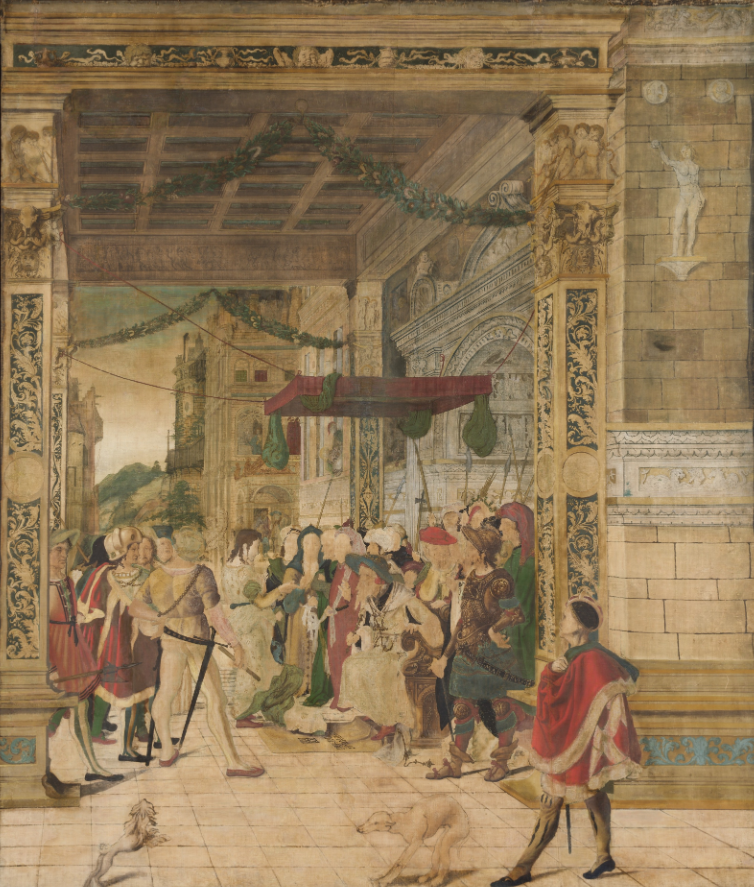
    Joseph Interpreting the Dreams of Pharaoh Attributed to Jörg Breu the Younger German ca. 1534–47

    That long wait between Joseph’s death and the Exodus may have seemed like silence. Generations were born and died; blessings gave way to oppression. Many probably doubted it would ever happen. Yet God’s timing was perfect—He was preparing both His people and their deliverance.

    We, too, live in a world that can feel like Egypt. Political unrest, economic hardship, and personal struggles can make us long for something better. Some people are searching for a dream—whether a new home, a better job, or a safer place to live. Others are simply holding on through hard times. But Joseph’s story reminds us that God has prepared something far greater than anything we could find here.

    Jesus said:

    “Let not your heart be troubled… In My Father’s house are many mansions… I go to prepare a place for you. And if I go… I will come again and receive you to Myself; that where I am, there you may be also.” (John 14:1–3)

    Just as God brought Israel out of Egypt, He will one day bring His people into the home He has promised. Whether that day comes for us individually or at Christ’s return, we can be certain—God will keep His word.

    “God Will Bring You Out of of This Land.” Rev. Dennis Alan RobertsFulbright, Shubert Christian Church, July 24, 2024.

  • The Shepherd and the Stone: Jacob’s Prophetic Blessing Over Joseph (Genesis 49)

    Genesis 49:1-2 (KJV): 1 And Jacob called unto his sons, and said, Gather yourselves together, that I may tell you that which shall befall you in the last days. 2 Gather yourselves together, and hear, ye sons of Jacob; and hearken unto Israel your father. 

    Genesis 49 opens with a poignant moment: Jacob, nearing death, gathers his twelve sons to speak over them. What follows is not just farewell, but prophecy. He says, “Gather together, that I may tell you what shall befall you in the last days” (Genesis 49:1, NKJV). While modern readers may interpret the phrase “the last days” as a reference to the end times, Jacob’s words are best understood as prophetic insight into the future of his sons and their descendants.

    One of the most significant and detailed blessings is reserved for Joseph. It spans 61 Hebrew words—more than any other son receives. Jacob not only recounts Joseph’s hardships, but testifies to the sustaining power of God throughout his life.

    Three Sheep Samuel Howitt British 1801

    Joseph’s Story, God’s Strength

    Joseph is described as “a fruitful bough by a well,” a life that thrives even under harsh conditions. Though “the archers have bitterly grieved him,” Joseph’s “bow remained in strength” (Genesis 49:23–24). Why? Because, Jacob says, his strength was “by the hands of the Mighty God of Jacob.”

    This blessing is rich with divine titles:

    • The Mighty God of Jacob
    • The God of your father
    • The Almighty
    • The Shepherd
    • The Stone of Israel

    Each title tells us something about God’s character. Jacob knew this God personally, and so did Joseph. Even after betrayal, slavery, false accusation, and years in prison, Joseph never wavered in faith. His blessing becomes a powerful testament to endurance rooted in trust in God.

    Among these divine names is “The Shepherd.” In ancient times, shepherds were often seen as lowly or unclean. Yet, when Jesus Christ entered the world, the birth announcement went first to shepherds in the field. Why? Because God identifies with the humble—and because He Himself is the Divine Shepherd.

    Scripture repeatedly calls out unfaithful shepherds (pastors and spiritual leaders) who neglect their flocks. In Ezekiel 34:6–10, God promises to hold these leaders accountable for the suffering of His people. Today, there are still pastors who distort the Gospel—preaching secular ideologies, affirming sin, and abandoning the truth of salvation through Christ. God’s judgment on unfaithful shepherds remains clear.

    In contrast, Jesus said:

    “I am the good shepherd. I know my own sheep, and they know me… I sacrifice my life for the sheep.”
    —John 10:14–15 (NLT)

    Jesus lived as the True Shepherd. Though hated by the powerful and misunderstood by many, He loved His flock, cared for the broken, and laid down His life. Christians today can take heart: if our Shepherd suffered rejection, we can endure hardship too. He walks with us still.


    God, Our Rock

    Jacob also describes God as “the Stone of Israel.” In Scripture, God is often compared to a rock—a source of stability, protection, and permanence.

    “The Lord is my rock, my fortress, and my deliverer… my stronghold.”
    —Psalm 18:2 (NKJV)

    Isaiah prophesied about a “precious cornerstone” that would become the foundation of God’s people (Isaiah 28:16). Jesus later revealed that this cornerstone was Himself.

    “The stone which the builders rejected has become the chief cornerstone.”
    —Matthew 21:42 (NKJV)

    The Apostle Paul echoed this truth in Ephesians 2, writing that believers are built on the foundation of the apostles and prophets, “Jesus Christ Himself being the chief cornerstone.” (Ephesians 2:20)

    The “Stone of Israel” Jacob spoke of was a foreshadowing of Jesus Christ. He is our Cornerstone, our Rock, our unshakable foundation.

    Roman Landscape with a Shepherd and Sheep Giovanni Benedetto Castiglione (Il Grechetto) Italian late 1640s

    Jacob’s blessing over Joseph was not just a family moment—it was a declaration of who God is. These names—Shepherd, Stone, Almighty—remind us of the attributes of God we can cling to today.

    Just as Joseph endured betrayal, hardship, and injustice yet held firm to faith, we too can be strengthened by the Mighty God. His blessings reach beyond generations: “the blessings of your father have excelled the blessings of my ancestors… they shall be on the head of Joseph” (Genesis 49:26).

    And because of Jesus Christ, the Chief Cornerstone, we are no longer strangers, but members of God’s household. We are heirs of the same promise. Our spiritual lives can be built on a true, lasting foundation.

    Let us praise God—for being our Shepherd, our Stone, our Rock, and our Redeemer.

    “The Shephard, the stone of Israel.” Rev. Dennis Alan RobertsFulbright, Shubert, NE, July 28, 2024

  • When the Money Failed: Biblical Wisdom for Financial Crisis from Genesis 47

    Today, I invite you to open your hearts to a passage from Genesis that speaks to us in a deeply relevant way. As we continue navigating a world filled with financial anxiety, inflation, and uncertainty, let us listen carefully to a time in Scripture when people, too, found themselves asking: What do we do when there’s just not enough to go around? Let us turn now to Genesis 47:13–21 (NKJV), and hear the Word of the Lord.


    Genesis 47:13–21 (NKJV)

    13 Now there was no bread in all the land; for the famine was very severe, so that the land of Egypt and the land of Canaan languished because of the famine.
    14 And Joseph gathered up all the money that was found in the land of Egypt and in the land of Canaan, for the grain which they bought; and Joseph brought the money into Pharaoh’s house.
    15 So when the money failed in the land of Egypt and in the land of Canaan, all the Egyptians came to Joseph and said, “Give us bread, for why should we die in your presence? For the money has failed.”
    16 Then Joseph said, “Give your livestock, and I will give you bread for your livestock, if the money is gone.”
    17 So they brought their livestock to Joseph, and Joseph gave them bread in exchange for the horses, the flocks, the cattle of the herds, and for the donkeys. Thus he fed them with bread in exchange for all their livestock that year.
    18 When that year had ended, they came to him the next year and said to him, “We will not hide from my lord that our money is gone; my lord also has our herds of livestock. There is nothing left in the sight of my lord but our bodies and our lands.
    19 Why should we die before your eyes, both we and our land? Buy us and our land for bread, and we and our land will be servants of Pharaoh; give us seed, that we may live and not die, that the land may not be desolate.”
    20 Then Joseph bought all the land of Egypt for Pharaoh; for every man of the Egyptians sold his field, because the famine was severe upon them. So the land became Pharaoh’s.
    21 And as for the people, he moved them into the cities, from one end of the borders of Egypt to the other end.

    We live in difficult economic times. Gas prices fluctuate, grocery bills rise, and many are struggling to make ends meet. As of today (July 20, 2024), we’re just months away from another presidential election, and one of the leading concerns among voters is—again—the economy. It’s a familiar concern. People are worried. Not just about jobs, but about justice. Not just about wages, but about worth.

    Some believe the answer lies in redistribution—giving everyone an “equal share.” That idea fuels certain progressive voices, and even versions of Christianity that preach a “social gospel” rooted in liberation theology. Now, caring for the poor is indeed a Christian calling, but some versions of this theology go further—suggesting that real Christianity means becoming poor, like Mother Teresa, to prove our faith. But friends, even Jesus Himself said:

    Matthew 26:11 (NKJV)
    “For you have the poor with you always, but Me you do not have always.”

    In that moment, Jesus was reminding His disciples—and us—that poverty is a persistent reality in a fallen world. And while we are called to care for the poor, we must also face the hard truth: there is not enough money to go around.

    We worry about money because it touches everything. And yet, we must ask: Where is our faith when the money fails?

    Let’s go back to Genesis 47:15. It says:

    “So when the money failed in the land of Egypt... the people said, ‘Give us bread, for why should we die? For the money has failed.’”

    Four times in this passage we hear it: The money is gone. Failed. Empty. Powerless to solve the problem.

    When the people’s money failed, Joseph offered them options—first, trade your livestock. Later, your land. Finally, even your labor. Pharaoh ended up owning nearly everything. The people became dependent servants—just to survive.

    Now imagine a scenario in our own day: A government overtaxes landowners. Farmers, unable to pay, are forced to sell. Slowly, the government absorbs more land, more control. That’s not far-fetched. It happened then—it could happen now.

    And while Joseph was a godly man, he was also acting under Pharaoh’s authority. He didn’t enslave the people against their will—they came to him, desperate. As John Lange writes:

    “When one is hungry, they might do just about anything in order to feed their belly.”

    Indeed, we will trade almost anything—our independence, our resources, even our freedom—when we are desperate.


    Jesus’ Teaching on Treasure and Trust

    But Jesus offers us a radically different path. Not one of fear, but faith.

    Matthew 6:19–21 (ESV)
    “Do not lay up for yourselves treasures on earth… but lay up for yourselves treasures in heaven… For where your treasure is, there your heart will be also.”

    Matthew 6:24 (ESV)
    “No one can serve two masters… You cannot serve God and money.”

    Matthew 6:30–33 (ESV)
    “…O you of little faith… your heavenly Father knows that you need [these things]. But seek first the kingdom of God and his righteousness, and all these things will be added to you.”

    Friends, the money will fail. The stock market will crash. Governments will rise and fall. But God is still in control. If our hope is in money, our hearts will be anxious. But if our hope is in God, we will find peace.


    The people of Egypt didn’t need more coins—they needed deliverance. Eventually, Egypt would become a place of slavery for Israel, and God would send Moses to set them free. Egypt had gods and goddesses, but only the God of Abraham, Isaac, and Jacob could truly provide.

    And today, many still bow to modern idols—wealth, power, fame—but the Bread of Life, Jesus Christ, says: Come to me, all you who are weary and burdened, and I will give you rest.

    We do not need a full bank account to get into heaven. We need a faithful heart, trusting in God’s mercy and grace.

    “When the Money Failed” Sermon by Rev. Dennis Alan RobertsFulbright, Shubert, NE July 20, 2024.