When Mothers Know Best: A Mother’s Day Reflection on John 2:1–12
Weddings are joyful occasions—filled with celebration, laughter, and love. They bring families and communities together to mark a new beginning. For many mothers, a wedding is also a moment of pride, reflection, and deep emotional investment. On this Mother’s Day, we turn to the wedding at Cana, where Jesus performed His first miracle. It’s a story not only about divine power but also about the quiet influence of a mother who knew her son better than anyone else. William Hull (1970) said:
“A wedding feast was one of the most important and joyous occasions in the life of a Jewish family. Since marriages were usually arranged well in advance, the tiny village of Cana in Galilee may have eagerly anticipated this celebration for a long while” (The Broadman Bible Commentary, Volume 9, p. 23).
As we turn to John 2:1-12, we find Jesus, His disciples, and His mother attending a wedding in Cana of Galilee.
2 On the third day a wedding took place in Cana of Galilee. Jesus’ mother was there, and 2 Jesus and His disciples were invited to the wedding as well. 3 When the wine ran out, Jesus’ mother told Him, “They don’t have any wine.” John 2:1–12 (HCSB)
This wasn’t just a casual event—it was a major social celebration in a Jewish village. Traditionally, wedding feasts could last as long as seven days, with much food, dancing, and of course, wine. The text begins with a problem: the wine runs out. In our modern context, this might seem like a minor inconvenience. But during this time, it was common for wedding festivities to last seven days so running out of wine could be a sign of poor planning; a serious embarrassment for the host family that could tarnish their reputation. It is here that Mary, the mother of Jesus, steps in.
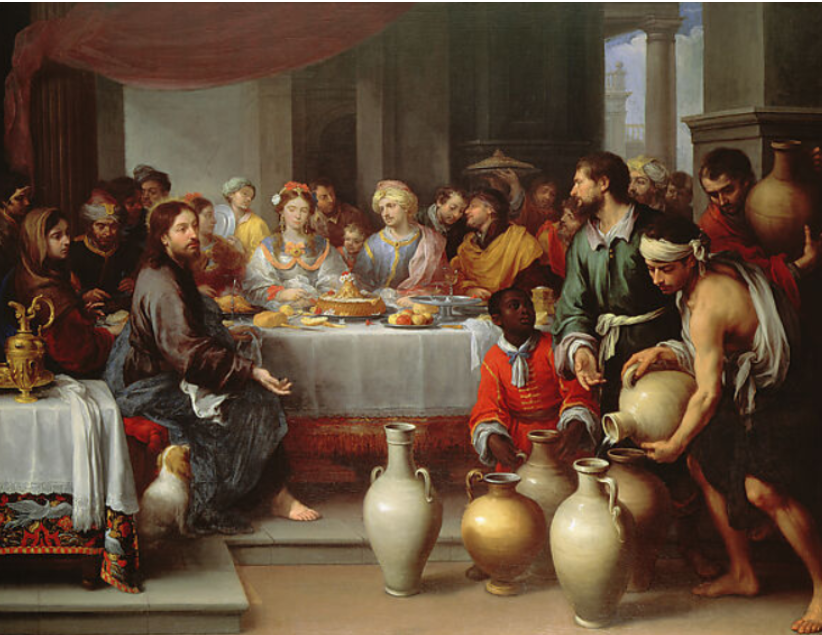
Since there were seven days set aside to pull off this wedding, we can certainly wonder about the complexities of details. In my time as a pastor and having been involved in wedding services, I have noted how strict certain people are about wedding details. It seemed that back in the day, ministers could just pull out a service book from their library and proceed with a brief marriage ceremony. However, today, ministers are expected to offer much more:
“Do you want a formal wedding?
a semi-formal wedding,
a contemporary service,
a traditional service,
a simple wedding,
or something else?”
“Will there be organ music,
live music,
recorded music,
special music done by a group or vocalist,
will you see singing as you walk down the aisle,
or something else?”
“Do you want this wedding inside the church,
outside the church,
inside a community hall,
inside a home,
outdoors
or should we have it in the parking lot?”
Wedding events have expanded so much that some churches even have a wedding coordinator available; if not, the family often hires their own. What I’ve discovered is there’s often a family member – usually someone’s aunt – who feels they are qualified for the job and take it upon themselves to be the wedding coordinator. They tell everyone where to stand, dictate the proper etiquette, insist on selecting the flower girls for the service, and manage the gift table. Maybe it’s not an aunt, maybe it’s a cousin, a sister, a mother? You get the picture.
With this in mind, we wonder about Mary. What was her role in this story? Since there isn’t a mention of Joseph, Jesus’ father, we could assume this event is after he passed away. This could also mean that Mary is related to the groom’s family, making the connection that Mary’s sister, Salome the mother of John (not John the Baptist) was a cousin of Jesus. However, this is just a theory and whether or not Mary and Jesus were attending the wedding of relatives or just happened to be at the event does not make a difference to the outcome of the story. Instead, this story and its dialogue are about the relationship between a mother and her son.
We know this wedding is an important event for Mary to attend. We imagine, as at any wedding, that many of the mothers are gathered around amazed at the festivities and eager to celebrate. Then, a sour note lands on the party when they realize, there is no more wine. And, the intriguing moment when Mary runs to Jesus with the problem at hand. Why would Mary run to Jesus?
To which Jesus replies, John 2: 4-8:
4 “What has this concern of yours to do with Me, woman?” Jesus asked. “My hour has not yet come.”
5 “Do whatever He tells you,” His mother told the servants.
6 Now six stone water jars had been set there for Jewish purification. Each contained 20 or 30 gallons.
7 “Fill the jars with water,” Jesus told them. So they filled them to the brim. 8 Then He said to them, “Now draw some out and take it to the chief servant.” And they did.
At first, we might read Jesus’ response to be harsh. “Woman, what has this concern of yours to do with me?” But in the cultural and linguistic context of the time, this wasn’t disrespectful. “Woman” was a formal, polite address. And His question was a way of signaling that He was stepping into His divine mission – not simply acting as her son, but as the Son of God.
Mary does not argue. Instead, she turns to the servants and instructs them to do whatever he tells them to do. In this moment, she is demonstrating faith. She trusts Jesus completely and because of her great faith, Jesus elects to meet the need at hand. This story teaches us that whenever faith is acted upon, miracles do appear. Jesus responds—not out of obligation, but from compassion and divine purpose. He tells the servants to fill six large stone jars with water. These jars, used for Jewish purification rituals, hold 20 to 30 gallons each. Once filled, Jesus instructs them to draw some out and take it to the chief servant. In John 2: 9-12,
9 When the chief servant tasted the water (after it had become wine), he did not know where it came from—though the servants who had drawn the water knew. He called the groom 10 and told him, “Everyone sets out the fine wine first, then, after people have drunk freely, the inferior. But you have kept the fine wine until now.”
11 Jesus performed this first sign in Cana of Galilee. He displayed His glory, and His disciples believed in Him.
12 After this, He went down to Capernaum, together with His mother, His brothers, and His disciples, and they stayed there only a few days.
The water has turned into wine. Not just any wine—the best wine. The chief servant, unaware of what has happened, is amazed. He says to the groom, “Everyone sets out the fine wine first… but you have kept the fine wine until now” (v. 10).
Many people in our world today do not believe in miracles. This text is an example of Jesus’ first recorded miracle – a sign that revealed His glory and caused His disciples to believe in Him. It began not with a grand declaration or a supernatural sign, but with a quiet moment between a mother and her son.
Mary didn’t perform the miracle—but her faith created the space for it to happen. Her trust in Jesus set the stage for His glory to be revealed. She didn’t demand; she simply believed. On a simple occasion of attending a wedding, Mary saw an opportunity for Jesus to bring joy to people’s lives. The joy was not found merely in the drink that was provided, but instead was the joy of the discovery as people realized the Messiah had come.
Sometimes, mothers have a way of seeing what others don’t. They notice what’s missing. They know when to speak, and when to trust. And in Mary, we see a mother who understood the weight of who her son was—even when His full mission was not yet clear.
Later in John’s Gospel, we see Mary again—at the foot of the cross. Even in His final moments, Jesus makes sure His mother will be cared for, saying to the beloved disciple, “Here is your mother” (John 19:27). His concern for her never faded.
On this Mother’s Day, we honor the mothers who have brought us into the world, nurtured us in love, and pointed us—sometimes gently, sometimes firmly—toward Jesus. We remember the quiet strength of Mary, whose faith opened the door to Christ’s first miracle. We thank God for mothers who see what others miss, who believe even when others doubt, and who teach us to listen to the voice of Jesus.
And at the very least, we say: God bless our mothers—for through them, many of us have come to know Jesus Christ.
~Rev. Dennis A. Fulbright
Preached: “The Mothers of Cana” | 2014, Hiawatha First Christian Church (DOC) & 2003, Paradise First Christian Church (DOC) , Revised 5/6/2025 by BRO, BA, Div.