At the end of Genesis, Joseph was nearing the end of his life. At 110 years old, he gathered his family and declared:
“I am dying; but God will surely visit you, and bring you out of this land to the land which He swore to Abraham, to Isaac, and to Jacob.”
Joseph’s words were more than a farewell—they were a prophecy. He didn’t know exactly how God would do it or how long it would take, but he was certain that God would keep His promise. Four centuries later, God did just that, raising up Moses to lead His people out of Egypt and into freedom.
Joseph had enjoyed Egypt’s comforts. As Pharaoh’s second-in-command, he had saved the nation from famine and brought his family to safety. But Egypt was never the final destination. Before he died, Joseph made his family swear to carry his bones back to the promised land. His eyes were fixed not on Egypt’s riches, but on God’s covenant.
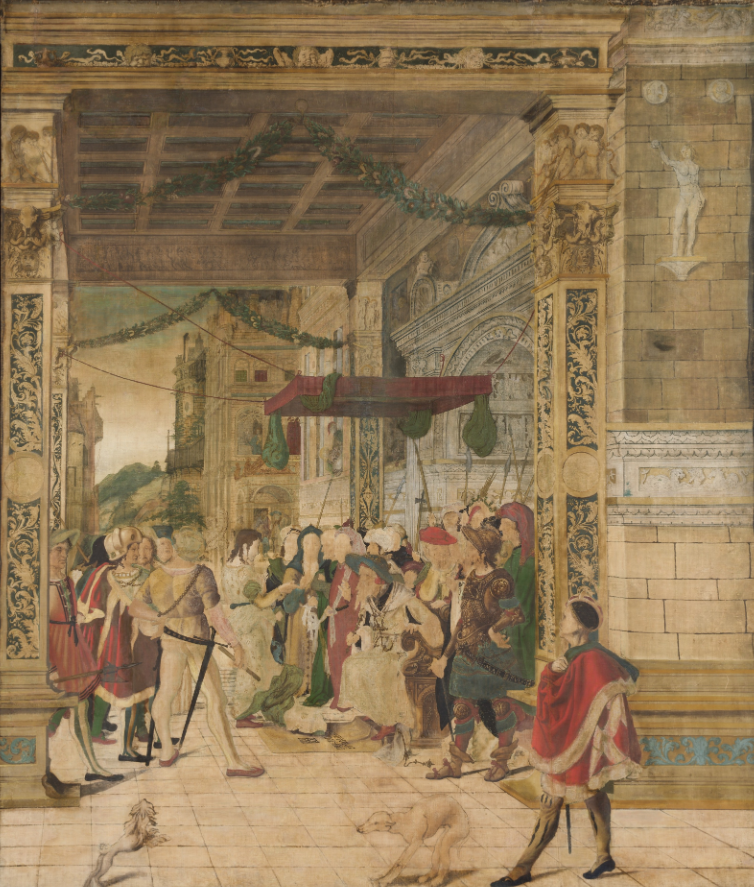
Joseph Interpreting the Dreams of Pharaoh Attributed to Jörg Breu the Younger German ca. 1534–47
That long wait between Joseph’s death and the Exodus may have seemed like silence. Generations were born and died; blessings gave way to oppression. Many probably doubted it would ever happen. Yet God’s timing was perfect—He was preparing both His people and their deliverance.
We, too, live in a world that can feel like Egypt. Political unrest, economic hardship, and personal struggles can make us long for something better. Some people are searching for a dream—whether a new home, a better job, or a safer place to live. Others are simply holding on through hard times. But Joseph’s story reminds us that God has prepared something far greater than anything we could find here.
Jesus said:
“Let not your heart be troubled… In My Father’s house are many mansions… I go to prepare a place for you. And if I go… I will come again and receive you to Myself; that where I am, there you may be also.” (John 14:1–3)
Just as God brought Israel out of Egypt, He will one day bring His people into the home He has promised. Whether that day comes for us individually or at Christ’s return, we can be certain—God will keep His word.
“God Will Bring You Out of of This Land.” Rev. Dennis Alan RobertsFulbright, Shubert Christian Church, July 24, 2024.
Genesis 49:1-2 (KJV): 1 And Jacob called unto his sons, and said, Gather yourselves together, that I may tell you that which shall befall you in the last days. 2 Gather yourselves together, and hear, ye sons of Jacob; and hearken unto Israel your father.
Genesis 49 opens with a poignant moment: Jacob, nearing death, gathers his twelve sons to speak over them. What follows is not just farewell, but prophecy. He says, “Gather together, that I may tell you what shall befall you in the last days” (Genesis 49:1, NKJV). While modern readers may interpret the phrase “the last days” as a reference to the end times, Jacob’s words are best understood as prophetic insight into the future of his sons and their descendants.
One of the most significant and detailed blessings is reserved for Joseph. It spans 61 Hebrew words—more than any other son receives. Jacob not only recounts Joseph’s hardships, but testifies to the sustaining power of God throughout his life.
Joseph is described as “a fruitful bough by a well,” a life that thrives even under harsh conditions. Though “the archers have bitterly grieved him,” Joseph’s “bow remained in strength” (Genesis 49:23–24). Why? Because, Jacob says, his strength was “by the hands of the Mighty God of Jacob.”
This blessing is rich with divine titles:
The Mighty God of Jacob
The God of your father
The Almighty
The Shepherd
The Stone of Israel
Each title tells us something about God’s character. Jacob knew this God personally, and so did Joseph. Even after betrayal, slavery, false accusation, and years in prison, Joseph never wavered in faith. His blessing becomes a powerful testament to endurance rooted in trust in God.
Among these divine names is “The Shepherd.” In ancient times, shepherds were often seen as lowly or unclean. Yet, when Jesus Christ entered the world, the birth announcement went first to shepherds in the field. Why? Because God identifies with the humble—and because He Himself is the Divine Shepherd.
Scripture repeatedly calls out unfaithful shepherds (pastors and spiritual leaders) who neglect their flocks. In Ezekiel 34:6–10, God promises to hold these leaders accountable for the suffering of His people. Today, there are still pastors who distort the Gospel—preaching secular ideologies, affirming sin, and abandoning the truth of salvation through Christ. God’s judgment on unfaithful shepherds remains clear.
In contrast, Jesus said:
“I am the good shepherd. I know my own sheep, and they know me… I sacrifice my life for the sheep.” —John 10:14–15 (NLT)
Jesus lived as the True Shepherd. Though hated by the powerful and misunderstood by many, He loved His flock, cared for the broken, and laid down His life. Christians today can take heart: if our Shepherd suffered rejection, we can endure hardship too. He walks with us still.
God, Our Rock
Jacob also describes God as “the Stone of Israel.” In Scripture, God is often compared to a rock—a source of stability, protection, and permanence.
“The Lord is my rock, my fortress, and my deliverer… my stronghold.” —Psalm 18:2 (NKJV)
Isaiah prophesied about a “precious cornerstone” that would become the foundation of God’s people (Isaiah 28:16). Jesus later revealed that this cornerstone was Himself.
“The stone which the builders rejected has become the chief cornerstone.” —Matthew 21:42 (NKJV)
The Apostle Paul echoed this truth in Ephesians 2, writing that believers are built on the foundation of the apostles and prophets, “Jesus Christ Himself being the chief cornerstone.” (Ephesians 2:20)
The “Stone of Israel” Jacob spoke of was a foreshadowing of Jesus Christ. He is our Cornerstone, our Rock, our unshakable foundation.
Jacob’s blessing over Joseph was not just a family moment—it was a declaration of who God is. These names—Shepherd, Stone, Almighty—remind us of the attributes of God we can cling to today.
Just as Joseph endured betrayal, hardship, and injustice yet held firm to faith, we too can be strengthened by the Mighty God. His blessings reach beyond generations: “the blessings of your father have excelled the blessings of my ancestors… they shall be on the head of Joseph” (Genesis 49:26).
And because of Jesus Christ, the Chief Cornerstone, we are no longer strangers, but members of God’s household. We are heirs of the same promise. Our spiritual lives can be built on a true, lasting foundation.
Let us praise God—for being our Shepherd, our Stone, our Rock, and our Redeemer.
“The Shephard, the stone of Israel.” Rev. Dennis Alan RobertsFulbright, Shubert, NE, July 28, 2024
Today, I invite you to open your hearts to a passage from Genesis that speaks to us in a deeply relevant way. As we continue navigating a world filled with financial anxiety, inflation, and uncertainty, let us listen carefully to a time in Scripture when people, too, found themselves asking: What do we do when there’s just not enough to go around? Let us turn now to Genesis 47:13–21 (NKJV), and hear the Word of the Lord.
Genesis 47:13–21 (NKJV)
13 Now there was no bread in all the land; for the famine was very severe, so that the land of Egypt and the land of Canaan languished because of the famine. 14 And Joseph gathered up all the money that was found in the land of Egypt and in the land of Canaan, for the grain which they bought; and Joseph brought the money into Pharaoh’s house. 15 So when the money failed in the land of Egypt and in the land of Canaan, all the Egyptians came to Joseph and said, “Give us bread, for why should we die in your presence? For the money has failed.” 16 Then Joseph said, “Give your livestock, and I will give you bread for your livestock, if the money is gone.” 17 So they brought their livestock to Joseph, and Joseph gave them bread in exchange for the horses, the flocks, the cattle of the herds, and for the donkeys. Thus he fed them with bread in exchange for all their livestock that year. 18 When that year had ended, they came to him the next year and said to him, “We will not hide from my lord that our money is gone; my lord also has our herds of livestock. There is nothing left in the sight of my lord but our bodies and our lands. 19 Why should we die before your eyes, both we and our land? Buy us and our land for bread, and we and our land will be servants of Pharaoh; give us seed, that we may live and not die, that the land may not be desolate.” 20 Then Joseph bought all the land of Egypt for Pharaoh; for every man of the Egyptians sold his field, because the famine was severe upon them. So the land became Pharaoh’s. 21 And as for the people, he moved them into the cities, from one end of the borders of Egypt to the other end.
We live in difficult economic times. Gas prices fluctuate, grocery bills rise, and many are struggling to make ends meet. As of today (July 20, 2024), we’re just months away from another presidential election, and one of the leading concerns among voters is—again—the economy. It’s a familiar concern. People are worried. Not just about jobs, but about justice. Not just about wages, but about worth.
Some believe the answer lies in redistribution—giving everyone an “equal share.” That idea fuels certain progressive voices, and even versions of Christianity that preach a “social gospel” rooted in liberation theology. Now, caring for the poor is indeed a Christian calling, but some versions of this theology go further—suggesting that real Christianity means becoming poor, like Mother Teresa, to prove our faith. But friends, even Jesus Himself said:
Matthew 26:11 (NKJV) “For you have the poor with you always, but Me you do not have always.”
In that moment, Jesus was reminding His disciples—and us—that poverty is a persistent reality in a fallen world. And while we are called to care for the poor, we must also face the hard truth: there is not enough money to go around.
We worry about money because it touches everything. And yet, we must ask: Where is our faith when the money fails?
Let’s go back to Genesis 47:15. It says:
“So when the money failed in the land of Egypt... the people said, ‘Give us bread, for why should we die? For the money has failed.’”
Four times in this passage we hear it: The money is gone. Failed. Empty. Powerless to solve the problem.
When the people’s money failed, Joseph offered them options—first, trade your livestock. Later, your land. Finally, even your labor. Pharaoh ended up owning nearly everything. The people became dependent servants—just to survive.
Now imagine a scenario in our own day: A government overtaxes landowners. Farmers, unable to pay, are forced to sell. Slowly, the government absorbs more land, more control. That’s not far-fetched. It happened then—it could happen now.
And while Joseph was a godly man, he was also acting under Pharaoh’s authority. He didn’t enslave the people against their will—they came to him, desperate. As John Lange writes:
“When one is hungry, they might do just about anything in order to feed their belly.”
Indeed, we will trade almost anything—our independence, our resources, even our freedom—when we are desperate.
Jesus’ Teaching on Treasure and Trust
But Jesus offers us a radically different path. Not one of fear, but faith.
Matthew 6:19–21 (ESV) “Do not lay up for yourselves treasures on earth… but lay up for yourselves treasures in heaven… For where your treasure is, there your heart will be also.”
Matthew 6:24 (ESV) “No one can serve two masters… You cannot serve God and money.”
Matthew 6:30–33 (ESV) “…O you of little faith… your heavenly Father knows that you need [these things]. But seek first the kingdom of God and his righteousness, and all these things will be added to you.”
Friends, the money will fail. The stock market will crash. Governments will rise and fall. But God is still in control. If our hope is in money, our hearts will be anxious. But if our hope is in God, we will find peace.
The people of Egypt didn’t need more coins—they needed deliverance. Eventually, Egypt would become a place of slavery for Israel, and God would send Moses to set them free. Egypt had gods and goddesses, but only the God of Abraham, Isaac, and Jacob could truly provide.
And today, many still bow to modern idols—wealth, power, fame—but the Bread of Life, Jesus Christ, says: Come to me, all you who are weary and burdened, and I will give you rest.
We do not need a full bank account to get into heaven. We need a faithful heart, trusting in God’s mercy and grace.
“When the Money Failed” Sermon by Rev. Dennis Alan RobertsFulbright, Shubert, NE July 20, 2024.
45 Then Joseph could not restrain himself before all those who stood by him, and he cried out, “Make everyone go out from me!” So no one stood with him while Joseph made himself known to his brothers. 2 And he wept aloud, and the Egyptians and the house of Pharaoh heard it.
3 Then Joseph said to his brothers, “I am Joseph; does my father still live?” But his brothers could not answer him, for they were dismayed in his presence. 4 And Joseph said to his brothers, “Please come near to me.” So they came near. Then he said: “I am Joseph your brother, whom you sold into Egypt. 5 But now, do not therefore be grieved or angry with yourselves because you sold me here; for God sent me before you to preserve life. 6 For these two years the famine has been in the land, and there are still five years in which there will be neither plowing nor harvesting. 7 And God sent me before you to preserve a posterity for you in the earth, and to save your lives by a great deliverance. 8 So now it was not you who sent me here, but God; and He has made me a father to Pharaoh, and lord of all his house, and a ruler throughout all the land of Egypt.
9 “Hurry and go up to my father, and say to him, ‘Thus says your son Joseph: “God has made me lord of all Egypt; come down to me, do not tarry.
Genesis 45 marks a turning point in one of the most moving stories in the Bible. Joseph—sold into slavery by his brothers, wrongfully imprisoned, and later elevated to a position of power—can no longer restrain his emotions. He reveals himself: “I am Joseph.” Three words. A bold declaration. And a moment of complete transformation.
His brothers, overwhelmed with guilt and fear, are stunned into silence. Joseph, once cast off and left for dead, now holds their lives in his hands. And instead of revenge, he offers grace.
From Accusation to Redemption
Joseph doesn’t sugarcoat the past. He says plainly: “I am Joseph your brother, whom you sold into Egypt.” There’s no hiding from the truth. But then comes the unexpected: “Do not be grieved or angry with yourselves… for God sent me before you to preserve life.”
Joseph had every right to retaliate. His power could have crushed them. But instead, his words and actions reflect divine purpose. He chooses to see God’s hand working through human wrongdoing to bring about salvation—not just for himself, but for many.
This kind of proclamation reminds me of Peter’s sermon in Acts 2:
“You have taken [Jesus] by lawless hands, have crucified, and put to death…” (Acts 2:23)
Peter doesn’t hesitate to point to guilt—but neither does he stop at accusation. He continues with the good news of resurrection and redemption. Likewise, Stephen, before being martyred in Acts 7, boldly names the sins of his people. Speaking truth, even when it stings, is part of faithful preaching.
And yet—what matters most is not accusation, but restoration.
The Power of Choices
Joseph had options. He could have punished. He could have ignored. But he chose reconciliation.
He asks, “Does my father still live?” His concern was not for revenge, but for reunion. He commands, “Hurry and go get my father!”
Joseph’s longing to see his father Jacob reflects a human urgency many of us know. I remember long childhood car rides from my hometown of Springfield, Colorado to visit my grandmother in Sidney, Nebraska. Hearing, “We’re in Nebraska” made me think we were almost there—but Grammy’s house was still miles away. I couldn’t wait.
Joseph likely felt that same eager ache. He hadn’t seen his father in decades. The journey back to Canaan would take his brothers nearly 10 days—and another 10 to return. A full month would pass before father and son would embrace again.
I Am Joseph… But God Did It
Maybe Joseph wanted to say to his father: “Remember my dreams? The ones no one believed? Look what God has done!” But the key is this: Joseph never takes the credit. He says clearly,
“It was not you who sent me here, but God.” (Genesis 45:8)
Joseph knew that it wasn’t his looks, strength, or intelligence that saved Egypt. It was God—working through his suffering and faithfulness.
That’s what we must remember. When life brings hardship or betrayal, or when the path is long and uncertain, God is still at work.
Life Application: Trust God’s Bigger Story
Joseph’s story reminds us: God has a plan, even in our pain. There are countless young people today who give up on life far too soon—never knowing the greatness God may have intended for them. What might have happened if they had trusted God to write their story?
Joseph’s journey—from pit to palace—was not easy. But it was purposeful.
Like Joseph, we have options. Will we choose bitterness—or forgiveness? Revenge—or restoration? Fear—or faith?
“I Am Joseph” Rev. Dennis Alan RobertsFulbright, Shubert, Nebraska, July 14, 2024
“So the advice was good in the eyes of Pharaoh and in the eyes of all his servants. And Pharaoh said… ‘Can we find such a one as this, a man in whom is the Spirit of God?’” (Genesis 41:37–38)
Pharaoh, though not a worshiper of the God of Abraham, Isaac, and Jacob, recognized something divine in Joseph. The Hebrew phrase used here—the Spirit of God—may have meant different things to Pharaoh. Perhaps he thought Joseph was blessed by the Egyptian gods. Ancient Egypt was a land rich with gods—over 2,000, in fact. Names like Ra, Isis, Horus, and Osiris were etched into temples and daily life.
But in the middle of this polytheistic empire, one man stood out as marked by the Spirit of Yahweh. Pharaoh didn’t convert, but he couldn’t deny Joseph’s divine wisdom. So, Joseph was elevated—not because of charm or education—but because of God’s favor.
MythologyArt. (2024). Sekhmet. Pixabay.com.
Pharaoh gave him his signet ring—the ancient world’s symbol of authority. He dressed him in royal linen, placed a gold chain on his neck, and paraded him through the streets in a chariot, commanding everyone to bow. Joseph’s name was changed to Zaphnath-Paaneah, which some believe means “Savior of the World” or “Revealer of Secrets.” He was even given a wife—Asenath, daughter of a high priest in the pagan city of On.
Whether Asenath accepted Joseph’s God or not, we don’t know. But we do know this: Joseph held onto his faith in the midst of power, wealth, and culture.
“All the Land of Egypt“
Five times this phrase appears in our passage: “all the land of Egypt.” Joseph was not just Pharaoh’s assistant—he had full authority. Verse 46 tells us, “Joseph went out from the presence of Pharaoh, and went throughout all the land of Egypt.” He didn’t waste time. He got to work.
And imagine what he saw: pyramids piercing the skyline, bustling cities, temples to sun gods, traders from Canaan, and the Nile winding its way through a wealthy, united kingdom. The Middle Kingdom era of Egypt was marked by stability, expansion, and order—everything Joseph needed to implement his God-given plan to save the region from famine.
This must have been a mountaintop moment. Like an Olympic gold medalist. Like a newly promoted CEO with a corner office. Like a graduate earning their PhD. Like an MVP signing a multi-million-dollar contract.
Joseph had arrived.
But Don’t Miss the Point
None of this was possible without God.
Joseph’s story reminds us that even when others betray us, when the world misunderstands us, and when it seems all hope is lost—God is still working. If Joseph had stayed with his brothers, or even succeeded in Potiphar’s house, he would never have become the man who saved Egypt and surrounding nations from starvation.
But because he kept trusting God through every trial, Joseph was exalted all over the land.
What About Us?
We may never ride in a chariot or rule a nation, but we can trust in the same God who elevated Joseph. We are not forgotten. Our trials are not wasted. And our faithfulness will not be ignored.
Joseph’s story is ultimately not about his rise to power—it’s about God’s presence, provision, and purpose.
And one day, like Joseph, we’ll stand on our mountaintop, shouting victory—not over Egypt, but over death and the grave, thanks to the One who was exalted not just over a land, but over all creation: Jesus Christ, risen from the dead.
Sermon Title: Exalted All Over the Land | Rev. Dennis Alan RobertsFulbright | Shubert, NE June 30, 2024.
“But the Lord was with Joseph and showed him mercy, and He gave him favor in the sight of the keeper of the prison.” —Genesis 39:21 (NKJV)
Introduction: When the Truth Doesn’t Seem to Matter
One of the most gripping narratives in the Old Testament is the life of Joseph. It’s a story filled with emotional highs and lows—betrayal, injustice, resilience, and, ultimately, redemption. In Genesis 39, we find Joseph in a foreign land, sold into slavery by his own brothers, and yet blessed by God in the midst of his suffering.
Joseph was purchased by Potiphar, a high-ranking Egyptian official. Though Joseph had no impressive resume—just the dirt of travel and betrayal on his back—Potiphar saw something in him. More accurately, Potiphar recognized that “the Lord was with him, and that the Lord made all he did to prosper in his hand” (v. 3). Joseph quickly rose to a position of great trust, becoming overseer of Potiphar’s entire household.
But then, everything changed. Genesis 39:6-10:
6 Now Joseph was handsome in form and appearance. 7 And it came to pass after these things that his master’s wife cast longing eyes on Joseph, and she said, “Lie with me.” 8 But he refused and said to his master’s wife, “Look, my master does not know what is with me in the house, and he has committed all that he has to my hand. 9 There is no one greater in this house than I, nor has he kept back anything from me but you, because you are his wife. How then can I do this great wickedness, and sin against God?” 10 So it was, as she spoke to Joseph day by day, that he did not heed her, to lie with her or to be with her.
Scripture tells us Joseph was “handsome in form and appearance” (v. 6), and Potiphar’s wife took notice. Her daily advances were persistent and direct. “Lie with me,” she said. But Joseph refused—not only because it would betray his master’s trust, but because it would be a sin against God (v. 9).
Her desire turned to fury when Joseph fled her final, forceful attempt. In his rush, he left his garment behind. She used it as false evidence, spinning a lie that would change Joseph’s life. Her accusation—that he tried to assault her—was believed. Joseph, though innocent, was thrown into prison.
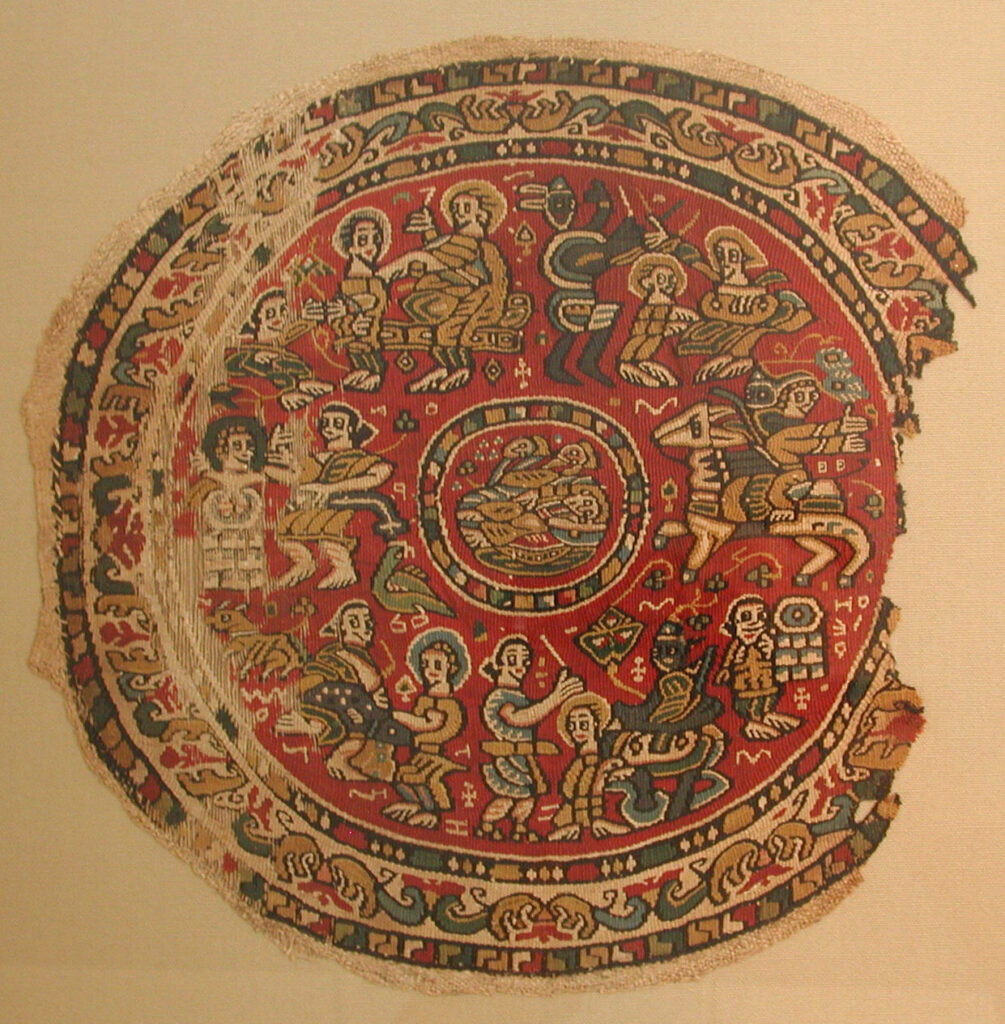
Source: Roundel Illustrating Episodes from the Biblical Story of Joseph, 7th century, metmuseum.org – Textiles like this one are thought to have been produced by Copts (Christian Egyptians) whose designs and motifs influenced the visual repertoire of the early Islamic period. This roundel utilizes explicitly Christian imagery—the life of Joseph, son of Jacob. The early life of Joseph appears to have been a popular source of imagery in Egypt, likely because the narrative largely takes place in that region. Roundels like this were often placed near the shoulders of a child’s garment, and the imagery here of Joseph’s childhood may have been considered as not only an appropriate choice for a child’s garment but also a protective one. (description from metmuseum.org)
A Story That Hits Close to Home
Have you ever been falsely accused? I have.
As a teenager, I came home one day with my mother to find a police car in our driveway. The officer approached with a stern expression and a heavy accusation: someone had used my name to make a prank call to the fire department, reporting a plane crash at the local airport. Emergency services had rushed to the scene, only to find nothing. It appeared I was the culprit.
Thankfully, I had an alibi—I had been at my guitar lesson during the call. Though I was cleared, I still remember the fear and helplessness I felt. What if I hadn’t been able to prove my innocence?
Wrongful Accusations in Today’s World
Joseph’s story is ancient, but the experience of false accusation is tragically modern. According to Prison Fellowship:
“Since 1989, DNA testing has exonerated over 225 innocent people in the United States—some of whom had spent years behind bars. At least 123 people have been released from death row since the 1970s. Wrongful convictions not only destroy lives—they allow the guilty to go free.”
Contributing factors include eyewitness misidentification, false confessions, and inadequate legal defense. Even today, thousands sit in prison cells for crimes they didn’t commit—just like Joseph.
Truth and Consequences
Potiphar believed his wife’s lie. I wonder how long it would have been before she tried the same thing again with another servant. But her slander had real consequences. And this kind of behavior—malicious lies, unfounded gossip, character assassination—remains dangerous.
Attorney David Goguen explains it this way:
“Libel and slander fall under defamation. Defamation is a false statement someone makes about you, which they present as fact, and which damages your reputation or causes emotional or financial harm.”
In today’s world, even idle gossip can do deep damage. Words matter. Lies—whether whispered behind backs or shouted from platforms—have the power to wound and destroy.
“But the Lord was with Joseph... and gave him favor in the sight of the keeper of the prison” (v. 21).
Joseph’s integrity remained intact, and over time, he was given authority even in prison. Eventually, he would rise to power beside Pharaoh himself.
Could he have done anything differently? Not likely. His only option in the face of temptation was to flee—and that was the right choice. Charles Spurgeon once wrote:
“In contending with certain sins there remains no mode of victory but by flight… A covenant must be made with our eyes not even to look upon the cause of temptation.”
The Lord Is With Us
Genesis 39 is not just a tale of injustice; it’s a declaration of God’s presence. Four times we are told: “The Lord was with Joseph.” This same truth applies to us. When we gather at the communion table, we do so in remembrance of Jesus—but also with the assurance of His ongoing presence.
He is with us. In trials. In temptations. In accusations. In prison cells. And around the table.
Let us give God the praise, for He never leaves nor forsakes us. Amen.
Falsely Accused (Genesis 39:1–23) | Originally preached by Rev. Dr. Dennis Alan RobertsFulbright Shubert Christian Church, June 23, 2024
Sometimes, the Bible tells a whole story in a single verse. In Genesis 35:22, we read: “While Israel was living in that land, Reuben went and lay with Bilhah, his father’s concubine; and Israel heard about it.”
Just one sentence. No added commentary. No dramatic pause. No confrontation scene. Just—Reuben, the firstborn, committed a shameful act with his father’s concubine, and somehow, Israel (Jacob) found out.
It’s sandwiched between the grief of Rachel’s death and a list of Jacob’s sons—as if the writer didn’t quite know what to do with it. But there it is, quietly disrupting the family legacy.
How Did Jacob Hear?
The verse says, “Israel heard about it.” We’re left to wonder: Who told him? Did someone witness it and come forward? Was it gossip? Small towns—ancient or modern—aren’t known for keeping secrets. The text doesn’t say, and maybe that’s the point.
Some sins are meant to be hidden. Reuben and Bilhah surely didn’t plan on sending out announcements. This was meant to stay secret—but secrets have a way of surfacing, especially when they’re rotten.
Why Include This?
You might ask, “Why is this even in the Bible?” Especially when the next verse moves on to list the twelve sons of Jacob, without so much as a comment. But maybe the lesson is exactly that—sin doesn’t always erupt in the moment. Sometimes, it lingers in silence, buried under the surface… until the day of reckoning comes.
The Reckoning
It’s not until Jacob is on his deathbed in Genesis 49 that the impact becomes clear. To Reuben, he says:
“Reuben, you are my firstborn… Unstable as water, you shall not excel, Because you went up to your father’s bed; Then you defiled it…”
No further punishment is recorded in Genesis 35. But that final word from a dying father is devastating. “You shall not excel.” It’s the undoing of a legacy Reuben might have had.
Was It Power? Was It Revenge?
Some scholars suggest Reuben’s act wasn’t just lust, but a power play. An attempt to assert dominance or to block Bilhah from rising in status after Rachel’s death. Was this about humiliating Bilhah, or asserting himself as next in line? Maybe both.
Whatever the motivation, the outcome was clear: disgrace, broken trust, and lost inheritance.
A Word for Father’s Day
It’s fitting—if painfully so—that this passage falls near Father’s Day. It reminds us how easily the sins of one generation bleed into the next, how fragile trust can be, and how silence isn’t always golden.
Jacob’s silence in Genesis 35 is eerie. Did he say nothing at the time? Did he wait for the right moment? Or did he simply carry it in his heart until the day he could finally speak truth?
As fathers, sons, and families, we’re reminded that the choices we make ripple through time. And yet, even in disgrace, Reuben’s name isn’t erased. He remains part of the Twelve Tribes. The consequences are real, but grace isn’t gone.
A Final Thought: No Verse Is Too Small
This story—just one sentence long—is a reminder that no part of Scripture is too small or too awkward to matter. The Bible tells the truth of human lives—messy, broken, sinful, sometimes shocking. And yet, God works through it all. Nothing is wasted. Not even a footnote like Genesis 35:22.
Let’s not read the Bible just to finish it. Let’s read it to find ourselves in it. Sometimes even in the most uncomfortable places.
Original Title: Reuben & Bilhah, June 16, 2024 (for Father’s Day) | Shubert Christian Church Shubert, Nebraska
In the summers of 1977 and 1978, I was offered a job to work for my cousin driving a combine during wheat harvest. Running two combines it took about three-and-a-half to four weeks to harvest the wheat. The first summer, my cousin said that he would pay me $25 a day to drive a combine. At 16 years old, I enjoyed driving the combine so I didn’t think much of it at the time. The next summer he gave me a rais; $30 a day. Again, I loved driving the combine so I didn’t complain.
However, it was an itchy, dirty job. The days were at least 12 hours with some going beyond 16 hours, harvesting from 7:30 AM to 1:00 AM the following morning. Then to drive home, shower, and sleep, and be back to the field by 6:30 AM, to refuel and service the combine. At $30 a day divided by 16 hours, I was working about $1.88 an hour. That was well below the minimum wage which was $2.30 an hour. Even working at my dad’s garage, I was making $2.00 an hour.
Did I feel that I was being ripped off? At the time, not really. I trusted my cousin was being fair with me. But, my dad said to me that he felt our cousins were taking advantage of me. Did we drive out to the field and start carrying our picket signs in protest to the unfair wage? No! We did not. But, my dad taught me a lesson about how it’s not wise to work for your relatives. A lesson that I have never forgotten.
Do I carry any ill will toward my family? No! I wouldn’t trade those memories for the world and would probably do it all again. However, the lesson still remains in my mind especially as we study Genesis 31:1-7 (NKJV):
1 Now Jacob heard the words of Laban’s sons, saying “Jacob has taken away all that was our father’s, and from what was our father’s he has acquired all this wealth.” 2 And Jacob saw the countenance of Laban, and indeed it was not favorable toward him as before. 3 Then the LORD said to Jacob, “Return to the land of your fathers and to your family, and I will be with you.”
4 So Jacob sent and called Rachel and Leah to the field, to his flock, 5 and said to them, “I see your father’s countenance, that it is not favorable toward me as before; but the God of my father has been with me. 6 And you know that with all my might I have served your father. 7 Yet your father has deceived me and changed my wages ten times, but God did not allow him to hurt me.
It seems that this was a case of love at first sight. When Jacob first met Rachel, he kissed her, and then he wept (Genesis 29:11). It didn’t matter that she was his first cousin. God didn’t address the issues of incest until much later. Jacob went to Rachel, he wanted her and was willing to work for her father in order to marry her. However, Rachel’s father, Laban, deceived Jacob and when the time came for Jacob to marry Rachel, Laban substituted his daughter Leah instead. After unknowingly having intercourse with her, Jacob discovered it was not Rachel and returned to Laban saying “why have you deceived me?”
Laban agreed to give Rachel to Jacob on the basis that he would work for him for another seven years (Genesis 29:25-27). However, as time passes and Jacob has almost finished his agreement, Laban begins to realize that Jacob is making him a lot of money so he contracts Jacob to work even longer.
The original agreement was (Genesis 30:31-33, NKJV):
31 So he [Laban] said, “what shall I give you?”
And Jacob said, “You shall not give me anything. If you will do this thing for me, I will again feed and keep your flocks: 32 Let me pass through all your flock today, removing from there all the speckled and spotted sheep, and all the brown ones among the lamps, and the spotted and speckled among the goats; and these shall be my wages. 33 So my righteousness will answer for me in time to come, when the subject of my wages comes before you: every one that is not speckled and spotted among the goats, and brown among the lamps, will be considered stolen, if it is with me.”
It is evident that God blessed Jacob. Because, over time Jacob’s flocks turned out to be strong, and well fed compared to Laban’s flocks. Therefore, Laban’s other sons became involved in sharing their complaints (Genesis 31). The sons felt that Jacob was robbing them of the inheritance they’d receive from their father. Realizing the hostility, Jacob decides to leave, especially after God told him:
3 Then the LORD said to Jacob, “Return to the land of your father and grandfather and to your relatives there, and I will be with you.” (Genesis 31:3, NLT)
At this time, Jacob felt he did not owe Laban anything. In fact, his own complain was:
6 You know how hard I have worked for your father, 7 but he has cheated me, changing my wages ten times. But God has not allowed him to do me any harm. (Genesis 31:6-7, NLT)
“Cheated me,” is a strong phrase; “deceived” isn’t much better. But the point is, Jacob is telling his wife that her father took advantage of him. Whereas, depending on who you talk to, Laban or his sons, the question might be: who took advantage of who?
Then, Rachel and Leah list their own complaints (Genesis 31: 14-16, NLT):
14 Rachel and Leah responded, “That’s fine with us! We won’t inherit any of our father’s wealth anyway. 15 He has reduced our rights to those of foreign women. And after he sold us, he wasted the money you paid him for us. 16 All the wealth God has given you from our father legally belongs to us and our children. So go ahead and do whatever God has told you.”
The women have their own reasons for their hostilities. With their belief that the Bible is based on a “patriarchal paradigm,” most women were considered lesser than men, with little of their own rights. Examining ancient culture, this is quite evident and true. It is certainly not an idea that is built upon righteousness, nor does it indicate any of God’s love being lost to women.
Continuing with the story, Jacob and his family head off without telling Laban. When Laban catches up to them, he also airs his own complaint (Genesis 31:25-29, NLT):
25 Laban caught up with Jacob as he was camped in the hill country of Gilead, and he set up his camp not far from Jacob’s. 26 “What do you mean by deceiving me like this?” Laban demanded. “How dare you drag my daughters away like prisoners of war? 27 Why did you slip away secretly? Why did you deceive me? And why did you say you wanted to leave? I would have given you a farewell feast, with singing and music, accompanied by tambourines and harps. 28 Why didn’t you let me kiss my daughters and grandchildren and tell them good-bye? You have acted very foolishly! 29 I could destroy you, but the God of your father appeared to me last night and warned me, ‘Leave Jacob alone!’
Based on what we know about Laban, it is pretty unlikely he would have thrown a farewell feast for his daughters and Jacob. Especially since we know that Laban was deceptive, it’s likely that he would have come up with another scheme. Additionally, Laban’s hostility toward them, reminding Jacob, “I could destroy you!” Yet, there’s one slight problem, or rather one big problem. A big God. An Almighty God. Who warns Laban, “leave Jacob alone!” The lesson here: It’s always good to have God on your side.
What do we learn from the challenges these families faced? From the story of Jacob and Laban, we gain insight into human relationships, ethics, perseverance, and God’s providence.
We learn patience and perseverance. Jacob worked for Laban for 20 years. Seven years for Rachel, another seven for Leah, and six more years for livestock. Despite the deceit and unfair treatment, Jacob persevered. This teaches us that achieving our goals often requires enduring difficult circumstances and remaining steadfast.
We learn the consequences of deception. Both Jacob and Laban engaged in deceptive practices. Jacob deceived his father, Isaac, to receive the blessing meant for Esau, and Laban deceived Jacob by giving him Leah instead of Rachel. These actions led to complicated family dynamics and strained relationships.
We learn God’s sovereignty and faithfulness. Despite the human flaws and deceptive actions, God’s plan continued to unfold. God promised to bless Jacob and was faithful to that promise, even when Jacob faced difficulties. This teaches us that God’s plans are sovereign, and His faithfulness endures despite human failures. It reassures us that God can bring about good from our circumstances and remains in control even when things seem chaotic.
We learn how to work diligently and ethically. Jacob worked diligently for Laban, even when he was treated unfairly. This underscores the value of working hard and maintaining a strong work ethic, regardless of how others treat us. It also reminds us to trust that God sees out efforts and will reward us in His timing.
We learn how to set boundaries. Eventually, Jaco realized that he needed to separate from Laban to fulfill God’s plan for his life. He took his family and possessions and left. This teaches us the importance of setting boundaries in relationships, especially when those relationships are harmful or exploitative. It is crucial to recognize when it is time to move on for our well-being and to follow God’s direction for our lives.
We learn how to resolve conflict. The story also highlights the importance of resolving conflicts. Jacob and Laban eventually made a covenant to part ways peacefully (Genesis 31:44-54). This shows the importance of addressing conflicts directly and finding a resolution that allows both parties to move forward without lingering animosity.
We learn to have faith in God. When leaving Laban, Jacob prayed and relied on God to protect him from Laban’s potential retaliation. This teaches us the importance of placing our faith and dependence on God, especially when facing uncertain or challenging situations.
We learn God’s blessings amidst challenges. Jacob prospered greatly. This illustrates that God’s blessings can come even in challenging circumstances. It encourages us to remain faithful and trust that God can and will bless us, sometimes in unexpected ways.
You might wonder “what if?” What if Jacob had not worked for his father-in-law? What if he had just gracefully asked for his daughter’s hand in marriage? Would there have been a better relationship between these two men, eventually? We know that within the family, the human family as well as the family of God that there are oftentimes conflict. Conflicts occur with people collaborating with people. Our communion with God can be a place for resolving conflicts. When we worship with others, we come together to remember our Lord Jesus Christ. Being reminded that no conflict should keep us from him, as he also instructed us to love one another.
Sermon Title: Why You Should Never Work For Your Relatives | Sermon: June 2, 2024, Shubert Christian Church, Shubert, NE
We continue with Jacob’s story after leaving off with the dispute over a birthright with his older brother, Esau (first born son of Issac). Having a birthright would mean obtaining the highest position in the family, and receiving a much larger portion of inheritance, including land. However, as we remember from the last chapter, Esau sold his birthright to Jacob for the low price of a bowl of stew.
To claim the birthright, Jacob and his mother managed to deceive Isaac into offering this blessing to Jacob. When Esau came forward to receive his birthright, he became intensely angry. Isaac also grieved when discovering that he had been deceived and blessed the wrong son.
Upon researching this text and its interpretation from the Jewish point of view, Rabbi Joseph Telushkin notes at least two problems. 1) Rabbi Telushkin states “the Torah never explains why a blessing given under false pretenses cannot be reassigned to its proper recipient,” and 2) Jacob lied to his father. We have to wonder, how did Jacob get away with deceiving his father? And, if ever there is a point where one is expected to respect their dying parent, especially an honorable Patriarch like Jacob, at what point has his sin ever been made justifiable?
From this point, we move back into the text, Genesis 28:10-11 (NRSV):
10 Jacob left Beersheba and went toward Haran. 11 He came to a certain place and stayed there for the night, because the sun had set. Taking one of the stones of the place, he put it under his head and lay down in that place.
All of this happened while Jacob was fleeing from his brother Esau. His journey to Haron is believed to have been over 400 miles. As he gets started, about 50 miles from home, he has this dream, Genesis 28:12-15 (NRSV):
12 And he dreamed that there was a ladder set up on the earth, the top of it reaching to heaven; and the angels of God were ascending and descending on it. 13 And the LORD stood beside him and said, “I am the LORD, the God of Abraham your father and the God of Isaac; the land on which you lie I will give to you and to your offspring; 14 and your offspring shall be like the dust of the earth, and you shall spread abroad to the west and to the east and to the north and to the south; and all the families of the earth shall be blessed in you and in your offspring. 15 Know that I am with you and will keep you wherever you go, and will bring you back to this land; for I will not leave you until I have done what I have promised you.”
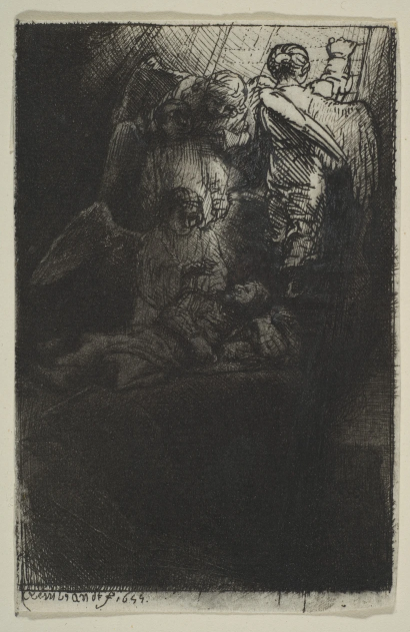
Image: “Jacobs Ladder” (1655) Rembrandt van Rijn
Jacob has an encounter with God. First, one might wonder from this text, why did God choose him? If this was a man who was clearly guilty of deceiving his father, why would God choose such a man to reveal himself to? However, if we look toward the New Testament, one is able to see that God doesn’t always reveal himself to those whom we should judge as the best of God’s creation. If we ask why God would choose Jacob, we should also ask why God chose Paul to be an Apostle.
When looking at this encounter between God and Jacob, we can see that Jacob is not being judged for his former sins. Instead, God offers future blessings to a man who has stolen blessings. God gives Jacob undeserved recognition in saying, “all the families of the earth shall be blessed in you.” But the best promise, God says, “know that I am with you…for I will not leave you.”
Many of us have been like Jacob. Our life’s journey has taken us to some places where our behaviors have bordered on the unethical. Some might call this guilt-ridden, leaving us to wonder, where is God? And, if God is out there, why would he have anything to do with me?
To some point, it is easy to understand why some people are agnostic when it comes to faith. Some may even admit that they believe in God but just don’t think God would have anything to do with them; sort of like God is on vacation, taking a break after creating the world. It is difficult for people to acknowledge that God is working in their personal life at this very moment. For some, it’s easy to be content with our life and live with very little awareness of the existence of God. Yet, it isn’t until our lives encounter a tragedy, say the death of a loved one or a sudden terminal illness, that we drop down to our knees in prayer frantically searching, asking “God, where are you?!”
This can be especially frustrating when we hear stories of Jacob and his direct encounter with God. We look at Jacob’s past and we wonder why he was allowed to become a famous biblical leader. We will never understand the kind of justice or injustice done by this story but what we do know is that God revealed Himself to Jacob, which assures us that God is capable of being present with the sinful.
Many people today assume God will have nothing to do with them because they are not perfect enough to have fellowship with Him. Yet, what we learn from this story of Jacob is that the idea couldn’t be further from the truth. From this one story and the many that follow, we see example after example of how God has chosen to have company with many men and women who’ve lived sinful lifestyles.
When we think about God’s willingness to be in company, and have communion with sinners, we ought to know that whatever spiritual state many of us may find ourselves in, God is always with us. There are reminders throughout the Old Testament where God says, “I am the LORD, the God of Abraham,” or “the God of Israel,” or “the God of your fathers.” This is even continued by Jesus in the New Testament, that even Jesus’ name, Emmanuel, means “God with us.”
In continuing with Jacob’s story, Genesis 28:16-19 (NRSV):
16 Then Jacob woke from his sleep and said, “Surely the LORD is in this place--and I did not know it!” 17 And he was afraid, and said, “How awesome is this place! This is none other than the house of God, and this is the gate of heaven.”
18 So Jacob rose early in the morning, and he took the stone that he had put under his head and set it up for a pillar and poured oil on the top of it. 19 He called that place Bethel.
After Jacob awoke from his dream, he set up a pillar, and named the place Bethel. The name Bethel may have two meanings, 1) the house of God, and 2) the gate of heaven. This helps support the idea that whenever God is, it is holy. Therefore, if God is present with us, then we can continue to acknowledge “surely the LORD is in this place. How awesome is this place! This is none other than the house of God, and this is the gate of heaven.”
To conclude, in times of trouble and heartache, many of us ask “Where is God?” Jesus said in the closing words of Matthew’s gospel, “I am with you always, to the very end of the age” (Matthew 28.20b, NIV). Where is God? God is with you. He is with you today. He will be with you tomorrow. God will never leave you.
Sermon Title: Where is God? Sermon Date: July 18, 1999, First Christian Church, Paradise, California
As we begin Genesis 25, we meet Esau and his brother Jacob, sons of Isaac (son of Abraham) and Rebekah. Esau and Jacob were twins with Esau the first born and Jacob following right after. As they grew, they had very different interests. Esau was a skilled hunter and farmer and Jacob “was a mild man, dwelling in tents” (Genesis 25:27). While it’s typically not common for parents to have favorites among their children, this was not the case for Esau and Jacob. Instead, Esau was the favorite of Isaac, which meant that Isaac had given Esau his birthright whereas Jacob was the favorite of Rebekah but received nothing. This birthright is expanded more in Genesis 25:29-34 (NKJV):
29 Now Jacob cooked a stew; and Esau came in from the field, and he was weary. 30 And Esau said to Jacob, “Please feed me with that same red stew, for I am weary.” Therefore his name was called Edom. 31 But Jacob said, “Sell me your birthright as of this day.” 32 And Esau said, “Look, I am about to die; so what is this birthright to me?” 33 Then Jacob said, “Swear to me as of this day.”
So he swore to him, and sold his birthright to Jacob. 34 And Jacob gave Esau bread and stew of lentils; then he ate and drank, arose, and went his way. Thus Esau despised his birthright.
Esau despised his birthright and considered the responsibilities and honors unimportant and uninteresting. Unsurprisingly, he would sell his birthright to his brother over bread and stew. A formal oath solidified the agreement, “Jacob said, ‘swear to me as of this day.’ So he swore to him, and sold his birthright to Jacob” (Genesis 25:33). Esau took what God considered sacred and made it common. He was more concerned about his temporary and material needs and gave them priority over his rights as the firstborn son and responsibilities as heir; a blessing of the Abrahamic covenant. This isn’t the only place in the Bible that references Esau’s lack of commitment. Hebrews 12:16 says:
16 lest there be any fornicator or profane person like Esau, who for one morsel of food sold his birthright.
Esau abandoned his birthright but that’s not all. Esau also chose wives–Judith the daughter of Beeri the Hittite, and Basemath the daughter of Elon the Hittite–who were outside the tribe his parents approved of. Whether they were “wild women,” we do not know but knowing from Hebrews that Esau was a “profane person and a fornicator having women he was not married to,” little is left to the imagination.
As we fast forward, Isaac was getting old, he was nearly 180 years old and was blind. He called out to his favorite son, Esau, and asked him to go hunting to bring back “savory” food. His wife Rebekah was standing nearby and devised a plan for Jacob to slaughter some goats, she would cook the food, and Jacob would take it to his father, posing as Esau. The only problem, Esau was a hairy man and Jacob was not. So, Rebekah went out and stole clothes from Esau and placed goat skins on Jacob where his father would likely want to feel, in order to fool him into believing that Jacob was Esau.
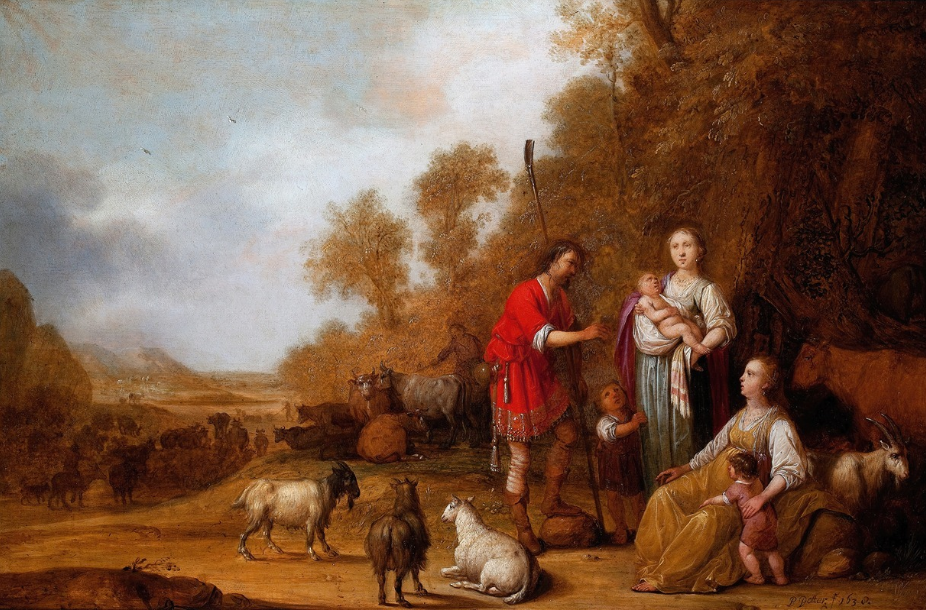
Image Source: Hendrick ter Brugghen – Web Gallery of Art, Public Domain
Jacob, disguised as Esau, went and gave food to his father. Isaac was amazed that his favorite son found the game so quickly to which Jacob replied, “God provided.” Isaac was suspicious and asked Jacob to come near him. He felt Jacob’s phony costume and said, “Your voice sounds like Jacob but you feel like Esau. Are you really my son Esau?” Jacob lied and replied, “I am.”
Jacob passed the inspection. Isaac was convinced Jacob was Esau. He felt like Esau and his clothes smelled like Esau. So, Isaac blessed Jacob instead of Esau. Isaac said,
28 Therefore may God give you Of the dew of heaven, Of the fatness of the earth, And plenty of grain and wine. 29 Let peoples serve you, And nations bow down to you. Be master over your brethren, And let your mother’s sons bow down to you. Cursed be everyone who curses you, And blessed be those who bless you!” (Genesis 25:28-29)
This was likely a one-time deal. There was no going back now. Jacob was blessed with the highest blessing. Sometime later, Esau comes home and prepares his game, cooks it, and brings it to his father. Isaac, having just eaten, says he is full and realizes he was deceived. Esau is heartbroken and weeps, which eventually turns to rage. He says, “Blee me, O my father!” Genesis 25:39-40 (NKJV) says:
39 Then Isaac his father answered and said to him: “Behold, your dwelling shall be of the fatness of the earth, And of the dew of heaven from above. 40 By your sword you shall live, And you shall serve your brother And it shall come to pass, when you become restless, That you shall break his yoke from your neck.”
As a result, Esau vowed he would kill his brother, Jacob. As an expert hunter, he could do just that. We’ve seen this story play out before with Cain and Abel. As God chose Abel over Cain, God chose Jacob over Esau.
There are multiple cheaters in this story. Rebekah conspired to deceive and cheat her husband, Isaac. Jacob cheated his brother out of a blessing. Esau cheated by marrying foreign women and living a reckless life. Unfortunately, we know people like this in our lives today. We’ve heard these stories. We see examples of these stories in popular media like The Bachelor, Survivor, and many others. This level of suffering entertains us but deep down, there is more to be said about deceit than the humor of a reality TV show. For Jacob, this meant that his mother sent him away, 450 miles away to be exact, to save him from being killed by his brother. Who knew you could find such entertainment in the Bible?
Title: “Your Cheating Heart” | Service Date: October 16, 2015, First Christian Church, Hiawatha, Kansas