Jesus Heals a Boy Possessed by an Impure Spirit
14 When they came to the other disciples, they saw a large crowd around them and the teachers of the law arguing with them. 15 As soon as all the people saw Jesus, they were overwhelmed with wonder and ran to greet him.
16 “What are you arguing with them about?” he asked.
17 A man in the crowd answered, “Teacher, I brought you my son, who is possessed by a spirit that has robbed him of speech. 18 Whenever it seizes him, it throws him to the ground. He foams at the mouth, gnashes his teeth and becomes rigid. I asked your disciples to drive out the spirit, but they could not.”
19 “You unbelieving generation,” Jesus replied, “how long shall I stay with you? How long shall I put up with you? Bring the boy to me.”
20 So they brought him. When the spirit saw Jesus, it immediately threw the boy into a convulsion. He fell to the ground and rolled around, foaming at the mouth.
21 Jesus asked the boy’s father, “How long has he been like this?”
“From childhood,” he answered. 22 “It has often thrown him into fire or water to kill him. But if you can do anything, take pity on us and help us.”
23 “‘If you can’?” said Jesus. “Everything is possible for one who believes.”
24 Immediately the boy’s father exclaimed, “I do believe; help me overcome my unbelief!”
25 When Jesus saw that a crowd was running to the scene, he rebuked the impure spirit. “You deaf and mute spirit,” he said, “I command you, come out of him and never enter him again.”
26 The spirit shrieked, convulsed him violently and came out. The boy looked so much like a corpse that many said, “He’s dead.” 27 But Jesus took him by the hand and lifted him to his feet, and he stood up.
28 After Jesus had gone indoors, his disciples asked him privately, “Why couldn’t we drive it out?”
29 He replied, “This kind can come out only by prayer.[a]”
In this story from the Gospel of Mark 9, everything looks hopeless. The disciples cannot help. The father cannot control or protect his son. The problem has gone on for years. The boy is tormented by an unclean spirit that throws him to the ground, causes convulsions, and leaves him suffering. It is a picture of helplessness and a lack of faith.
In verse 19, Jesus says, “O faithless generation.” He sees something deeper than the illness. He sees a lack of faith. The father’s own distressed words reveal it, “if You can do anything, have compassion on us and help us.”
Jesus responds, “If you can believe, all things are possible to him who believes.”
Your Faith Can Make the Impossible Possible
Every day we face many hopeless situations, obstacles, and challenges. We are faced with sickness, disease, and injuries. Our lives are filled with worries and stress where many people are working 2-3 jobs just to make ends meet. Why does life have to be so tough?
The season of Lent invites us to sit honestly in this tension. Lent is not a season of pretending we are strong. It is a season of confession.
We live in a world shaped by the words of Genesis 3:19: “In the sweat of your face you shall eat bread… for dust you are, and to dust you shall return.” Life is hard. Bodies break down. Work exhausts us. Money feels unstable. Relationships strain. Stress presses in from every direction.
We worry about sickness. We worry about bills. We worry about our children. We worry about the future. We try to secure ourselves with investments, careers, plans, and routines. Yet Jesus reminds us in Gospel of Matthew 6:19–20 not to store up treasures on earth, where everything can be stolen or destroyed. And in Gospel of John 10:10 He says He came to give life abundantly.
Lent pulls back the curtain and asks: What are we really trusting?
“Lord, I Believe; Help My Unbelief”
The father in Mark’s Gospel is painfully honest. He does not pretend to have great faith. He cries out, “Lord, I believe; help my unbelief!”
Faith is not pretending everything is fine. Faith is bringing our fear, our doubt, and our weakness to Jesus and asking Him to strengthen what is fragile.
So how do we cope when life feels impossible?
We hold fast to God’s promises.
Hebrews 10:23 tells us, “Let us hold fast the confession of our hope without wavering, for He who promised is faithful.”
Peter 3:9 reminds us that the Lord is faithful and patient, not wanting any to perish.
God keeps His promises. The question is whether we know His word well enough to cling to it.
Book of Proverbs 4:20–22 urges us to pay attention to God’s words, to keep them in our hearts, because they are life and health to those who find them. During Lent, we slow down and return to Scripture. We fast from distractions so we can feast on truth.
A Call to Believe Again
The deeper problem in Mark 9 may not have been only the father’s weak faith. Jesus speaks of a “faithless generation.” Sometimes the greater danger is not open suffering but quiet unbelief. Churches can be full of people who go through the motions yet they hesitate to truly trust God.
Lent challenges that comfort. It calls us to repentance. It calls us to renewed belief.
In every hopeless situation, the invitation is the same; come to Jesus and believe. Not perfectly. Not proudly. But honestly.
“Lord, I believe; help my unbelief.”
Believing does not deny the sweat, the struggle, or the dust of Genesis 3. It trusts that beyond the cross stands resurrection. Lent moves us toward that hope.
Jesus said, “All things are possible to him who believes.”
In this season, we ask Him to do the impossible in our hearts. To turn our weak faith into steadfast trust, despair into hope, and hearts of dust into hearts alive with resurrection promise.
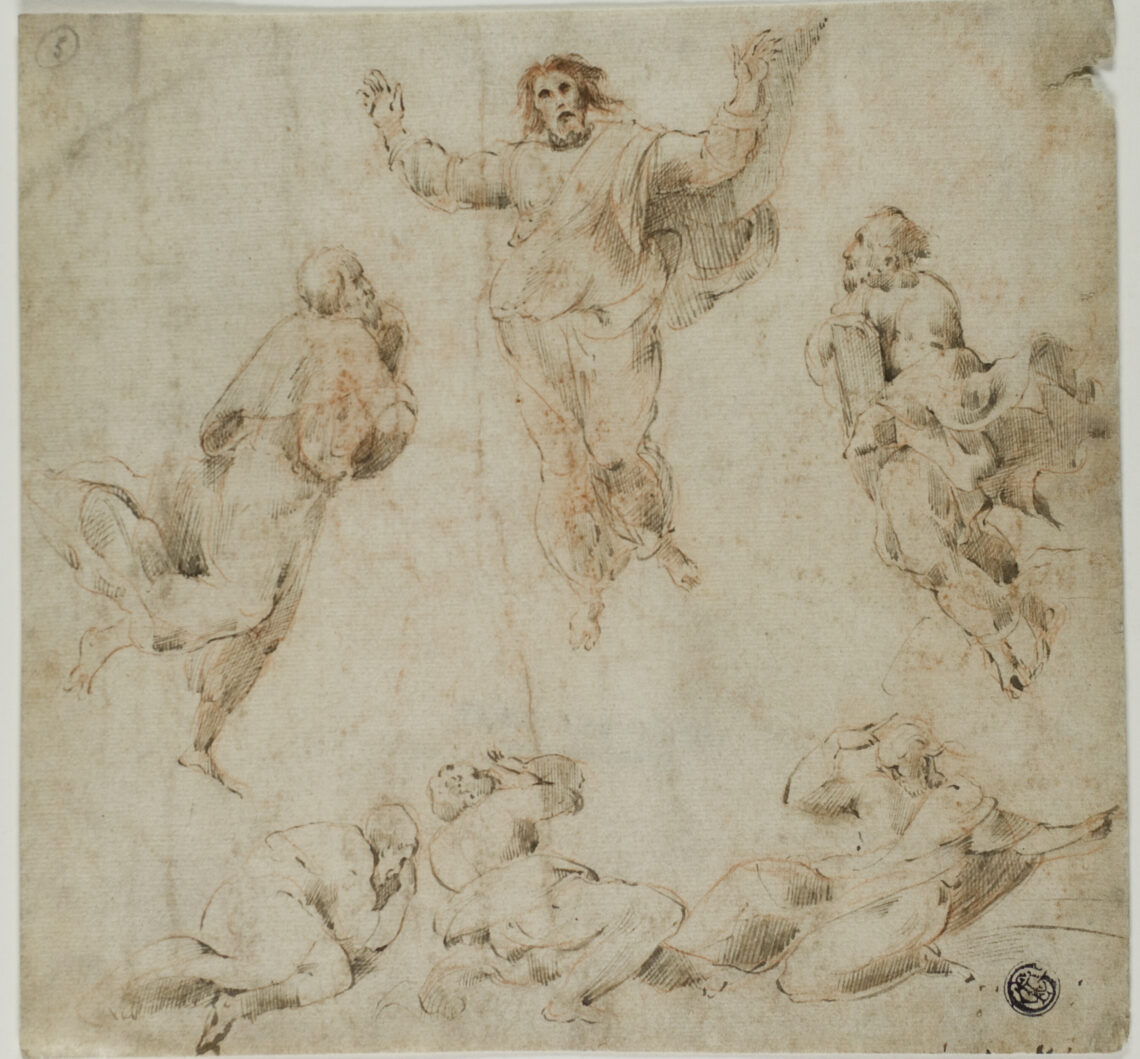
Image caption: Transfiguration, 1530, Raphael, artic.edu/artworks/95792/transfiguration
Adapted from Rev. Dr. Dennis Alan Fulbright’s Sermon, 2012.