Latest Articles

  • The Origin of Love (Genesis 22)

    Many people are familiar with the story of Abraham and Isaac. Genesis 22:1-5: 

    1 Now it came to pass after these things that God tested Abraham, and said to him, “Abraham!” And he said, “Here I am.” 2 Then He said, “Take now your son, your only son Isaac, whom you love, and go to the land of Moriah, and offer him there as a burnt offering on one of the mountains of which I shall tell you.” 3 So Abraham rose early in the morning and saddled his donkey, and took two of his young men with him, and Isaac his son; and he split the wood for the burnt offering, and arose and went to the place of which God had told him. 4 Then on the third day Abraham lifted his eyes and saw the place afar off. 5 And Abraham said to his young men, “Stay here with the donkey; the lad and I will go yonder and worship, and we will come back to you.” 

    It sometimes horrifies us to think how God could require human sacrifice. Yet, the point of this story is to show God testing Abraham’s faith and loyalty; nothing more. Genesis 6-12:

    6 So Abraham took the wood of the burnt offering and laid it on Isaac his son; and he took the fire in his hand, and a knife, and the two of them went together. 7 But Isaac spoke to Abraham his father and said, “My father!” And he said, “Here I am, my son.” Then he said, “Look, the fire and the wood, but where is the lamb for a burnt offering?” 

    8 And Abraham said, “My son, God will provide for Himself the lamb for a burnt offering.” So the two of them went together. 9 Then they came to the place of which God had told him. And Abraham built an alter there and placed the wood in order; and he bound Isaac his son and laid him on the alter; upon the wood. 10 And Abraham stretched out his hand and took the knife to slay his son. 11 But the Angel of the LORD called to him from heaven and said, “Abraham, Abraham!” So he said, “Here I am.” 

    12 And He said, “Do not lay your hand on the lad, or do anything to him; for now I know that you fear God, since you have not withheld your son, your only son, from Me.” 
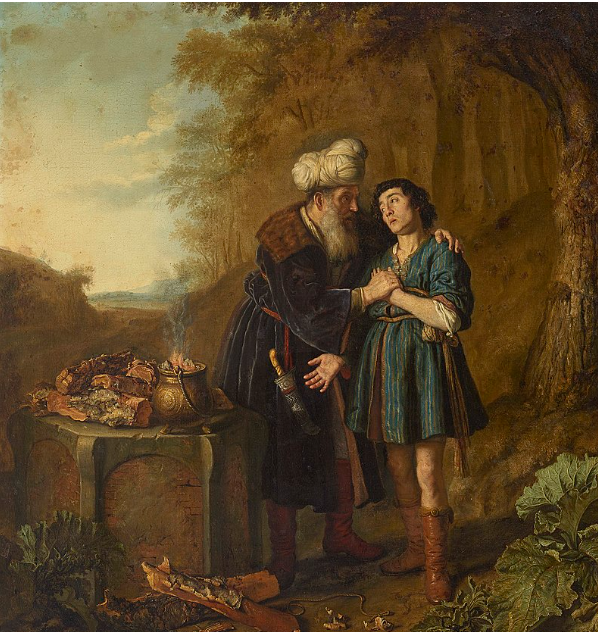
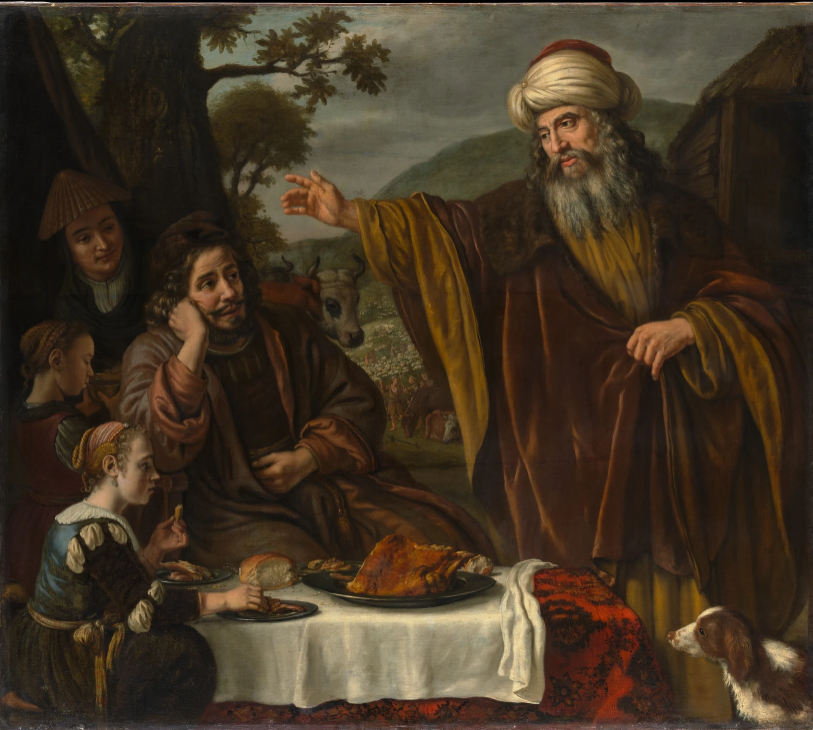
    "Abraham and Isaac before the Sacrifice" 1644 painting by Jan Victors
    Image Source: “Abraham and Isaac before the Sacrifice” 1644 painting by Jan Victors

    We may never know if God would have allowed Abraham to follow through and kill his son, Isaac. Fortunately, we have the privilege of knowing how this story ends. 

    One of the areas of focus for this story is looking at what the Bible has to say about love and where it originated. In today’s society, we throw around the word “love” rather loosely. It is not so much a Christianized idea and because of this, love can often be associated with “tolerance,” “affirmation,” and “acceptance.” Even within the walls of progressive Christianity, there is a connection with a worldview of love. This makes us wonder; Where did love originate?

    William McDonald, author and former president of Emmaus Bible College, stated “the first occurrence of a word in the Bible often sets the pattern for its usage throughout Scripture.” The Hebrew word for “love,” אָהַב (˒âhab, aw-hab,) was first used in Genesis 22:2: 

    2 Then He said, “Take now your son, your only son Issac, whom you love…

    We know from reading Genesis 21 that Isaac was almost a miracle child for Abraham and Sarah, because of their older age. There was likely a lot of hope for them that through their offspring, their lineage would continue. Therefore, we are left wondering why God would require Abraham to give up his only son when He knew how important this child was to them. And, on top of that, let’s not forget the request to kill Isaac.

    Within the context of defining love, we look at Abraham’s love for his child. Warren Wiersbe, author of With the Word Bible Commentary, explains that this was a test of love: 

    Abraham loved his son, but he loved God more. Isaac was God’s gift to Abraham, but the gift had to become a sacrifice to God. If the gift becomes more important than the Giver, it becomes an idol.   

    We have no evidence that Abraham told God outright, “I love you,” but we know from this text that Abraham passed the test which proved to God, through action and obedience, that God meant more to him than anything. He may have ever realized that if it were not for God, he wouldn’t have Isaac. Furthermore, his actions exemplify the love that a parent has for their children. Later in Genesis 25, we see Isaac with his children, Esau and Jacob. 

    27 So the boys grew. And Esau was a skillful hunter, a man of the field, but Jacob was a mild man, dwelling in tents. 28 And Isaac loved Esau because he ate of his game, but Rebekah loved Jacob. 

    As parents, we rarely show favoritism to our children. However, Isaac showed favoritism toward Esau, the older twin brother of Jacob. We see this continue to Genesis 27: 

    1 Now it came to pass when Isaac was old and his eyes were so dim that he could not see, that he called Esau his older son and said to him, “My Son.” And he answered him, “Here I am.” 2 Then he said, “Behold now, I am old. I do not know the day of my death. 3 Now therefore, please take your weapons, your quiver, and your bow, and go out to the field and hunt game for me. 4 And make me savory food, such as I love, and bring it to me that I may eat, that my soul may bless you before I die.” 

    The same word “love” is used in this scripture but its meaning is different. We all have a favorite food that we love. It might be apple pie, chocolate cake, or cookies. If you don’t have a sweet tooth, maybe you love mashed potatoes, turkey, and green bean casserole. Whatever it is, most of us have a love for food. Even in the Bible, we find that people had a love for certain foods. 
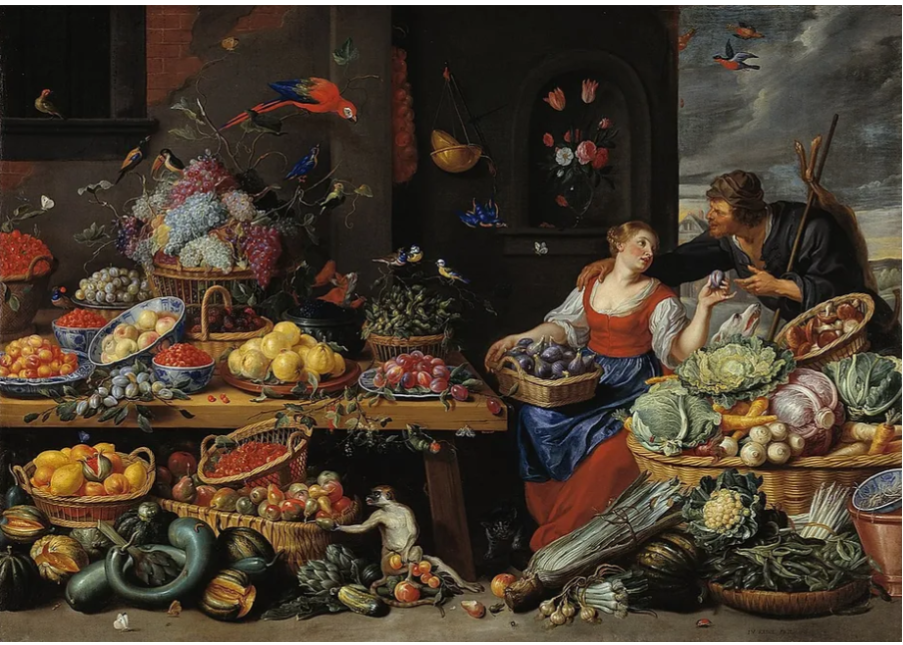
    Jan Van Kessel. "Fruit and Vegetable Market with a Young Fruit Seller." Between 1650 and 1660.
    Image Source: Jan Van Kessel. “Fruit and Vegetable Market with a Young Fruit Seller.” Between 1650 and 1660.

    Another kind of love is romantic or sexual love. We see an example of this in Genesis 29:30 (NKJV):   

    30 Then Jacob also went in to Rachel, and he also loved Rachel more than Leah. And he served with Laban still another seven years.

    This time, love is interpreted to mean love between two people. In this example, we are given a biblical model of romance and sexual love between a man and a woman. This kind of love is one of God’s greatest gifts to humanity. In today’s society, many try to minimize the significance of this blessing by forcing the acceptance of other types of sexual and romantic love upon us. Unfortunately, this has been one of the reasons romantic and sexual love are often disregarded with couples refusing to commit to the marriage vows or even breaking marriage vows in time. 

    Looking at the origin of love is an exciting journey. God allowed humankind to develop feelings of certain things. All these various kinds of love, whether it be romantic love or love for certain foods, it was all placed within the boundaries that always put God first. Even for Abraham, it was to put God first. Some might even read Genesis and say that love toward God was implied, but that’s not always explained. Jumping into the book of Exodus 20:4-6, we see an example of this (NKJV): 

    4 “You shall not make for yourself a carved image—any likeness of anything that is in heaven above, or that is in the earth beneath, or that is in the water under the earth; 5 you shall not bow down to them nor serve them. For I, the Lord your God, am a jealous God, visiting the iniquity of the fathers upon the children to the third and fourth generations of those who hate Me, 6 but showing mercy to thousands, to those who love Me and keep My commandments.

    We see another example of loving God in Deuteronomy 6:4-5 (NKJV): 

    4 “Hear, O Israel: The Lord our God, the Lord is one! 5 You shall love the Lord your God with all your heart, with all your soul, and with all your strength.

    While there are many other examples of loving God throughout the Bible, another example, this time stated by our Lord Jesus Christ, is in Mark 12:28-30 and Matthew 22:34-40. Matthew 12:28-30 reads: 

    28 Then one of the scribes came, and having heard them reasoning together, perceiving that He had answered them well, asked Him, “Which is the first commandment of all?” 29  Jesus answered him, “The first of all the commandments is: ‘Hear, O Israel, the Lord our God, the Lord is one. 30 And you shall love the Lord your God with all your heart, with all your soul, with all your mind, and with all your strength.’ This is the first commandment.

    The origin of love is encompassed within the boundaries of the Kingdom of God. Its purpose is to love God and to put God first. By doing this, we can be sure that everything else will fall into place. When the world tries to redefine the meaning of love and sexuality the results will always end in heartache. Even for those who indulge in the love of food, it still brings all kinds of problems, including health issues, obesity, addiction, etc. However, the biggest difference with food is that we need food to survive. I don’t think God intended for us to not have a favorite food, but food cannot become one’s God. 

    People can love their families and should love their families. But people who do not love God do not always know how to love their families. Or to turn it around, people who do not love their families cannot love God. This is not to say that people do not get hurt by their families, and sometimes we have to forgive people but remain distant. And in many cases, we have to love people at a distance.

    The Bible has something to say about love in just about every book. Sometimes, people struggle with studying their Bible because they think they need to read the book starting with Genesis, all the way through. It can be really helpful and rewarding to do a word study, and in this case, take a word (like love) and identify where and how that word is used in the Bible. One can gain a great deal of spiritual understanding just by reviewing that word and seeing how it repeats itself, what different versions of the word are used, and how it unfolds through the scriptures. Love is certainly a gift from God and true love is from God. We can seek out love throughout the Bible and every time we find God, we will also find love.  

    Title: Formerly “The Origin of Love” | Sermon: October 8, 2023, Shubert Christian Church, Shubert, Nebraska
  • When Mothers Know Best: A Mother’s Day Reflection on John 2:1–12

    Weddings are joyful occasions—filled with celebration, laughter, and love. They bring families and communities together to mark a new beginning. For many mothers, a wedding is also a moment of pride, reflection, and deep emotional investment. On this Mother’s Day, we turn to the wedding at Cana, where Jesus performed His first miracle. It’s a story not only about divine power but also about the quiet influence of a mother who knew her son better than anyone else. William Hull (1970) said: 

    “A wedding feast was one of the most important and joyous occasions in the life of a Jewish family.  Since marriages were usually arranged well in advance, the tiny village of Cana in Galilee may have eagerly anticipated this celebration for a long while” (The Broadman Bible Commentary, Volume 9, p. 23). 

    As we turn to John 2:1-12, we find Jesus, His disciples, and His mother attending a wedding in Cana of Galilee. 

    2 On the third day a wedding took place in Cana of Galilee. Jesus’ mother was there, and 2 Jesus and His disciples were invited to the wedding as well. 3 When the wine ran out, Jesus’ mother told Him, “They don’t have any wine.” John 2:1–12 (HCSB)

    This wasn’t just a casual event—it was a major social celebration in a Jewish village. Traditionally, wedding feasts could last as long as seven days, with much food, dancing, and of course, wine. The text begins with a problem: the wine runs out. In our modern context, this might seem like a minor inconvenience. But during this time, it was common for wedding festivities to last seven days so running out of wine could be a sign of poor planning; a serious embarrassment for the host family that could tarnish their reputation.  It is here that Mary, the mother of Jesus, steps in.

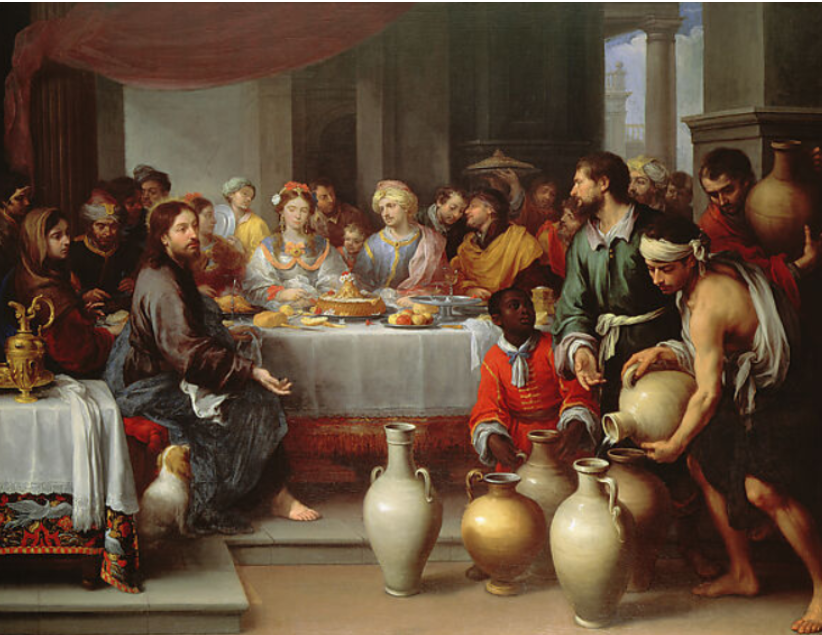
    "The Marriage Feast at Cana" by Bartolomé Estebán Murillo, 1672
    Source: “The Marriage Feast at Cana” by Bartolomé Estebán Murillo, 1672

    Since there were seven days set aside to pull off this wedding, we can certainly wonder about the complexities of details. In my time as a pastor and having been involved in wedding services, I have noted how strict certain people are about wedding details. It seemed that back in the day, ministers could just pull out a service book from their library and proceed with a brief marriage ceremony. However, today, ministers are expected to offer much more: 

    “Do you want a formal wedding?
    a semi-formal wedding, 
    a contemporary service, 
    a traditional service, 
    a simple wedding, 
    or something else?”  

    “Will there be organ music, 
    live music, 
    recorded music, 
    special music done by a group or vocalist,
    will you see singing as you walk down the aisle,
     or something else?”  

    “Do you want this wedding inside the church, 
    outside the church, 
    inside a community hall, 
    inside a home, 
    outdoors
    or should we have it in the parking lot?”

    Wedding events have expanded so much that some churches even have a wedding coordinator available; if not, the family often hires their own. What I’ve discovered is there’s often a family member – usually someone’s aunt – who feels they are qualified for the job and take it upon themselves to be the wedding coordinator. They tell everyone where to stand, dictate the proper etiquette, insist on selecting the flower girls for the service, and manage the gift table. Maybe it’s not an aunt, maybe it’s a cousin, a sister, a mother? You get the picture. 

    With this in mind, we wonder about Mary. What was her role in this story? Since there isn’t a mention of Joseph, Jesus’ father, we could assume this event is after he passed away. This could also mean that Mary is related to the groom’s family, making the connection that Mary’s sister, Salome the mother of John (not John the Baptist) was a cousin of Jesus. However, this is just a theory and whether or not Mary and Jesus were attending the wedding of relatives or just happened to be at the event does not make a difference to the outcome of the story. Instead, this story and its dialogue are about the relationship between a mother and her son. 

    We know this wedding is an important event for Mary to attend. We imagine, as at any wedding, that many of the mothers are gathered around amazed at the festivities and eager to celebrate. Then, a sour note lands on the party when they realize, there is no more wine. And, the intriguing moment when Mary runs to Jesus with the problem at hand. Why would Mary run to Jesus? 

    To which Jesus replies, John 2: 4-8: 

    4 “What has this concern of yours to do with Me, woman?” Jesus asked. “My hour has not yet come.” 
    5 “Do whatever He tells you,” His mother told the servants. 
    6 Now six stone water jars had been set there for Jewish purification. Each contained 20 or 30 gallons. 
    7 “Fill the jars with water,” Jesus told them. So they filled them to the brim. 8 Then He said to them, “Now draw some out and take it to the chief servant.” And they did. 

    At first, we might read Jesus’ response to be harsh. “Woman, what has this concern of yours to do with me?” But in the cultural and linguistic context of the time, this wasn’t disrespectful. “Woman” was a formal, polite address. And His question was a way of signaling that He was stepping into His divine mission – not simply acting as her son, but as the Son of God. 

    Mary does not argue. Instead, she turns to the servants and instructs them to do whatever he tells them to do. In this moment, she is demonstrating faith. She trusts Jesus completely and because of her great faith, Jesus elects to meet the need at hand. This story teaches us that whenever faith is acted upon, miracles do appear. Jesus responds—not out of obligation, but from compassion and divine purpose. He tells the servants to fill six large stone jars with water. These jars, used for Jewish purification rituals, hold 20 to 30 gallons each. Once filled, Jesus instructs them to draw some out and take it to the chief servant. In John 2: 9-12, 

    9 When the chief servant tasted the water (after it had become wine), he did not know where it came from—though the servants who had drawn the water knew. He called the groom 10 and told him, “Everyone sets out the fine wine first, then, after people have drunk freely, the inferior. But you have kept the fine wine until now.” 
    11 Jesus performed this first sign in Cana of Galilee. He displayed His glory, and His disciples believed in Him. 
    12 After this, He went down to Capernaum, together with His mother, His brothers, and His disciples, and they stayed there only a few days.

    The water has turned into wine. Not just any wine—the best wine. The chief servant, unaware of what has happened, is amazed. He says to the groom, “Everyone sets out the fine wine first… but you have kept the fine wine until now” (v. 10).

    Many people in our world today do not believe in miracles. This text is an example of Jesus’ first recorded miracle – a sign that revealed His glory and caused His disciples to believe in Him. It began not with a grand declaration or a supernatural sign, but with a quiet moment between a mother and her son. 

    Mary didn’t perform the miracle—but her faith created the space for it to happen. Her trust in Jesus set the stage for His glory to be revealed. She didn’t demand; she simply believed. On a simple occasion of attending a wedding, Mary saw an opportunity for Jesus to bring joy to people’s lives. The joy was not found merely in the drink that was provided, but instead was the joy of the discovery as people realized the Messiah had come. 

    Sometimes, mothers have a way of seeing what others don’t. They notice what’s missing. They know when to speak, and when to trust. And in Mary, we see a mother who understood the weight of who her son was—even when His full mission was not yet clear.

    Later in John’s Gospel, we see Mary again—at the foot of the cross. Even in His final moments, Jesus makes sure His mother will be cared for, saying to the beloved disciple, “Here is your mother” (John 19:27). His concern for her never faded.

    On this Mother’s Day, we honor the mothers who have brought us into the world, nurtured us in love, and pointed us—sometimes gently, sometimes firmly—toward Jesus. We remember the quiet strength of Mary, whose faith opened the door to Christ’s first miracle. We thank God for mothers who see what others miss, who believe even when others doubt, and who teach us to listen to the voice of Jesus.

    And at the very least, we say: God bless our mothers—for through them, many of us have come to know Jesus Christ.

    ~Rev. Dennis A. Fulbright

    Preached: “The Mothers of Cana” | 2014, Hiawatha First Christian Church (DOC) & 2003, Paradise First Christian Church (DOC) , Revised 5/6/2025 by BRO, BA, Div. 

  • Does Everlasting Still Mean Everlasting?

    In Hebrew, the word for everlasting is עֹלָם˓ôlâm, o-lawm’ which  means eternity, forever future, or a time unending.   So when God makes a promise to Abraham in Genesis 17, is this promise good for eternity? Or was God exaggerating? Genesis 17:1-2 reads

    1 When Abram was ninety-nine years old, the Lord appeared to Abram and said to him, “I am Almighty God; walk before Me and be blameless.  2 And I will make My covenant between Me and you, and will multiply you exceedingly.” 

    Does everlasting still mean everlasting? In today’s society, we could say the Jews and the nation of Israel are God’s people. Many people have tried to remove the Jews from having any claim to a covenant with God. The nation of Israel and the bloodline of the Jewish people still make the Jews descendants of Abraham. Yet, the focus of this chapter is on the term “everlasting” and does everlasting still mean everlasting for today’s society?

    "Clouds" by Thomas Cole, 1838.
    Image: “Clouds” by Thomas Cole, 1838.

    Abram surely knew that God, The Almighty God (El Shaddai), was the creator of the universe and therefore had no limitations to power or strength. In Genesis 17: 1, the Lord appeared to Abram and said to him, “I am Almighty God;” (NKJV).

    As God made promises to Abram, Abram must have realized that God was serious. His immediate response was that he fell on his face before God. He was showing God respect and indicating his unworthiness to be in the presence of God. To which God replies in Genesis 17:3-6: 

    3 Then Abram fell on his face, and God talked with him, saying: 4 “As for Me, behold, My covenant is with you, and you shall be a father of many nations. 5 No longer shall your name be called Abram, but your name shall be Abraham; for I have made you a father of many nations. 6 I will make you exceedingly fruitful; and I will make nations of you, and kings shall come from you.

    God said Abram was “blameless” which meant for him to maintain his integrity, to walk before God obeying God. His reward was that God would multiply him exceedingly. God continues in Genesis 17:7-8:

    7 And I will establish My covenant between Me and you and your descendants after you in their generations, for an everlasting covenant, to be God to you and your descendants after you. 8 Also I give to you and your descendants after you the land in which you are a stranger, all the land of Canaan, as an everlasting possession; and I will be their God.”

    Then, God changes Abram’s name. The name Abram means “high father,” and his new name, Abraham, meant “father of a multitude.” We also learn later in Genesis 17:16 that Sarai also receives a new name; Sarah, the “mother of nations.” And, every time their names are spoken, it is a reminder of the promises of God’s covenant. This covenant was not just a covenant that would be terminated upon the death of the recipients. This covenant was now an “everlasting covenant”; an eternal covenant, a covenant without end. 

    Whenever one reads the books of the Old Testament one gets the idea that the story plot is about God’s people coming to God, turning away from God, coming back to God, and then rejecting God. The Israelites (known as the Hebrew children) also known as the Jews have a hot and cold relationship with the Almighty. They reject the Almighty and in return; the Almighty rejects them. 

    Because they are God’s chosen people, God is always there to welcome them back into the fold. Therefore, this nation shouldn’t be discounted from the Biblical message. Our nation, the United States of America, should support Israel. If our nation turns away from Israel, God will certainly turn away from us. Yet, the most troubling part is there are millions of people in this nation that turned away from God already; they simply no longer care. 

    Those practicing the Jewish faith today likely feel they are well-connected to God. Whereas, people of our faith, our Christian faith believe that since the Jews rejected Jesus Christ, they lost their rights to be considered as the people of God; the true chosen people of God. There’s that little problem again about the “everlasting covenant.” Does everlasting still mean everlasting? Hosea 4:1, 6-7 (NKJV) explains:

    4 Hear the word of the Lord, 
    You children of Israel, 
    For the Lord brings a charge against the inhabitants of the land: 
    “There is no truth or mercy
    Or knowledge of God in the land.
    6 My people are destroyed for lack of knowledge.
    Because you have rejected knowledge,
    I also will reject you from being priest for Me;
    Because you have forgotten the law of your God,
    I also will forget your children.
    7 “The more you increased,
    The more they sinned against me; 
    I will change their glory into shame. 

    It is clear that God, through the prophet, is addressing Israel. Without including a lengthy portion of Hosea 4, Hosea 4:1 clarifies that it is addressing Israel, and 4:6 details how God is rejecting his people. “My people are destroyed for lack of knowledge…” (Hosea 4:6) clearly emphasizes that if you do not know something, then you are vulnerable to being destroyed.

    An example of this could be like flying an airplane. Imagine you’re traveling on a commercial jet at an altitude of 35,000 feet when the pilot suddenly hands you the controls. They tell you to just “fly the plane.” Of course, most of you’d likely reply, “But I don’t know how to fly the plane!” But the pilot does not rescind the command and instead replies, “Just fly the plane!” Then, the pilot puts on a parachute,  opens the door, and jumps out. 

    You were told to fly the plane and now you are left flying the plane. What do you think the results will be? It’s pretty likely you are going to crash the plane, and while there are cases where people survive plane crashes, this is likely not going to be one of those cases. The point here is you lack the knowledge for how to fly a plane and therefore are destroyed for your lack of knowledge. 

    Of course, the knowledge implied is the “knowledge of God.” In Hosea 4:7, “the more they increased, the more they sinned against me.” Some would assume that because the people of Israel sinned against God, God is saying to them “Okay, the deal is off, you are no longer my people.” But God does not say this. God is a merciful God who is long-suffering. He is a God who is ready to forgive when people sin. The only real problem between Christianity and today’s Judaism is that today’s Jews do not accept Jesus Christ as the Messiah; the Savior. What becomes problematic is, how can one be saved without a savior. The answer, one cannot! At the same time, Jews claim they do not accept Jesus Christ…yet. 

    We still cannot rule out the possibility that God may give his people a special opportunity, a last-ditch opportunity to acknowledge that Jesus Christ is Lord. Whether or not they reject Jesus, the covenant of God still stands. The covenant is everlasting and is good for all future generations. 

    Which brings another question, how much land will be claimed? Genesis 17:8 says “All the land of Canaan.” If you look up a map of Canaan, and go back to about 2000 BC, how much of this land is given to God’s people? 

    Looking at this from the perspective of the twenty-first century, as of 2024, Hamas is working toward destroying Israel. We hear about the Gaza Strip and wonder, when will the Hamas and Israel stop fighting? Only time will tell. However, under the promise of the everlasting covenant, if Israel truly returns to God, then Israel should have a claim to the land of Canaan. This could include the Gaza Strip, possibly parts of Saudi Arabia, and a large portion of Jordan. There are a lot of other complications here. There are cultural differences, religious differences, political differences; all kinds of complex issues to give reason for fighting a war. 

    At the end of the day, it’s best to be on the side of God. The God who is eternal and gives eternal covenants. Eternal life is a promise that is every bit as good as a covenant. As Israel claims the rights to their land, through our Savior Jesus Christ, we claim our rights to eternal life. There is a land that is being prepared for us, and it will be glorious. 

    Title: Does Everlasting Still Mean Everlasting? | Sermon: April 28, 2024, Shubert Christian Church, Shubert, Nebraska
  • The Risks of Faith: Exploring Abraham’s Journey as a Biblical Patriarch

    One of the major characters in the Bible that many would call a patriarch is Abram, better known as Abraham. Like many Bible characters who lived before the time of King David (before 1040 BC), it is hard to know much about these patriarchs. We not only lack what is referred to as reliable historical information but there also isn’t any archaeological evidence that proves the existence of Abraham. Along with Moses, we believe that Abraham lived because the Bible tells us so, in Genesis 12 (NKJV): 

    1 Now the LORD had said unto Abram, Get thee out of thy country, and from thy kindred, and from thy father’s house, unto a land that I will shew thee: 2 And I will make of thee a great nation, and I will bless thee, and make thy name great; and though shalt be a blessing: 3 And I will bless them that bless thee, and curse him that curseth thee: and in thee shall all families of the earth be blessed. 

    Genesis 12 begins a new division in the book of Genesis. The first eleven chapters are called “primeval history.” These chapters convey the story of the first years of the world’s existence and are usually divided into three main parts: the creation and fall of humankind (chapters 1-6); the Flood (chapters 6-9); and the Flood to Abraham (chapters 9-11). The last chapters of Genesis are known as “patriarchal history.” Pastor Bob Deffinbaugh writes:

    While the effect of man’s sin has become increasingly widespread, the fulfillment of the promise of God in Genesis 3:15 has become more selective. The Redeemer was to come from the seed of the woman (Genesis 3:15), the from the descendants of Seth, then Noah, and now Abraham (Genesis 12:2-3). 

    Theologically, Genesis chapter 12 is one of the key Old Testament passages, for it contains what has been called the Abrahamic Covenant. This covenant is the thread which ties the rest of the Old Testament together. It is critical to a correct understanding of Bible prophecy.

    Rabbi Joseph Telushkin also has an interesting observation about Abraham and writes: 

    The Torah nowhere explains why God chooses Abraham for this mission, though Jewish tradition claims it is because he is the first monotheist since the time of Noah. A Jewish legend teaches that Abraham’s father, Terakh, owned an idol shop. One day, while his father was away and Abraham was in charge of the store, he smashed all the idols but the biggest with an ax, and then put the ax in the remaining idol’s hand. To his outraged father’s question as to what had happened, Abraham explained that the large idol became upset at the other idols and destroyed them. 

    “You know these idols can’t move,” Terakh shouted.

    “If they can’t save themselves,” Abraham answered, “then we are superior to them. So why should we worship them?” 

    Because this rabbinic tale is taught to almost all children in Jewish schools, many Jews mistakenly believe that it is in the Torah itself.

    As we continue reviewing the text, Yahweh speaks to Abram, and his words are: 

    1 The LORD had said to Abram, “Go from your country, your people and your father’s household to the land I will show you. (NIV)

    What does it mean for Abram to leave his country? In some ways, we can imagine what it would be like telling a young man or woman, “Now is the time for you to go and pursue a college education.” Depending on what field of study one chooses, and how badly one wants to leave their parents, some students might pick a college several states away. 

    But Abram is not a young man going off to college. He is 75 years old. This is a different culture compared to what we know. 75-year-old people are usually not thinking about leaving home, unless, of course, it is a nursing home. Many 75-year-olds we know are enjoying a peaceful lifestyle living in their retirement communities, not thinking of taking off and leaving their family behind. Yet, here we have Abram faced with this task, as Yahweh continues:

    2 I shall make a great nation, I shall bless you and make your name famous; you are to be a blessing! 3 I shall bless those who bless you, and shall curse those who curse you, and all clans on earth will bless themselves by you. (NIV)
    Abraham's Parting from the Family of Lot Jan Victors 1655
    Abraham’s Parting from the Family of Lot Jan Victors 1655

    Abram surely knew that what was promised to him was not going to be something that he would live to see in its entirety or even his lifetime. But it did not matter because the promise was enough for Abram to step out and obey. Abram was willing to take that risk. 

    How are we doing when it comes to taking risks? Our culture teaches us that once we’ve reached 75 it’s time to settle down, not get up and start out on a whole new journey. But the Christian faith is a new journey. Nowhere in the Bible does it mention “retired Christians.” Yet some have that attitude. 

    Some may try to justify being a retired Christian. They might stop being involved in church activities or not participate in the gospel message. But the Bible doesn’t give a pass. Christians continue to live by faith and take risks as they are led by God. 

    Abram took a risk by leaving his homeland to journey off into unfamiliar territory. Jesus Christ also took many risks, as he continued to preach the message and help the sick while going to Jerusalem where he’d be crucified. Let’s consider modeling our lives after Abram (and Jesus) who are risk takers. Let each of us ask ourselves; what risks does God have for me to take today? 

    Title: Taking a Risk | Sermon: February 28, 1999 First Christian Church, LaJunta, Colorado

    Sources:

    • Bob Deffinbaugh. May 12, 2004. “12. The Call of Abram (Genesis 11:31-12:9).” Bible.org.
    • Rabbi Joseph Telushkin, Jewish Literacy (New York:  William Morrow and Company, Inc., 1991, 30.

  • “He is Greatly Exalted:” Celebrating Christ’s Resurrection this Easter in Psalm 47

    Before we jump into the celebration this Easter Sunday, I want to rewind a moment back to when Jesus was on the cross, Luke 23:39-43 (NCV): 

    39 One of the criminals on a cross began to shout insults at Jesus: “Aren’t you the Christ? Then save yourself and us.”
    40 But the other criminal stopped him and said, “You should fear God! You are getting the same punishment he is. 41 We are punished justly, getting what we deserve for what we did. But this man has done nothing wrong.” 42 Then he said, “Jesus, remember me when you come into your kingdom.”
    43 Jesus said to him, “I tell you the truth, today you will be with me in paradise.” 

    Luke tells us that “the other criminal” on the cross… 

    • Acknowledged his wrongdoings. 
    • He accepted his justified punishment.
    • He believed in Jesus and asked Jesus to remember him.
    • He had faith that Jesus was the Messiah of God.
    • He believed there was a “kingdom” of God.
    • He believed there was a life after death!  

    Those who stood under the cross and witnessed the thief’s ramblings must have thought these men were out of their minds. But this sinner had faith. He called upon the name of the Lord and was saved.

    With this in mind, let us look at Psalm 47.1-2: 

    1 Oh, clap your hands, all you peoples!
    Shout to God with the voice of triumph!
    2 For the Lord Most High is awesome; 
    He is great a King over all the earth

    On Resurrection Sunday, which we also refer to as Easter, we gather to celebrate the resurrection power of our risen Lord. Christ is risen! Christ is risen indeed!  Isn’t that what it is all about?

    This is often a day we welcome the CEO Christians (Christian-Easter-Only Christians) into our church. Which leaves us asking, why this Sunday? Why today? Why did you come to church this morning?  For some people:

    • I wanted to see the pretty flowers.
    • I wanted to show off my new clothes.
    • I am here because that is what my family wanted to do today.
    • I am here because I always attend church on Christmas and Easter.
    • I am here because of Mama!
    • I am here because I want to get my religion out of the way for a while, sort of pay my yearly dues.
    • I am here out of obligation.  Where does this obligation come from, I do not know?

    To all, you are welcome here in church today. You are welcome every Sunday. To our CEO Christian friends, we hope after today you will return next week, and the week after. Because you belong here. However, all of these reasons, are WRONG reasons for coming to church on Easter Sunday. It is about God! Not you or I! Do any of these reasons apply to your life this morning?  If not, maybe you are here for all the right reasons.

    Art: Simon Dewey, “He Lives”

    There is an old joke we hear often – It was Easter Sunday in Sunday School.  Mrs. Ross was trying to teach her students about the meaning of Easter.  

    What does Easter mean? She asked.

    Little Suzie put up her hand and Mrs. Ross acknowledged, Okay, Suzie go ahead…

    It is when we get to hunt Easter Eggs! Suzie said.

    Mrs. Ross answered, Yes, that is partially true.

    Turning to little Bobby, she asked if he knew.

    Bobby said,  Is that when we get to go to Jesus’ funeral?

    Mrs. Ross said, Not quite.

    She turned to little Billy, Billy, do you know what the meaning of Easter is?

    Billy paused for a moment:  It is the day Jesus rose from the dead.

    Mrs. Ross was excited, “Yes, go on!”

    Bobby said, And Jesus comes out of the tomb…  

    Yes, go on! 

    And when he sees his shadow, we will have six more weeks of Easter!

    This is one of the problems we have today is the problem of Biblical illiteracy.  We don’t know the Bible. Psalm 47:1-2, again, reads: 

    1 Oh, clap your hands, all you peoples! 
     Shout to God with the voice of triumph! 
     2 For the Lord Most High is awesome; 
    He is a great a King over all the earth. 

    We celebrate today not only the event where Jesus Christ rose triumphantly from the dead.  But because “He is the great King over all the earth!”  He is the creator and ruler of the universe!  Jesus Christ is Lord!

    In the Psalmic tradition, we are to “clap our hands” and “Shout to God.”  This might look different from church to church. Some might literally be clapping their hands and shouting, while others might have a true and meaningful way of worship through songs of praise. Yet, some Christians get caught up in clapping and shouting that they forget (or do not know) the deep spiritual sense as to why.

    • Why am I clapping my hands?
    • Why am I shouting?
    • Why am I here?
    • And what is the meaning of life? Maybe I will go and ask Plato.

    Another great and wonderful dynamic act of worship is singing praise to God.  Singing praise to God from our hearts.  In Psalm 47.6-7:

    6 Sing praises to God, sing praises!
    Sing praises to our King, sing praises!
    7 For God is the King of all the earth;
    Sing praises with understanding.

    We sing praises to God and we know WHY we are praising Him. In Psalm 47.5:

    5 God has gone up with a shout,
    The Lord with the sound of a trumpet.

    This verse speaks of God going up, which we also refer to as ascension. The last words in Luke’s Gospel read (Luke 24:49-55 (NKJV)):

    49 Behold, I send the Promise of My Father upon you; but tarry in the city 4of Jerusalem until you are endued with power from on high.” 
    50 And He led them out as far as Bethany, and He lifted up His hands and blessed them. 51 Now it came to pass, while He blessed them, that He was parted from them and carried up into heaven. 52 And they worshiped Him, and returned to Jerusalem with great joy, 53 and were continually in the temple 5praising and blessing God. 

    The first six sentences of the Apostles Creed are:

    1. I believe in God the Father, Almighty, Maker of heaven and earth: 
    2. And in Jesus Christ, his only begotten Son, our Lord: 
    3. Who was conceived by the Holy Ghost, born of the Virgin Mary: 
    4. Suffered under Pontius Pilate; was crucified, dead and buried: He descended into hell: 
    5. The third day he rose again from the dead: 
    6. He ascended into heaven, and sits at the right hand of God the Father Almighty: 

    The Apostles Creed represents basic Christian doctrine.  

    1. We believe in God.
    2. We believe in the Son of God—Jesus Christ.
    3. We believe in the virgin birth of Jesus as conceived by the Holy Spirit.
    4. We believe that he stood condemned by Pontius Pilate, was crucified, died, was buried, and went to visit hell.
    5. On the third day, Jesus rose from the dead.
    6. He ascended/went up into heaven, and He sits on the throne at the right hand of God.

    If someone were to ask you what is so great about Christians going to church on Easter Sunday. Would you tell them it is about celebrating our risen Lord? Would you tell them because Jesus is worthy of our praise and He is greatly exalted? 

    Tell them it is because “HE IS GREATLY EXALTED” (Psalm 47:9)!

    Sermon Title: Clap Your Hands All You Peoples | First Christian Church (DOC) Winfield, Kansas April 8, 2012

  • The Meaning of Peter’s Denial on Good Friday – A Closer Look at Betrayal and Forgiveness

    For this Good Friday, let’s turn our focus to Peter—his denial of Jesus, but also key moments from his life that shaped his faith and discipleship. His story is one of deep failure, but also deep grace. And it calls us to look inward at our own journey with Christ.

    We first meet Peter in Luke 5, where he is out fishing—unsuccessfully. After a long night of catching nothing, Jesus steps into Peter’s boat and tells him where to cast his nets. Peter responds, “Master, we have toiled all night and caught nothing.”

    How often does God lead us to do something, and our first response is an excuse? If we are even remotely conscious of God’s presence, we must understand that God knows the truth of our hearts. We can’t lie to Him. So, who are we trying to fool with our excuses?

    But Peter obeyed. “Nevertheless, at Your word I will let down the net.” And what happened next was miraculous. The net was so full of fish it began to break. In that moment, Peter realized he was not standing in the presence of an ordinary man. He fell at Jesus’ knees and said, “Depart from me, for I am a sinful man, O Lord!” He might as well have added, “I’m not worthy of even being near You.” Yet Jesus did not leave. He stayed. He called Peter to follow Him.

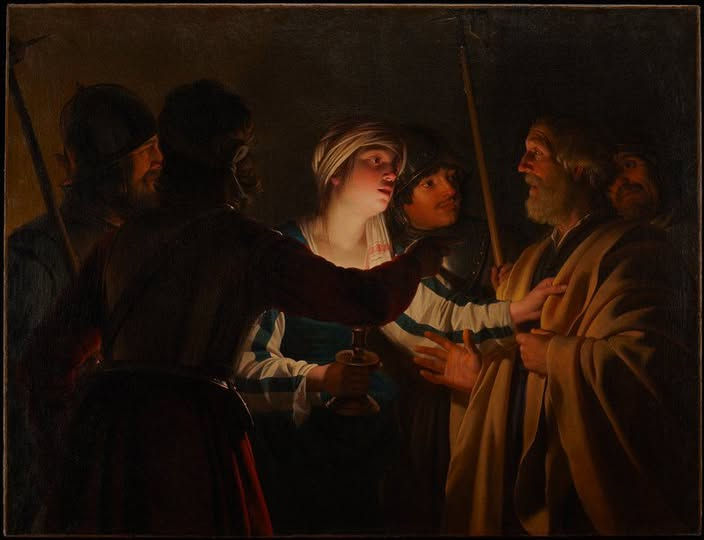
    Gerrit van Honthorst The Denial of St Peter c.1623

    Later, in Matthew 16, we see another pivotal moment. Jesus asks His disciples, “Who do people say that I am?” They offer various answers—“Some say John the Baptist, others Elijah, and still others Jeremiah or one of the prophets.” But those were just the rumors.

    Then Jesus asks the real question: “But who do you say I am?”

    That’s the question we all must answer. Who do you say Jesus is? Was He just a moral teacher? A historical figure? A religious symbol? Or is He truly the Son of God, the Messiah, the Lord of your life?

    Peter gives the right answer: “You are the Messiah, the Son of the living God.” But he didn’t arrive at that answer on his own. Jesus tells him, “Flesh and blood has not revealed this to you, but My Father in heaven.” This was spiritual revelation—truth planted in Peter’s heart by the Holy Spirit.

    Jesus then says:

    Matthew 16:18–19 (NKJV) 18 “And I also say to you that you are Peter, and on this rock I will build My church, and the gates of Hades shall not prevail against it. 19 And I will give you the keys of the kingdom of heaven, and whatever you bind on earth will be bound in heaven, and whatever you loose on earth will be loosed in heaven.”

    Fast forward to Luke 22—the Last Supper. Jesus gathers with His disciples and says:

    Luke 22:14–16 (NKJV) 14 “When the hour had come, He sat down, and the twelve apostles with Him. 15 Then He said to them, ‘With fervent desire I have desired to eat this Passover with you before I suffer; 16 for I say to you, I will no longer eat of it until it is fulfilled in the kingdom of God.’”

    Did Peter have any clue this would be their final meal with Jesus? Probably not. It likely felt like any other gathering—good food, strong fellowship. Then things took a turn. Jesus begins speaking about betrayal. The disciples argue about who it could be, then shift into a dispute about who among them is the greatest.

    And in the midst of this, Jesus turns to Peter and says, “Simon, Simon, Satan has asked to sift you like wheat. But I have prayed for you, that your faith may not fail.”

    Peter, with passion, declares, “Lord, I am ready to go with You, both to prison and to death!” But Jesus knows better. He replies, “Peter, before the rooster crows, you will deny three times that you know Me.”

    Later that night, Jesus is arrested. A mob, led by Judas, comes to seize Him. Chaos. Fear. Confusion.

    Peter follows, but from a distance. At the high priest’s courtyard, as Jesus is put on trial, Peter tries to stay unnoticed. He only wants to warm himself by the fire. But then, a servant girl recognizes him: “This man was with Him.”

    Peter says, “Woman, I do not know Him.”

    Later, someone else insists, “You’re one of them.”

    “Man, I am not!”

    About an hour passes, and another person says, “Surely this man was with Jesus—his accent gives him away.” According to Matthew’s Gospel, Peter begins cursing and swearing. “Man, I do not know what you’re talking about!”

    And then the rooster crowed.

    Peter remembered what Jesus had said. Overwhelmed with shame, he went outside and wept bitterly.

    Was Peter there at the crucifixion? The Gospels don’t clearly say. Maybe he was. Maybe he watched from a distance. But we do know this: he was heartbroken. The one he loved was dying, and he had denied even knowing Him.

    Could Peter ever forget the look Jesus gave him in that courtyard? The eyes of the one he had denied? The memory must have haunted him. But don’t forget Jesus’ words: “I have prayed for you, that your faith may not fail.” When the Son of God prays for you, your story doesn’t end in failure. Not because of your strength but because of His.

    Each person present that night had a part in the story. Some watched silently. Some mocked. Some betrayed. Some scattered. Some, like John, stayed by the cross. Jesus’ mother, Mary, was there too. Perhaps Mary, Martha, and Lazarus were among the crowd. Crucifixion was a public display of shame—a message to all: this is what happens to rebels. The more people watching, the better for Rome.

    And yet, even amid that shame and suffering, God’s purpose was unfolding.

    Judas, filled with remorse, took his own life. Peter, filled with grief, would later find forgiveness. Jesus was crucified, died, and was buried.

    This is what Good Friday is about—remembering the cross. This is the one day we pause, and we do not rush ahead to Easter Sunday. We leave Jesus on the cross, not because He’s still there, but to remember the cost.

    Many today wear crosses as jewelry but do not understand what it truly represents. The cross is not just a symbol of suffering—it is a call to discipleship. As William Penn wrote, “No Cross, No Crown.” Without enduring the cross, there is no hope for the crown.

    Luke 9:23–26 (NKJV) 23 “If anyone desires to come after Me, let him deny himself, and take up his cross daily, and follow Me. 24 For whoever desires to save his life will lose it, but whoever loses his life for My sake will save it. 25 For what profit is it to a man if he gains the whole world, and is himself destroyed or lost? 26 For whoever is ashamed of Me and My words, of him the Son of Man will be ashamed when He comes in His own glory…”

    There’s so much in that passage. But focus on this: “Take up your cross daily.” That means the cross is not distant, not abstract—it is personal. We each carry one. And in doing so, we walk the path Christ walked.

    Today, we remember His cross.

    Sermon: I Don’t’ Even Know the Man | March 29, 2024 Shubert Christian Church, Shubert, Nebraska / April 6, 2012 First Christian Church (DOC) Winfield, KS

  • If You Have Love: Exploring Christ’s Love Through Maundy Thursday (John 13)

    Today is Maundy Thursday, also known as Holy Thursday. The name is thought to be a Middle English derivation taken from a Latin anthem sung in Roman Catholic churches on that day: “Mandatum novum do vobis” (“a new commandment I give to you;” John 13:34). For today’s notes, we are reviewing John 13:20-36 (ESV):

    20 Truly, truly, I say to you, whoever receives the one I send receives me, and whoever receives me receives the one who sent me.” 

    21 After saying these things, Jesus was troubled in his spirit, and testified, “Truly, truly, I say to you, one of you will betray me.” 22 The disciples looked at one another, uncertain of whom he spoke. 23 One of his disciples, whom Jesus loved, was reclining at table at Jesus’ side, 24 so Simon Peter motioned to him to ask Jesus of whom he was speaking. 25 So that disciple, leaning back against Jesus, said to him, “Lord, who is it?” 26 Jesus answered, “It is he to whom I will give this morsel of bread when I have dipped it.” So when he had dipped the morsel, he gave it to Judas, the son of Simon Iscariot. 27 Then after he had taken the morsel, Satan entered into him. Jesus said to him, “What you are going to do, do quickly.” 28 Now no one at the table knew why he said this to him. 29 Some thought that, because Judas had the moneybag, Jesus was telling him, “Buy what we need for the feast,” or that he should give something to the poor. 30 So, after receiving the morsel of bread, he immediately went out. And it was night. 

    31 When he had gone out, Jesus said, “Now is the Son of Man glorified, and God is glorified in him. 32 If God is glorified in him, God will also glorify him in himself, and glorify him at once. 33 Little children, yet a little while I am with you. You will seek me, and just as I said to the Jews, so now I also say to you, ‘Where I am going you cannot come.’ 34 A new commandment I give to you, that you love one another: just as I have loved you, you also are to love one another. 35 By this all people will know that you are my disciples, if you have love for one another.” 

    I like the idea of having a meal, or as referenced in this scripture, I like the idea of a feast. Following the traditions of Jesus, when he fed the thousands, everyone left with a full stomach. [Mark 6:42; Mark 8:8] Much in the way that we often do when we celebrate Thanksgiving, Christmas, and many other holidays. We leave stuffed! We leave full! Therefore, when Jesus sat down to eat his last meal with his disciples, I am sure for the most part they felt like it was a feast, or a feast full of celebration. Little did they know that afterward, the events that took place were much less to celebrate. 

    My wife, Pamela, gave me an idea the other day about Judas Iscariot and even Peter, who would later deny Jesus. Both of these men sat down and ate this meal. Peter, thinking that he would even die for Jesus would later discover his human weakness and deny Jesus. Judas, however, was different. His betrayal was premeditated. When he sat down to partake of this meal, he knew quite well what he was going to do. 

    Therefore, we know what Jesus said: “What you are going to do, do quickly.” 

    What we do not know is what Judas said. Did he say, “I am sorry, Jesus, but I am not feeling very well this evening, and so I will not be joining you for dinner?” One would think that if they were going to betray the son of God and Savior of the world, they would not be able to sit down and eat a meal that he provided. No. We know that Judas was there. And Judas ate, and likely he ate until he was full and satisfied.

    Of course, we cannot be too critical of these men because when it came time for Jesus to be arrested and put on trial, all of his followers fled. But this was a feast and a last meal, and Jesus left them with some final instructions (John 13:34-35, NKJV):

    34 A new commandment I give to you, that you love one another; as I have loved you, that you also love one another. 35 By this all will know that you are My disciples, if you have love for one another.”

    During this Holy Week, we are given many opportunities to focus on these events. From Maundy Thursday to the Last Supper, the washing of feet, the prayers in the garden, and the arrest and trial of Jesus. Each one of these events could provide a whole worship service experience. But of all of these, the most important element from all these events is love. 

     If you have love for one another.

    That is what Christ wanted to emphasize. That is what is needed inside the church today. Inside the fellowship of believers must be love. As we reflect on this passage from John 13, we are reminded of both the deep love of Jesus and the painful reality of His coming betrayal. This moment at the table is intimate, emotional, and powerful. Jesus not only reveals His knowledge of the events to come but also demonstrates His heart of compassion and service, even toward those who would turn against Him. Maundy Thursday calls us to remember Christ’s commandment to love one another as He has loved us — sacrificially, humbly, and completely. It is a time to examine our own hearts, to receive His love, and to extend that love to others.

  • The Significance of “Hosanna” and The Triumphal Entry in Celebrating Palm Sunday

    As the Season of Lent comes to a close, we turn to Mark 11:1-11 (NKJV): 

    1 Now when they drew near Jerusalem, to Bethphage and Bethany, at the Mount of Olives, He sent two of His disciples; 2 and He said to them, “Go into the village opposite you; and as soon as you have entered it you will find a colt tied, on which no one has sat. Loose it and bring it. 3 “And if anyone says to you, ‘Why are you doing this?’ say, ‘The Lord has need of it,’ and immediately he will send it here.” 4 So they went their way, and found the colt tied by the door outside on the street, and they loosed it. 5 But some of those who stood there said to them, “What are you doing, loosing the colt?” 6 And they spoke to them just as Jesus had commanded. So they let them go. 7 Then they brought the colt to Jesus and threw their clothes on it, and He sat on it. 8 And many spread their clothes on the road, and others cut down leafy branches from the trees and spread them on the road. 9 Then those who went before and those who followed cried out, saying: 
    “Hosanna! 
    ‘Blessed is He who comes in the name of the Lord!’
    10 Blessed is the kingdom of our father David 
    That comes in the name of the Lord! 
    Hosanna in the highest!”
    11 And Jesus went into Jerusalem and into the temple. So when He had looked around at all things, as the hour was already late, He went out to Bethany with the twelve.

    Holy Week officially begins. The quiet time that we have spent in spiritual reflection is now interrupted with noise coming from the crowds. We hear voices crying, “Hosanna!  Hosanna!  Blessed is the One who comes in the name of the Lord.  Hosanna!  Hosanna!  Blessed is the coming kingdom of our father David!  Hosanna in the highest!”

    Depending on what particular study Bible you have, this event is more popularly labeled as “The Triumphal Entry.” We celebrate it as Palm Sunday, even though according to Mark’s gospel, there is no mention of palm branches. The description says “leafy branches.” The type of branches seems irrelevant. The focus here is on the act of worship.

    So, why is this entry considered triumphal? 

    Some people might wonder why this is called The Triumphal Entry. Considering the crucifixion of Jesus that takes place later, it is more of a triumph turned tragedy. The people cry out “Hosanna,” which means, “Save us,” or “Save now.” The act of saving would most certainly be expected, that is, if Jesus is the Messiah, the Christ of God.  And we believe that He is.

    But still, one has to have some appreciation for the dramatization done by Mark’s gospel.  Mark is a short gospel and does not offer a lengthy dissertation. The story shifts in Mark 10, with Jesus healing Blind Bartimaeus as he is approaching Jerusalem. The people who believe in Jesus are there to greet Him, offering shouts of praise, and some probably expecting Him to claim His rule as the Messiah.

    We know the gospel’s story.  Jesus does not claim any throne.  He gets arrested.  Jesus does not gain any high recognition or respect.  He gets mocked and ridiculed.  As I just referred to the dramatization of Mark’s story, the Hosanna cries quickly turn to cries of mourning.  Faith most surely turns to doubt, as the One who appears to be the Savior is unable to save Himself.

    Mark’s gospel gives a good account of the mockery that is said.   Mark 15.27-32 reads:

     27 Two criminals were crucified with him, their crosses on either side of his. 29 And the people passing by shouted abuse, shaking their heads in mockery. “Ha! Look at you now!” they yelled at him. “You can destroy the Temple and rebuild it in three days, can you? 30 Well then, save yourself and come down from the cross!”
    31 The leading priests and teachers of religious law also mocked Jesus. “He saved others,” they scoffed, “but he can’t save himself! 32 Let this Messiah, this king of Israel, come down from the cross so we can see it and believe him!” Even the two criminals who were being crucified with Jesus ridiculed him.

    When one examines the whole story that occurs from triumphal entry to crucifixion, it may be difficult for some people to see the triumph of the occasion.  On the other hand, it seems more of a failure on the people’s part to understand the true person Jesus was and what His mission was—what He came to do. 

    They were not seeing Jesus through the window of Isaiah 53.3-12:

    He was despised and rejected—a man of sorrows, acquainted with bitterest grief. We turned our backs on him and looked the other way when he went by. He was despised, and we did not care. 
    Yet it was our weaknesses he carried; it was our sorrows that weighed him down. And we thought his troubles were a punishment from God for his own sins! 5 But he was wounded and crushed for our sins. He was beaten that we might have peace. He was whipped, and we were healed! 6 All of us have strayed away like sheep. We have left God’s paths to follow our own. Yet the Lord laid on him the guilt and sins of us all.
    He was oppressed and treated harshly, yet he never said a word. He was led as a lamb to the slaughter. And as a sheep is silent before the shearers, he did not open his mouth. 8 From prison and trial they led him away to his death. But who among the people realized that he was dying for their sins—that he was suffering their punishment? He had done no wrong, and he never deceived anyone. But he was buried like a criminal; he was put in a rich man’s grave.
    10 But it was the Lord’s good plan to crush him and fill him with grief. Yet when his life is made an offering for sin, he will have a multitude of children, many heirs. He will enjoy a long life, and the Lord’s plan will prosper in his hands. 11 When he sees all that is accomplished by his anguish, he will be satisfied. And because of what he has experienced, my righteous servant will make it possible for many to be counted righteous, for he will bear all their sins. 12 I will give him the honors of one who is mighty and great, because he exposed himself to death. He was counted among those who were sinners. He bore the sins of many and interceded for sinners.

    We turn back to the question, why is this considered Triumphal? On the surface, it appears to be one of the great tragedies of all time.  If there had been the technology for newspapers, the headlines might have read: 

    RELIGIOUS RADICAL, PUBLIC MENACE, 

    EXECUTED BY THE ROMAN GOVERNMENT.

    Still, as one gains an understanding of what, or rather whom, Jesus came to save–then his entry was triumphal. We understand better that Jesus did not come into the world to become a political leader to liberate his people. Jesus came to seek and to save the lost. [Luke 19.10] Jesus came to save sinners. Jesus came to save all of the human race, past, present, and future, from death and destruction. Furthermore, we understand being saved as being allowed to live life with Jesus after we die.

    What has occurred then through the triumphal entry is the announcement of the greatest form of salvation. Had Jesus been a political ruler like King David, the people might have been content for a time under his rule. But what happens when the king dies? Another king comes to rule. In the history of the Old Testament, there were good kings and even more wicked kings. The people during Jesus’ time were living under the rule of wicked kings. Why would the world need another earthly king?

    But now the problem is solved. It no longer matters who the king reigning on the earth is.  There is now an appointed king who will rule for all of eternity.   This King who comes—comes in triumph—triumphal entry. 

    What does this mean for us today? Today, we have a wonderful privilege, to offer worship to the One who has saved us.  Today, we have the option to cry out “Hosanna,” and from the very moment we utter our cry, the Savior hears us. Did you ever think how easy it is to be saved? I am not talking about how easy it is to live the Christian life because living the Christian life is not easy.  But being saved is easy. Being saved is as easy as saying to Jesus Christ, “Hosanna—save me, Lord!”   

    Of course, what is equally important is that your cry comes from the depths of your heart.   It is like falling into a rapidly moving stream and being carried down the river. You realize that unless something miraculously happens, you are sure to drown. And then, as you grab hold of your senses, you know there is only one thing to do. You cry out as loud as you can, “Help…someone, save me!” Usually, those people standing safely on the side of the bank are not arguing amongst themselves, “Well, what do you think? Is that an earnest cry for help?” Maybe I am expecting too much here with my illustration.  

    In some places in this country, the reaction might be: 

    “I just don’t want to get involved!”  

    “If I go rescue that person crying for help—my luck they would hit their head on a rock in the process and then sue me for all I am worth.” 

    Then there are those people who say,

    “What? I can’t hear you! Do you need help?”

    “Too late; I guess they did not need my help.”  

    Still believing there is some goodness left in humanity, most will attempt to rescue a person who is drowning. With the same kind of reaction, Jesus is quick to rescue us.

    Romans 10.13:

    13 For “whoever calls on the name of the Lord shall be saved.”

    Considering the invitation, is there anyone who is drowning? Is there anyone who needs saving? It is our purpose to continue the ministry of Jesus Christ, to seek and to save the lost. We give an invitation to those who are seeking salvation, as well as those who are seeking a family of faith.

    Sermon: “Hosanna” | April 16, 2000, at FCC Paradise, California and April 5, 2009, FCC Winfield, KS

  • Exploring the Significance of Noah and the Ark in Genesis 6-12

    One of the more difficult stories in the Old Testament for people to accept as factual is the story of Noah and the Ark. In Genesis 6:5-8 (NKJV): 

    5 Then the LORD saw that the wickedness of man as great in the earth, and that every intent of the thoughts of his heart was only evil continually. 6 And the LORD was sorry that He had made man on the earth, and He was grieved in His heart. 7 So the LORD said, “I will destroy man whom I have created from the face of the earth, both man and beast, creeping thing and birds of the air, for I am sorry that I have made them. 8 But Noah found grace in the eyes of the LORD.

    Think about it. You have one man, one family, one large boat, two of every animal, and a rainstorm that causes the entire world to flood. It rains for forty days and forty nights. Most of us have seen it rain for several days in a row, maybe even forty days, and have never seen enough flooding to destroy the earth. 

    Some of the more modern Bible scholars have written the story off as merely an example of a Jewish fable. On the other hand, there have been rumors for the past four decades that someone has found Noah’s Ark, some even say on Mt. Ararat. Theories have been explained to show how the ark was once on top of the mountain, which is believed to be a volcano. The volcano erupted around a thousand years ago and carried the ark down through a flow of lava. 

    Most recently, archaeologists believe they have discovered the final location on Turkey’s Mount Ararat through soil samples which reveal human activity and marine materials during the time of the flood (dating around 5500 to 3000 BC). Yet, many researchers disagree and even disagree on the extent of the flood saying that “those events naturally made their way into the world’s oral and written lore.” Andrew A. Snelling, a geologist and Director of Research for Answers in Genesis says, “We do not expect the Ark to have survived and been available to find after 4,350 years.” 

    While such theories continue to exist, there is no credible archaeology done to prove that Noah’s Ark exists. However, there are people who desperately want to find it. Christians and Jews would most certainly rejoice if Noah’s Ark were found. 

    As a Bible story, we accept Noah and the Ark on faith, believing that because it is in the Bible, it has to be true. This story is not told in the form of a historical lesson. It’s an example of God’s salvific act. We are not left standing on the sidelines wondering why God, who is an all-loving God, would carry out this horrendous act of destroying His creation. Instead, we should be grieved as God was grieved seeing His creation only desiring to perform evil acts. This here is an example in the history of humanity where God’s heart was broken. 

    In Genesis 6:13-14, God proposes a plan: 

    13 And God said to Noah, “The end of all flesh has come before Me, for the earth is filled with violence through them; and behold, I will destroy them with the earth. 14 “Make yourself an ark…”

    The Bible gives the description and measurements in “cubits.” Modern comparisons describe the ark as being about half the size of an ocean liner, the Queen Elizabeth (which is about double the size of the Titanic), and about 450 feet long. Imagine if you took one of each animal from the face of the earth and placed it aboard the Queen Elizabeth. This glorious ship would still not be large enough to hold all the a animals. So, again, there are always people waiting to dispute what the Bible claims. 

    The Hebrew word, tebah (teebayh) is translated as “ark” from the Latin word “arca.” This translation is often debated, as well as the shape of the ark. Most Bible scholars agree the ark was shaped more like a chest or box-shaped but others believe it to be more of a “floating palace.” Clyde Francisco, a Bible scholar, says “it was certainly not built for sailing but for surviving.” What’s important to note is that there is value in seeing that God had a specific vehicle in mind by which to save Noah, his family, and the birds and animals. God could have placed them all on a raft, and yet still God could have saved them. 

    The fact is, this event occurred over 4,000 years ago. We do not have a methodology for a reconstruction of how this might have occurred. Some people feel comfortable writing this story off as fiction. But, if one reduces this story to be only a Jewish myth or fable, then does one really believe in God? 

    God does not seem the least concerned about coming forward to prove His ark existed. One can choose to believe or not believe. The basic synopsis stands: Noah was told to build an ark. Using this ark, God would establish his covenant with Noah. We now see a greater purpose to the Noah and the Ark story. It’s not only about a man, his family, some animals, and a flood. It is about God’s righteous judgment passed against all that is evil. It is about God’s wondrous grace given to save that which is good. And, with this, God was not merely saving a few people aboard an ark. He was saving a multitude of generations of people to follow. 

    In the Dickson study Bible, The New Analytical Bible (1973), Dickson states “Noah is the last member of the Sethite line of the Antediluvian Age. From Seth to Noah, nine members of that line are given. The race is to be all but obliterated, but it is not only preserved but also the Messianic line. It is of special interest that the preservation of the race is in the line of the Messiah, hence the history of a Savior will be fulfilled in the historical line that has been selected.”.

    Luke’s gospel traces the genealogy of Jesus all the way back through Noah in Noah 3:36-38 (NIV): 

    36 the son of Cainan, the son of Arphaxad, the son of Shem, the son of Noah, the son of Lamech, 37 the son of Methuselah, the son of Enoch, the son of Jared, the son of Mahalalel, the son of Kenan, 38 the son of Enosh, the son of Seth, the son of Adam, the son of God.

    In short, we see God’s plan of salvation extends to multiple generations–not limited to one. If people today were to take away the story of Noah and the Ark, then one is destroying one of the basic roots of God’s salvation plan. Furthermore, to not believe in Noah and the Ark is to not believe in God’s plan of salvation. Still, there is another reason we review this story. It’s to remind us that Noah and the Ark symbolize new beginnings. 

    Noah obeyed God. He built the ark. People probably laughed at him, “Hey, look at that old man, Noah, up there building an ark. Want us to come up and show you how to build a real boat, Noah?…Hey, Noah, where’s the flood…That’s quite the house you are building up there, Noah. You planning on having more kids? You’re crazy Noah!”

    Noah built the ark. He did everything God asked him to do. He loaded up the animals and his family. God shut the door and turned on the rain. It rained and rained. And all those people who had no vehicles for survival sank. They all drowned. 

    The rain stopped, but the waters continued to cover the earth for 150 days. Image by now, everyone was probably getting cabin fever. I mean, “Get those sheep over there some deodorant!” Noah started sending birds out to find land. Then, imagine the day when Noah and his family first stepped out of the ark. It is like an undiscovered country, a whole new world. It was a new beginning. A new opportunity to begin again. 

    Title: Noah and the Ark | Sermon: January 5, 2003, First Christian Church (Paradise, California)

  • Original Song: Mighty is the Lord Our God

    Might is the Lord Our God was written by Dennis Alan Fulbright in 1981 with Iris Green.

    {Opening Instrumental}

    Mighty is the Lord our God
    Mighty is the Lord our God
    Mighty to deliver, mighty to set free
    Mighty is the Lord our God

    Father You are mighty
    Father You’re so kind
    Father we adore You
    You renew our minds
    Father You are holy
    We give You all our praise
    We will keep on shouting
    Our Lord,  Jesus saves!

    {repeat both parts}

    Ending

    Mighty is the Lord our God
    Mighty is the Lord our God
    Mighty is the Lord our God

    {Closing Instrumental}