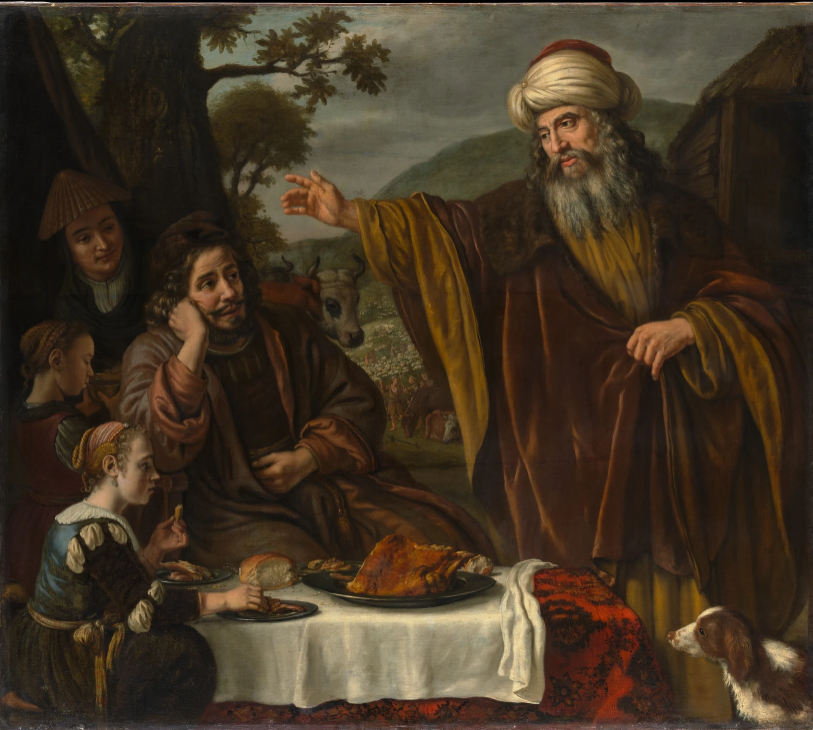
• The Betrayal of Esau: A Tale of Inheritance and Deception in Genesis 25-27

    As we begin Genesis 25, we meet Esau and his brother Jacob, sons of Isaac (son of Abraham) and Rebekah. Esau and Jacob were twins with Esau the first born and Jacob following right after. As they grew, they had very different interests. Esau was a skilled hunter and farmer and Jacob “was a mild man, dwelling in tents” (Genesis 25:27). While it’s typically not common for parents to have favorites among their children, this was not the case for Esau and Jacob. Instead, Esau was the favorite of Isaac, which meant that Isaac had given Esau his birthright whereas Jacob was the favorite of Rebekah but received nothing. This birthright is expanded more in Genesis 25:29-34 (NKJV): 

    29 Now Jacob cooked a stew; and Esau came in from the field, and he was weary. 30 And Esau said to Jacob, “Please feed me with that same red stew, for I am weary.” Therefore his name was called Edom. 31 But Jacob said, “Sell me your birthright as of this day.” 32 And Esau said, “Look, I am about to die; so what is this birthright to me?” 33 Then Jacob said, “Swear to me as of this day.” 
    So he swore to him, and sold his birthright to Jacob. 34 And Jacob gave Esau bread and stew of lentils; then he ate and drank, arose, and went his way. Thus Esau despised his birthright.

    Esau despised his birthright and considered the responsibilities and honors unimportant and uninteresting. Unsurprisingly, he would sell his birthright to his brother over bread and stew. A formal oath solidified the agreement, “Jacob said, ‘swear to me as of this day.’ So he swore to him, and sold his birthright to Jacob” (Genesis 25:33). Esau took what God considered sacred and made it common. He was more concerned about his temporary and material needs and gave them priority over his rights as the firstborn son and responsibilities as heir; a blessing of the Abrahamic covenant. This isn’t the only place in the Bible that references Esau’s lack of commitment. Hebrews 12:16 says:

    16 lest there be any fornicator or profane person like Esau, who for one morsel of food sold his birthright. 

    Esau abandoned his birthright but that’s not all. Esau also chose wives–Judith the daughter of Beeri the Hittite, and Basemath the daughter of Elon the Hittite–who were outside the tribe his parents approved of. Whether they were “wild women,” we do not know but knowing from Hebrews that Esau was a “profane person and a fornicator having women he was not married to,” little is left to the imagination. 

    As we fast forward, Isaac was getting old, he was nearly 180 years old and was blind. He called out to his favorite son, Esau, and asked him to go hunting to bring back “savory” food.  His wife Rebekah was standing nearby and devised a plan for Jacob to slaughter some goats, she would cook the food, and Jacob would take it to his father, posing as Esau. The only problem, Esau was a hairy man and Jacob was not. So, Rebekah went out and stole clothes from Esau and placed goat skins on Jacob where his father would likely want to feel, in order to fool him into believing that Jacob was Esau.
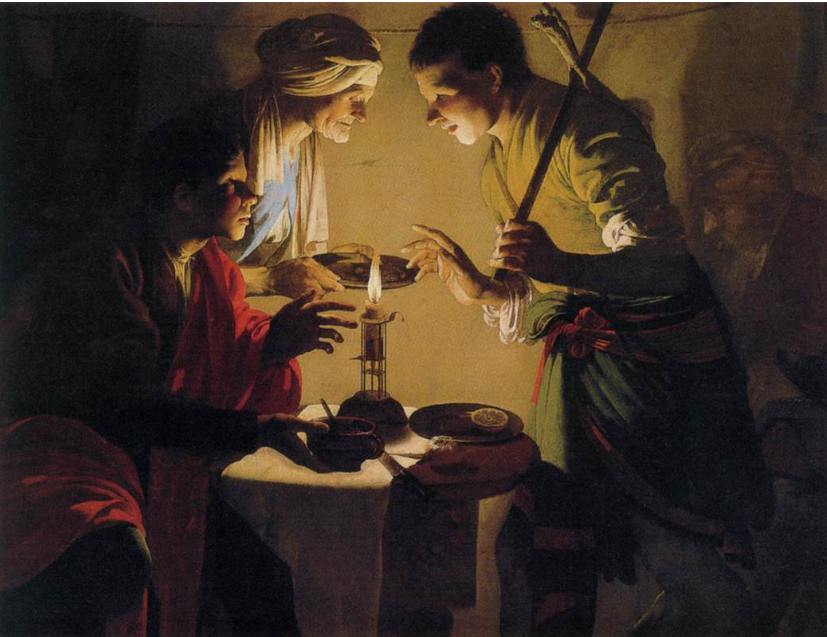
    Image Source: Hendrick ter Brugghen – Web Gallery of Art, Public Domain

    Jacob, disguised as Esau, went and gave food to his father. Isaac was amazed that his favorite son found the game so quickly to which Jacob replied, “God provided.” Isaac was suspicious and asked Jacob to come near him. He felt Jacob’s phony costume and said, “Your voice sounds like Jacob but you feel like Esau. Are you really my son Esau?” Jacob lied and replied, “I am.” 

    Jacob passed the inspection. Isaac was convinced Jacob was Esau. He felt like Esau and his clothes smelled like Esau. So, Isaac blessed Jacob instead of Esau. Isaac said,

    28 Therefore may God give you 
    Of the dew of heaven, 
    Of the fatness of the earth, 
    And plenty of grain and wine. 
    29 Let peoples serve you, 
    And nations bow down to you. 
    Be master over your brethren, 
    And let your mother’s sons bow down to you. 
    Cursed be everyone who curses you, 
    And blessed be those who bless you!” (Genesis 25:28-29)

    This was likely a one-time deal. There was no going back now. Jacob was blessed with the highest blessing. Sometime later, Esau comes home and prepares his game, cooks it, and brings it to his father. Isaac, having just eaten, says he is full and realizes he was deceived. Esau is heartbroken and weeps, which eventually turns to rage. He says, “Blee me, O my father!” Genesis 25:39-40 (NKJV) says:

    39 Then Isaac his father answered and said to him: 
    “Behold, your dwelling shall be of the fatness of the earth, 
    And of the dew of heaven from above. 
    40 By your sword you shall live, 
    And you shall serve your brother
    And it shall come to pass, when you become restless, 
    That you shall break his yoke from your neck.”

    As a result, Esau vowed he would kill his brother, Jacob. As an expert hunter, he could do just that. We’ve seen this story play out before with Cain and Abel. As God chose Abel over Cain, God chose Jacob over Esau.

    There are multiple cheaters in this story. Rebekah conspired to deceive and cheat her husband, Isaac. Jacob cheated his brother out of a blessing. Esau cheated by marrying foreign women and living a reckless life. Unfortunately, we know people like this in our lives today. We’ve heard these stories. We see examples of these stories in popular media like The Bachelor, Survivor, and many others. This level of suffering entertains us but deep down, there is more to be said about deceit than the humor of a reality TV show. For Jacob, this meant that his mother sent him away, 450 miles away to be exact, to save him from being killed by his brother. Who knew you could find such entertainment in the Bible?

    Title: “Your Cheating Heart” | Service Date: October 16, 2015, First Christian Church, Hiawatha, Kansas
  • The Origin of Love (Genesis 22)

    Many people are familiar with the story of Abraham and Isaac. Genesis 22:1-5: 

    1 Now it came to pass after these things that God tested Abraham, and said to him, “Abraham!” And he said, “Here I am.” 2 Then He said, “Take now your son, your only son Isaac, whom you love, and go to the land of Moriah, and offer him there as a burnt offering on one of the mountains of which I shall tell you.” 3 So Abraham rose early in the morning and saddled his donkey, and took two of his young men with him, and Isaac his son; and he split the wood for the burnt offering, and arose and went to the place of which God had told him. 4 Then on the third day Abraham lifted his eyes and saw the place afar off. 5 And Abraham said to his young men, “Stay here with the donkey; the lad and I will go yonder and worship, and we will come back to you.” 

    It sometimes horrifies us to think how God could require human sacrifice. Yet, the point of this story is to show God testing Abraham’s faith and loyalty; nothing more. Genesis 6-12:

    6 So Abraham took the wood of the burnt offering and laid it on Isaac his son; and he took the fire in his hand, and a knife, and the two of them went together. 7 But Isaac spoke to Abraham his father and said, “My father!” And he said, “Here I am, my son.” Then he said, “Look, the fire and the wood, but where is the lamb for a burnt offering?” 

    8 And Abraham said, “My son, God will provide for Himself the lamb for a burnt offering.” So the two of them went together. 9 Then they came to the place of which God had told him. And Abraham built an alter there and placed the wood in order; and he bound Isaac his son and laid him on the alter; upon the wood. 10 And Abraham stretched out his hand and took the knife to slay his son. 11 But the Angel of the LORD called to him from heaven and said, “Abraham, Abraham!” So he said, “Here I am.” 

    12 And He said, “Do not lay your hand on the lad, or do anything to him; for now I know that you fear God, since you have not withheld your son, your only son, from Me.” 

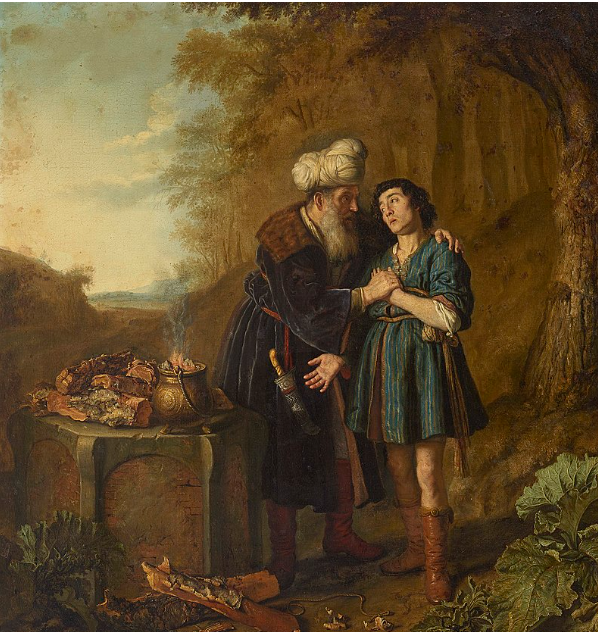
    "Abraham and Isaac before the Sacrifice" 1644 painting by Jan Victors
    Image Source: “Abraham and Isaac before the Sacrifice” 1644 painting by Jan Victors

    We may never know if God would have allowed Abraham to follow through and kill his son, Isaac. Fortunately, we have the privilege of knowing how this story ends. 

    One of the areas of focus for this story is looking at what the Bible has to say about love and where it originated. In today’s society, we throw around the word “love” rather loosely. It is not so much a Christianized idea and because of this, love can often be associated with “tolerance,” “affirmation,” and “acceptance.” Even within the walls of progressive Christianity, there is a connection with a worldview of love. This makes us wonder; Where did love originate?

    William McDonald, author and former president of Emmaus Bible College, stated “the first occurrence of a word in the Bible often sets the pattern for its usage throughout Scripture.” The Hebrew word for “love,” אָהַב (˒âhab, aw-hab,) was first used in Genesis 22:2: 

    2 Then He said, “Take now your son, your only son Issac, whom you love…

    We know from reading Genesis 21 that Isaac was almost a miracle child for Abraham and Sarah, because of their older age. There was likely a lot of hope for them that through their offspring, their lineage would continue. Therefore, we are left wondering why God would require Abraham to give up his only son when He knew how important this child was to them. And, on top of that, let’s not forget the request to kill Isaac.

    Within the context of defining love, we look at Abraham’s love for his child. Warren Wiersbe, author of With the Word Bible Commentary, explains that this was a test of love: 

    Abraham loved his son, but he loved God more. Isaac was God’s gift to Abraham, but the gift had to become a sacrifice to God. If the gift becomes more important than the Giver, it becomes an idol.   

    We have no evidence that Abraham told God outright, “I love you,” but we know from this text that Abraham passed the test which proved to God, through action and obedience, that God meant more to him than anything. He may have ever realized that if it were not for God, he wouldn’t have Isaac. Furthermore, his actions exemplify the love that a parent has for their children. Later in Genesis 25, we see Isaac with his children, Esau and Jacob. 

    27 So the boys grew. And Esau was a skillful hunter, a man of the field, but Jacob was a mild man, dwelling in tents. 28 And Isaac loved Esau because he ate of his game, but Rebekah loved Jacob. 

    As parents, we rarely show favoritism to our children. However, Isaac showed favoritism toward Esau, the older twin brother of Jacob. We see this continue to Genesis 27: 

    1 Now it came to pass when Isaac was old and his eyes were so dim that he could not see, that he called Esau his older son and said to him, “My Son.” And he answered him, “Here I am.” 2 Then he said, “Behold now, I am old. I do not know the day of my death. 3 Now therefore, please take your weapons, your quiver, and your bow, and go out to the field and hunt game for me. 4 And make me savory food, such as I love, and bring it to me that I may eat, that my soul may bless you before I die.” 

    The same word “love” is used in this scripture but its meaning is different. We all have a favorite food that we love. It might be apple pie, chocolate cake, or cookies. If you don’t have a sweet tooth, maybe you love mashed potatoes, turkey, and green bean casserole. Whatever it is, most of us have a love for food. Even in the Bible, we find that people had a love for certain foods. 

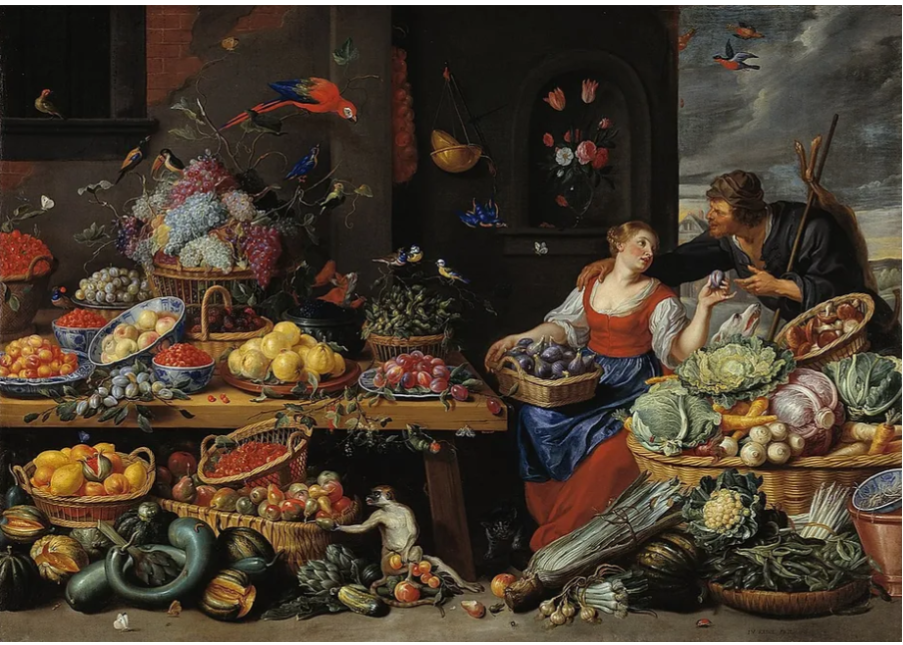
    Jan Van Kessel. "Fruit and Vegetable Market with a Young Fruit Seller." Between 1650 and 1660.
    Image Source: Jan Van Kessel. “Fruit and Vegetable Market with a Young Fruit Seller.” Between 1650 and 1660.

    Another kind of love is romantic or sexual love. We see an example of this in Genesis 29:30 (NKJV):   

    30 Then Jacob also went in to Rachel, and he also loved Rachel more than Leah. And he served with Laban still another seven years.

    This time, love is interpreted to mean love between two people. In this example, we are given a biblical model of romance and sexual love between a man and a woman. This kind of love is one of God’s greatest gifts to humanity. In today’s society, many try to minimize the significance of this blessing by forcing the acceptance of other types of sexual and romantic love upon us. Unfortunately, this has been one of the reasons romantic and sexual love are often disregarded with couples refusing to commit to the marriage vows or even breaking marriage vows in time. 

    Looking at the origin of love is an exciting journey. God allowed humankind to develop feelings of certain things. All these various kinds of love, whether it be romantic love or love for certain foods, it was all placed within the boundaries that always put God first. Even for Abraham, it was to put God first. Some might even read Genesis and say that love toward God was implied, but that’s not always explained. Jumping into the book of Exodus 20:4-6, we see an example of this (NKJV): 

    4 “You shall not make for yourself a carved image—any likeness of anything that is in heaven above, or that is in the earth beneath, or that is in the water under the earth; 5 you shall not bow down to them nor serve them. For I, the Lord your God, am a jealous God, visiting the iniquity of the fathers upon the children to the third and fourth generations of those who hate Me, 6 but showing mercy to thousands, to those who love Me and keep My commandments.

    We see another example of loving God in Deuteronomy 6:4-5 (NKJV): 

    4 “Hear, O Israel: The Lord our God, the Lord is one! 5 You shall love the Lord your God with all your heart, with all your soul, and with all your strength.

    While there are many other examples of loving God throughout the Bible, another example, this time stated by our Lord Jesus Christ, is in Mark 12:28-30 and Matthew 22:34-40. Matthew 12:28-30 reads: 

    28 Then one of the scribes came, and having heard them reasoning together, perceiving that He had answered them well, asked Him, “Which is the first commandment of all?” 29  Jesus answered him, “The first of all the commandments is: ‘Hear, O Israel, the Lord our God, the Lord is one. 30 And you shall love the Lord your God with all your heart, with all your soul, with all your mind, and with all your strength.’ This is the first commandment.

    The origin of love is encompassed within the boundaries of the Kingdom of God. Its purpose is to love God and to put God first. By doing this, we can be sure that everything else will fall into place. When the world tries to redefine the meaning of love and sexuality the results will always end in heartache. Even for those who indulge in the love of food, it still brings all kinds of problems, including health issues, obesity, addiction, etc. However, the biggest difference with food is that we need food to survive. I don’t think God intended for us to not have a favorite food, but food cannot become one’s God. 

    People can love their families and should love their families. But people who do not love God do not always know how to love their families. Or to turn it around, people who do not love their families cannot love God. This is not to say that people do not get hurt by their families, and sometimes we have to forgive people but remain distant. And in many cases, we have to love people at a distance.

    The Bible has something to say about love in just about every book. Sometimes, people struggle with studying their Bible because they think they need to read the book starting with Genesis, all the way through. It can be really helpful and rewarding to do a word study, and in this case, take a word (like love) and identify where and how that word is used in the Bible. One can gain a great deal of spiritual understanding just by reviewing that word and seeing how it repeats itself, what different versions of the word are used, and how it unfolds through the scriptures. Love is certainly a gift from God and true love is from God. We can seek out love throughout the Bible and every time we find God, we will also find love.  

    Title: Formerly “The Origin of Love” | Sermon: October 8, 2023, Shubert Christian Church, Shubert, Nebraska

  • The Risks of Faith: Exploring Abraham’s Journey as a Biblical Patriarch

    One of the major characters in the Bible that many would call a patriarch is Abram, better known as Abraham. Like many Bible characters who lived before the time of King David (before 1040 BC), it is hard to know much about these patriarchs. We not only lack what is referred to as reliable historical information but there also isn’t any archaeological evidence that proves the existence of Abraham. Along with Moses, we believe that Abraham lived because the Bible tells us so, in Genesis 12 (NKJV): 

    1 Now the LORD had said unto Abram, Get thee out of thy country, and from thy kindred, and from thy father’s house, unto a land that I will shew thee: 2 And I will make of thee a great nation, and I will bless thee, and make thy name great; and though shalt be a blessing: 3 And I will bless them that bless thee, and curse him that curseth thee: and in thee shall all families of the earth be blessed. 

    Genesis 12 begins a new division in the book of Genesis. The first eleven chapters are called “primeval history.” These chapters convey the story of the first years of the world’s existence and are usually divided into three main parts: the creation and fall of humankind (chapters 1-6); the Flood (chapters 6-9); and the Flood to Abraham (chapters 9-11). The last chapters of Genesis are known as “patriarchal history.” Pastor Bob Deffinbaugh writes:

    While the effect of man’s sin has become increasingly widespread, the fulfillment of the promise of God in Genesis 3:15 has become more selective. The Redeemer was to come from the seed of the woman (Genesis 3:15), the from the descendants of Seth, then Noah, and now Abraham (Genesis 12:2-3). 

    Theologically, Genesis chapter 12 is one of the key Old Testament passages, for it contains what has been called the Abrahamic Covenant. This covenant is the thread which ties the rest of the Old Testament together. It is critical to a correct understanding of Bible prophecy.

    Rabbi Joseph Telushkin also has an interesting observation about Abraham and writes: 

    The Torah nowhere explains why God chooses Abraham for this mission, though Jewish tradition claims it is because he is the first monotheist since the time of Noah. A Jewish legend teaches that Abraham’s father, Terakh, owned an idol shop. One day, while his father was away and Abraham was in charge of the store, he smashed all the idols but the biggest with an ax, and then put the ax in the remaining idol’s hand. To his outraged father’s question as to what had happened, Abraham explained that the large idol became upset at the other idols and destroyed them. 

    “You know these idols can’t move,” Terakh shouted.

    “If they can’t save themselves,” Abraham answered, “then we are superior to them. So why should we worship them?” 

    Because this rabbinic tale is taught to almost all children in Jewish schools, many Jews mistakenly believe that it is in the Torah itself.

    As we continue reviewing the text, Yahweh speaks to Abram, and his words are: 

    1 The LORD had said to Abram, “Go from your country, your people and your father’s household to the land I will show you. (NIV)

    What does it mean for Abram to leave his country? In some ways, we can imagine what it would be like telling a young man or woman, “Now is the time for you to go and pursue a college education.” Depending on what field of study one chooses, and how badly one wants to leave their parents, some students might pick a college several states away. 

    But Abram is not a young man going off to college. He is 75 years old. This is a different culture compared to what we know. 75-year-old people are usually not thinking about leaving home, unless, of course, it is a nursing home. Many 75-year-olds we know are enjoying a peaceful lifestyle living in their retirement communities, not thinking of taking off and leaving their family behind. Yet, here we have Abram faced with this task, as Yahweh continues:

    2 I shall make a great nation, I shall bless you and make your name famous; you are to be a blessing! 3 I shall bless those who bless you, and shall curse those who curse you, and all clans on earth will bless themselves by you. (NIV)
    Abraham's Parting from the Family of Lot Jan Victors 1655
    Abraham’s Parting from the Family of Lot Jan Victors 1655

    Abram surely knew that what was promised to him was not going to be something that he would live to see in its entirety or even his lifetime. But it did not matter because the promise was enough for Abram to step out and obey. Abram was willing to take that risk. 

    How are we doing when it comes to taking risks? Our culture teaches us that once we’ve reached 75 it’s time to settle down, not get up and start out on a whole new journey. But the Christian faith is a new journey. Nowhere in the Bible does it mention “retired Christians.” Yet some have that attitude. 

    Some may try to justify being a retired Christian. They might stop being involved in church activities or not participate in the gospel message. But the Bible doesn’t give a pass. Christians continue to live by faith and take risks as they are led by God. 

    Abram took a risk by leaving his homeland to journey off into unfamiliar territory. Jesus Christ also took many risks, as he continued to preach the message and help the sick while going to Jerusalem where he’d be crucified. Let’s consider modeling our lives after Abram (and Jesus) who are risk takers. Let each of us ask ourselves; what risks does God have for me to take today? 

    Title: Taking a Risk | Sermon: February 28, 1999 First Christian Church, LaJunta, Colorado

    Sources:

    • Bob Deffinbaugh. May 12, 2004. “12. The Call of Abram (Genesis 11:31-12:9).” Bible.org.
    • Rabbi Joseph Telushkin, Jewish Literacy (New York:  William Morrow and Company, Inc., 1991, 30.