• The Shepherd and the Stone: Jacob’s Prophetic Blessing Over Joseph (Genesis 49)

    Genesis 49:1-2 (KJV): 1 And Jacob called unto his sons, and said, Gather yourselves together, that I may tell you that which shall befall you in the last days. 2 Gather yourselves together, and hear, ye sons of Jacob; and hearken unto Israel your father. 

    Genesis 49 opens with a poignant moment: Jacob, nearing death, gathers his twelve sons to speak over them. What follows is not just farewell, but prophecy. He says, “Gather together, that I may tell you what shall befall you in the last days” (Genesis 49:1, NKJV). While modern readers may interpret the phrase “the last days” as a reference to the end times, Jacob’s words are best understood as prophetic insight into the future of his sons and their descendants.

    One of the most significant and detailed blessings is reserved for Joseph. It spans 61 Hebrew words—more than any other son receives. Jacob not only recounts Joseph’s hardships, but testifies to the sustaining power of God throughout his life.
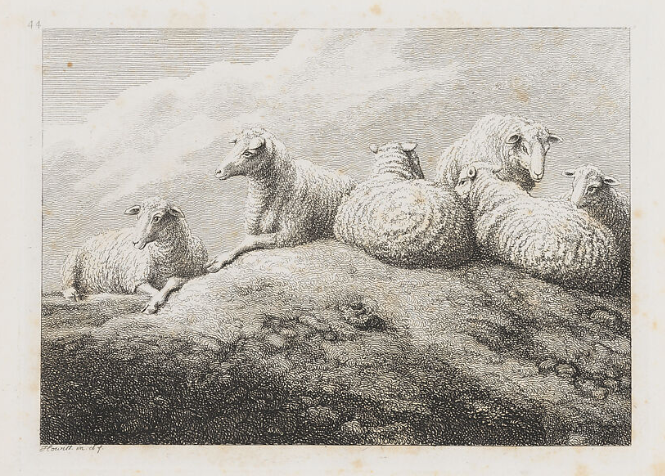
    Three Sheep Samuel Howitt British 1801

    Joseph’s Story, God’s Strength

    Joseph is described as “a fruitful bough by a well,” a life that thrives even under harsh conditions. Though “the archers have bitterly grieved him,” Joseph’s “bow remained in strength” (Genesis 49:23–24). Why? Because, Jacob says, his strength was “by the hands of the Mighty God of Jacob.”

    This blessing is rich with divine titles:

    • The Mighty God of Jacob
    • The God of your father
    • The Almighty
    • The Shepherd
    • The Stone of Israel

    Each title tells us something about God’s character. Jacob knew this God personally, and so did Joseph. Even after betrayal, slavery, false accusation, and years in prison, Joseph never wavered in faith. His blessing becomes a powerful testament to endurance rooted in trust in God.

    Among these divine names is “The Shepherd.” In ancient times, shepherds were often seen as lowly or unclean. Yet, when Jesus Christ entered the world, the birth announcement went first to shepherds in the field. Why? Because God identifies with the humble—and because He Himself is the Divine Shepherd.

    Scripture repeatedly calls out unfaithful shepherds (pastors and spiritual leaders) who neglect their flocks. In Ezekiel 34:6–10, God promises to hold these leaders accountable for the suffering of His people. Today, there are still pastors who distort the Gospel—preaching secular ideologies, affirming sin, and abandoning the truth of salvation through Christ. God’s judgment on unfaithful shepherds remains clear.

    In contrast, Jesus said:

    “I am the good shepherd. I know my own sheep, and they know me… I sacrifice my life for the sheep.”
    —John 10:14–15 (NLT)

    Jesus lived as the True Shepherd. Though hated by the powerful and misunderstood by many, He loved His flock, cared for the broken, and laid down His life. Christians today can take heart: if our Shepherd suffered rejection, we can endure hardship too. He walks with us still.


    God, Our Rock

    Jacob also describes God as “the Stone of Israel.” In Scripture, God is often compared to a rock—a source of stability, protection, and permanence.

    “The Lord is my rock, my fortress, and my deliverer… my stronghold.”
    —Psalm 18:2 (NKJV)

    Isaiah prophesied about a “precious cornerstone” that would become the foundation of God’s people (Isaiah 28:16). Jesus later revealed that this cornerstone was Himself.

    “The stone which the builders rejected has become the chief cornerstone.”
    —Matthew 21:42 (NKJV)

    The Apostle Paul echoed this truth in Ephesians 2, writing that believers are built on the foundation of the apostles and prophets, “Jesus Christ Himself being the chief cornerstone.” (Ephesians 2:20)

    The “Stone of Israel” Jacob spoke of was a foreshadowing of Jesus Christ. He is our Cornerstone, our Rock, our unshakable foundation.
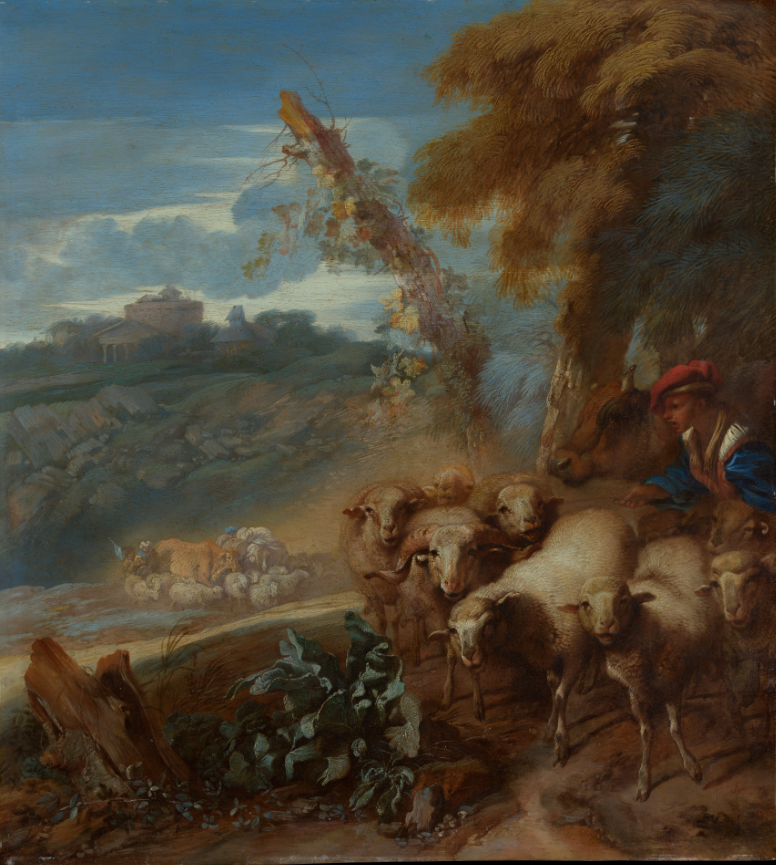
    Roman Landscape with a Shepherd and Sheep Giovanni Benedetto Castiglione (Il Grechetto) Italian late 1640s

    Jacob’s blessing over Joseph was not just a family moment—it was a declaration of who God is. These names—Shepherd, Stone, Almighty—remind us of the attributes of God we can cling to today.

    Just as Joseph endured betrayal, hardship, and injustice yet held firm to faith, we too can be strengthened by the Mighty God. His blessings reach beyond generations: “the blessings of your father have excelled the blessings of my ancestors… they shall be on the head of Joseph” (Genesis 49:26).

    And because of Jesus Christ, the Chief Cornerstone, we are no longer strangers, but members of God’s household. We are heirs of the same promise. Our spiritual lives can be built on a true, lasting foundation.

    Let us praise God—for being our Shepherd, our Stone, our Rock, and our Redeemer.

    “The Shephard, the stone of Israel.” Rev. Dennis Alan RobertsFulbright, Shubert, NE, July 28, 2024

  • I Am Joseph: How God Uses Betrayal to Fulfill His Purpose

    Preaching the Word: Genesis 45:1–9 (NKJV)

    45 Then Joseph could not restrain himself before all those who stood by him, and he cried out, “Make everyone go out from me!” So no one stood with him while Joseph made himself known to his brothers. And he wept aloud, and the Egyptians and the house of Pharaoh heard it.
    Then Joseph said to his brothers, “I am Joseph; does my father still live?” But his brothers could not answer him, for they were dismayed in his presence. And Joseph said to his brothers, “Please come near to me.” So they came near. Then he said: “I am Joseph your brother, whom you sold into Egypt. But now, do not therefore be grieved or angry with yourselves because you sold me here; for God sent me before you to preserve life. For these two years the famine has been in the land, and there are still five years in which there will be neither plowing nor harvesting. And God sent me before you to preserve a posterity for you in the earth, and to save your lives by a great deliverance. So now it was not you who sent me here, but God; and He has made me a father to Pharaoh, and lord of all his house, and a ruler throughout all the land of Egypt.
    “Hurry and go up to my father, and say to him, ‘Thus says your son Joseph: “God has made me lord of all Egypt; come down to me, do not tarry.

    Genesis 45 marks a turning point in one of the most moving stories in the Bible. Joseph—sold into slavery by his brothers, wrongfully imprisoned, and later elevated to a position of power—can no longer restrain his emotions. He reveals himself:
    “I am Joseph.”
    Three words. A bold declaration. And a moment of complete transformation.

    His brothers, overwhelmed with guilt and fear, are stunned into silence. Joseph, once cast off and left for dead, now holds their lives in his hands. And instead of revenge, he offers grace.

    From Accusation to Redemption

    Joseph doesn’t sugarcoat the past. He says plainly:
    “I am Joseph your brother, whom you sold into Egypt.”
    There’s no hiding from the truth. But then comes the unexpected:
    “Do not be grieved or angry with yourselves… for God sent me before you to preserve life.”

    Joseph had every right to retaliate. His power could have crushed them. But instead, his words and actions reflect divine purpose. He chooses to see God’s hand working through human wrongdoing to bring about salvation—not just for himself, but for many.

    This kind of proclamation reminds me of Peter’s sermon in Acts 2:

    “You have taken [Jesus] by lawless hands, have crucified, and put to death…” (Acts 2:23)

    Peter doesn’t hesitate to point to guilt—but neither does he stop at accusation. He continues with the good news of resurrection and redemption. Likewise, Stephen, before being martyred in Acts 7, boldly names the sins of his people. Speaking truth, even when it stings, is part of faithful preaching.

    And yet—what matters most is not accusation, but restoration.

    The Power of Choices

    Joseph had options. He could have punished. He could have ignored. But he chose reconciliation.

    He asks, “Does my father still live?” His concern was not for revenge, but for reunion.
    He commands, “Hurry and go get my father!”

    Joseph’s longing to see his father Jacob reflects a human urgency many of us know. I remember long childhood car rides from my hometown of Springfield, Colorado to visit my grandmother in Sidney, Nebraska. Hearing, “We’re in Nebraska” made me think we were almost there—but Grammy’s house was still miles away. I couldn’t wait.

    Joseph likely felt that same eager ache. He hadn’t seen his father in decades. The journey back to Canaan would take his brothers nearly 10 days—and another 10 to return. A full month would pass before father and son would embrace again.

    I Am Joseph… But God Did It

    Maybe Joseph wanted to say to his father:
    “Remember my dreams? The ones no one believed? Look what God has done!”
    But the key is this: Joseph never takes the credit. He says clearly,

    “It was not you who sent me here, but God.” (Genesis 45:8)

    Joseph knew that it wasn’t his looks, strength, or intelligence that saved Egypt. It was God—working through his suffering and faithfulness.

    That’s what we must remember. When life brings hardship or betrayal, or when the path is long and uncertain, God is still at work.

    Life Application: Trust God’s Bigger Story

    Joseph’s story reminds us: God has a plan, even in our pain.
    There are countless young people today who give up on life far too soon—never knowing the greatness God may have intended for them. What might have happened if they had trusted God to write their story?

    Joseph’s journey—from pit to palace—was not easy. But it was purposeful.

    Like Joseph, we have options.
    Will we choose bitterness—or forgiveness?
    Revenge—or restoration?
    Fear—or faith?

    “I Am Joseph” Rev. Dennis Alan RobertsFulbright, Shubert, Nebraska, July 14, 2024