• Faith That Can Make the Impossible Possible / Lent, Day 2 Mark 9

    Jesus Heals a Boy Possessed by an Impure Spirit
    14 When they came to the other disciples, they saw a large crowd around them and the teachers of the law arguing with them. 15 As soon as all the people saw Jesus, they were overwhelmed with wonder and ran to greet him.
    16 “What are you arguing with them about?” he asked.
    17 A man in the crowd answered, “Teacher, I brought you my son, who is possessed by a spirit that has robbed him of speech. 18 Whenever it seizes him, it throws him to the ground. He foams at the mouth, gnashes his teeth and becomes rigid. I asked your disciples to drive out the spirit, but they could not.”
    19 “You unbelieving generation,” Jesus replied, “how long shall I stay with you? How long shall I put up with you? Bring the boy to me.”
    20 So they brought him. When the spirit saw Jesus, it immediately threw the boy into a convulsion. He fell to the ground and rolled around, foaming at the mouth.
    21 Jesus asked the boy’s father, “How long has he been like this?”
    “From childhood,” he answered. 22 “It has often thrown him into fire or water to kill him. But if you can do anything, take pity on us and help us.”
    23 “‘If you can’?” said Jesus. “Everything is possible for one who believes.”
    24 Immediately the boy’s father exclaimed, “I do believe; help me overcome my unbelief!”
    25 When Jesus saw that a crowd was running to the scene, he rebuked the impure spirit. “You deaf and mute spirit,” he said, “I command you, come out of him and never enter him again.”
    26 The spirit shrieked, convulsed him violently and came out. The boy looked so much like a corpse that many said, “He’s dead.” 27 But Jesus took him by the hand and lifted him to his feet, and he stood up.
    28 After Jesus had gone indoors, his disciples asked him privately, “Why couldn’t we drive it out?”
    29 He replied, “This kind can come out only by prayer.[a]”


    In this story from the Gospel of Mark 9, everything looks hopeless. The disciples cannot help. The father cannot control or protect his son. The problem has gone on for years. The boy is tormented by an unclean spirit that throws him to the ground, causes convulsions, and leaves him suffering. It is a picture of helplessness and a lack of faith.
    In verse 19, Jesus says, “O faithless generation.” He sees something deeper than the illness. He sees a lack of faith. The father’s own distressed words reveal it, “if You can do anything, have compassion on us and help us.”
    Jesus responds, “If you can believe, all things are possible to him who believes.”

    Your Faith Can Make the Impossible Possible

    Every day we face many hopeless situations, obstacles, and challenges. We are faced with sickness, disease, and injuries. Our lives are filled with worries and stress where many people are working 2-3 jobs just to make ends meet. Why does life have to be so tough?

    The season of Lent invites us to sit honestly in this tension. Lent is not a season of pretending we are strong. It is a season of confession.

    We live in a world shaped by the words of Genesis 3:19: “In the sweat of your face you shall eat bread… for dust you are, and to dust you shall return.” Life is hard. Bodies break down. Work exhausts us. Money feels unstable. Relationships strain. Stress presses in from every direction.

    We worry about sickness. We worry about bills. We worry about our children. We worry about the future. We try to secure ourselves with investments, careers, plans, and routines. Yet Jesus reminds us in Gospel of Matthew 6:19–20 not to store up treasures on earth, where everything can be stolen or destroyed. And in Gospel of John 10:10 He says He came to give life abundantly.

    Lent pulls back the curtain and asks: What are we really trusting?

    “Lord, I Believe; Help My Unbelief”

    The father in Mark’s Gospel is painfully honest. He does not pretend to have great faith. He cries out, “Lord, I believe; help my unbelief!”

    Faith is not pretending everything is fine. Faith is bringing our fear, our doubt, and our weakness to Jesus and asking Him to strengthen what is fragile.

    So how do we cope when life feels impossible?

    We hold fast to God’s promises.

    Hebrews 10:23 tells us, “Let us hold fast the confession of our hope without wavering, for He who promised is faithful.”

    Peter 3:9 reminds us that the Lord is faithful and patient, not wanting any to perish.

    God keeps His promises. The question is whether we know His word well enough to cling to it.

    Book of Proverbs 4:20–22 urges us to pay attention to God’s words, to keep them in our hearts, because they are life and health to those who find them. During Lent, we slow down and return to Scripture. We fast from distractions so we can feast on truth.

    A Call to Believe Again

    The deeper problem in Mark 9 may not have been only the father’s weak faith. Jesus speaks of a “faithless generation.” Sometimes the greater danger is not open suffering but quiet unbelief. Churches can be full of people who go through the motions yet they hesitate to truly trust God.

    Lent challenges that comfort. It calls us to repentance. It calls us to renewed belief.

    In every hopeless situation, the invitation is the same; come to Jesus and believe. Not perfectly. Not proudly. But honestly.

    “Lord, I believe; help my unbelief.”

    Believing does not deny the sweat, the struggle, or the dust of Genesis 3. It trusts that beyond the cross stands resurrection. Lent moves us toward that hope.

    Jesus said, “All things are possible to him who believes.”

    In this season, we ask Him to do the impossible in our hearts. To turn our weak faith into steadfast trust, despair into hope, and hearts of dust into hearts alive with resurrection promise.

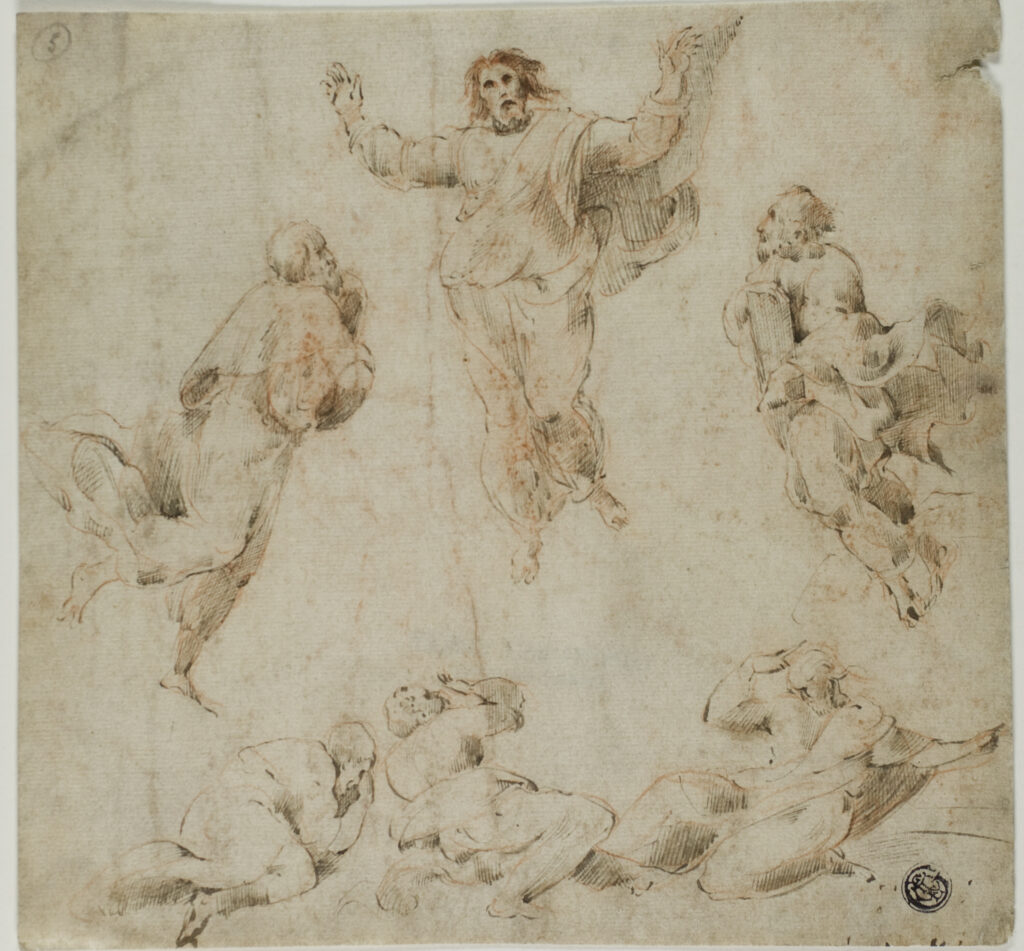
    Image caption: Transfiguration, 1530, Raphael, artic.edu/artworks/95792/transfiguration

    Adapted from Rev. Dr. Dennis Alan Fulbright’s Sermon, 2012.

  • Have Mercy On Me Lord | Ash Wednesday, Psalm 51

    Psalm 51:1–11 (NKJV) 
    1 Have mercy upon me, O God, 
    According to Your loving kindness; 
    According to the multitude of Your tender mercies, 
    Blot out my transgressions. 
    
    2 Wash me thoroughly from my iniquity, 
    And cleanse me from my sin. 
    
    3 For I acknowledge my transgressions, 
    And my sin is always before me. 
    
    4 Against You, You only, have I sinned, 
    And done this evil in Your sight— 
    That You may be found just when You speak, 
    And blameless when You judge. 
    
    5 Behold, I was brought forth in iniquity, 
    And in sin my mother conceived me. 
    
    6 Behold, You desire truth in the inward parts, 
    And in the hidden part You will make me to know wisdom. 
    
    7 Purge me with hyssop, and I shall be clean; 
    Wash me, and I shall be whiter than snow. 
    
    8 Make me hear joy and gladness, 
    That the bones You have broken may rejoice. 
    
    9 Hide Your face from my sins, 
    And blot out all my iniquities. 
    
    10 Create in me a clean heart, O God, 
    And renew a steadfast spirit within me. 
    
    11 Do not cast me away from Your presence, 
    And do not take Your Holy Spirit from me. 

    Psalm 51 is labeled: A Prayer of Repentance.

    This is a Psalm of King David (around 1000 BC) after the prophet Nathan confronted him for committing adultery with Bathsheba and arranging to have Bathsheba’s husband, Uriah the Hittite, to be killed in battle (instructing his soldiers to abandon Uriah while he was on the front lines) in order to cover up her pregnancy.

    Then it happened one evening that David arose from his bed and walked on the roof of the king’s house. And from the roof he saw a woman bathing, and the woman was very beautiful to behold. So David sent and inquired about the woman. And someone said, “Is this not Bathsheba, the daughter of Eliam, the wife of Uriah the Hittite?” Then David sent messengers, and took her; and she came to him, and he lay with her, for she was cleansed from her impurity; and she returned to her house. And the woman conceived; so she sent and told David, and said, “I am with child.” (2 Samuel 12:2-5, KJV)

    You are probably familiar with the saying, “Be sure your sins will find you out.” (Numbers 32:23)  That happened to David. He was caught. He was confronted. He could have followed after his predecessor King Saul.  Ignore God and do your own thing.  Live your life by your own rules.

    But David repented.

    He cries out (Psalm 51:1-9):  Have mercy upon me, O God…Blot out my transgressions. Wash me thoroughly from my iniquity, And cleanse me from my sin…I acknowledge my transgressions, And my sin is always before me. Against You, You only, have I sinned, And done this evil in Your sight… Wash me, and I shall be whiter than snow… blot out all my iniquities.

    David Provides a Model for True Repentance

    We do not know how many times King David sinned. We do not know how many times he committed similar sins in his lifetime. Was his cry for mercy a one-time event? Or, did he continually pray to God for forgiveness?

    What we do know it God’s Mercy is a Mystery.

    Not to be doubtful toward God in any way, but how many or how much of my sins will His mercy cover? God knows my heart. God watches over my life. God knows every time I sin and even my premeditated sins. God knows when those sins keep me from communicating with him. God knows when I am most vulnerable to sin. God knows my heart completely.

    People and even some Christians live their lives as if God doesn’t exist.  Yet God knows us even better than we know ourselves.

    How well do we know another person?

    People only know of us what we chose to reveal to them. That is one thing that makes life scary. The possibility that one may house hidden secrets. Even more scary that those hidden secrets create harm to another person(s).

    But with God there are no hidden secrets.

    Jesus said:  Luke 12:2 (NKJV) For there is nothing covered that will not be revealed, nor hidden that will not be known

    So, I live my life knowing that God knows everything about me—as God does each of you. 

    Where does God’s mercy kick in?

    We live in a sinful world where we are exposed to sin every moment of the day. Not just our own sins but the sins of those around us. We read about sins every day in the news. We see people sin, without remorse, in today’s social media, gossip columns, and celebrity lifestyles. Many of today’s news (especially celebrity news) focuses on who’s in a relationship with who, or “who’s sleeping with who?”

    And while the world sits on the edge of the seat absorbing this “gossip,” it’s not likely these sins will be remembered in the way that we remember King David’s sin. For one, King David’s sin wasn’t kept secret but imagine having committed a sin only for it to be documented in the best selling book of all time and read by millions of people for over 3,000 years. As long as the Holy Bible remains in print, people will continue to read about David’s sin. Whereas, the “published” articles and media we see about other’s sinful acts in today’s news…well, lucky for them, “yesterday’s news is today’s wastepaper” (Notting Hill).

    And while we might publish thosands of news articles about the sinful acts of others, it’s unlikely that another text will be published at the level of the Holy Bible. Celebrity’s can rest assured, their sins won’t be printed to last 3,000 years in the future. The main reason, there are just too many people committing the same sins at the

    Conclusion

    Psalm 51 is an example for repentance, showing David’s transition from a sinner attempting to hid his actions to a broken king seeking God’s restoration. The psalm reflects that while Nathan declared God had forgiven him, the king still felt the weight of his sin upon his shoulders.

    Psalm 51 is an “iconic” scripture for Ash Wednesday because it provides the ultimate biblical template for repentance and spiritual renewal. During this 40-day journey of self-examination, we use this psalm to set the pace for this season through the following connections:

    • Repentance: Psalm 51 is one of the seven Penitential Psalms and emphasizes a “broken spirit” and a “contrite heart” as the only sacrifices truly acceptable to God.
    • Reminder: We start this season with Ash Wednesday. The ash reminding us we are “dust,” symbolizing human frailty and the need for God’s “abundant mercy” to blot out transgressions.
    • Renewal: Psalm 51:10, Create in me a clean heart, O God” is a prayer many of us have said during this season. This verse uses the Hebrew word bārā’ (to create), the same word used in Genesis for God creating the world, which suggests only a divine act can provide the fresh start needed for Lent.

    We are reminded all throughout the Psalms of God’s everlasting loving kindness, love, and mercy that endures forever. We can be sure of God’s mercy as long as we are willing to repent with a sincere heart.  To assure us of a sincere heart we keep in our prayers the words of David, Psalm 51:10-11:
    10 Create in me a clean heart, O God, 
    And renew a steadfast spirit within me. 
    11 Do not cast me away from Your presence, 
    And do not take Your Holy Spirit from me.

    Cover photo citation: Louis Joseph le Lorrain, 1715-1759, “King David Kneeling in Penitence,” George F. Porter Collection. https://www.artic.edu/artworks/34668/king-david-kneeling-in-penitence

    Adapted from Rev. Dr. Dennis Alan RobertsFulbright, 2014.