• God Will Bring You Out of This Land: Trusting God’s Promises in Uncertain Times

    At the end of Genesis, Joseph was nearing the end of his life. At 110 years old, he gathered his family and declared:

    “I am dying; but God will surely visit you, and bring you out of this land to the land which He swore to Abraham, to Isaac, and to Jacob.”

    Joseph’s words were more than a farewell—they were a prophecy. He didn’t know exactly how God would do it or how long it would take, but he was certain that God would keep His promise. Four centuries later, God did just that, raising up Moses to lead His people out of Egypt and into freedom.

    Joseph had enjoyed Egypt’s comforts. As Pharaoh’s second-in-command, he had saved the nation from famine and brought his family to safety. But Egypt was never the final destination. Before he died, Joseph made his family swear to carry his bones back to the promised land. His eyes were fixed not on Egypt’s riches, but on God’s covenant.

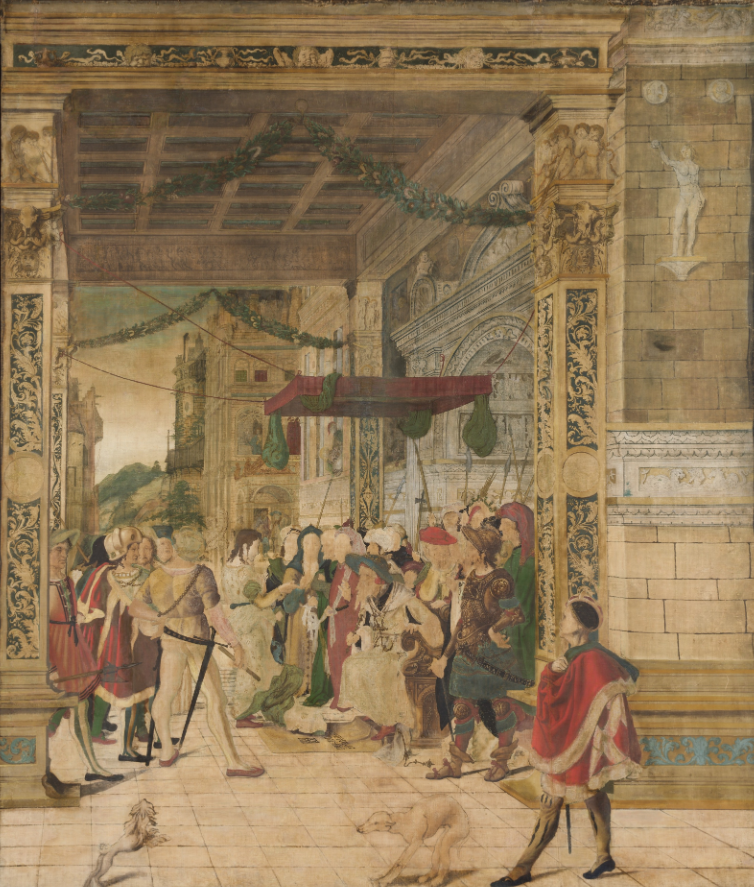
    Joseph Interpreting the Dreams of Pharaoh Attributed to Jörg Breu the Younger German ca. 1534–47

    That long wait between Joseph’s death and the Exodus may have seemed like silence. Generations were born and died; blessings gave way to oppression. Many probably doubted it would ever happen. Yet God’s timing was perfect—He was preparing both His people and their deliverance.

    We, too, live in a world that can feel like Egypt. Political unrest, economic hardship, and personal struggles can make us long for something better. Some people are searching for a dream—whether a new home, a better job, or a safer place to live. Others are simply holding on through hard times. But Joseph’s story reminds us that God has prepared something far greater than anything we could find here.

    Jesus said:

    “Let not your heart be troubled… In My Father’s house are many mansions… I go to prepare a place for you. And if I go… I will come again and receive you to Myself; that where I am, there you may be also.” (John 14:1–3)

    Just as God brought Israel out of Egypt, He will one day bring His people into the home He has promised. Whether that day comes for us individually or at Christ’s return, we can be certain—God will keep His word.

    “God Will Bring You Out of of This Land.” Rev. Dennis Alan RobertsFulbright, Shubert Christian Church, July 24, 2024.

  • When the Money Failed: Biblical Wisdom for Financial Crisis from Genesis 47

    Today, I invite you to open your hearts to a passage from Genesis that speaks to us in a deeply relevant way. As we continue navigating a world filled with financial anxiety, inflation, and uncertainty, let us listen carefully to a time in Scripture when people, too, found themselves asking: What do we do when there’s just not enough to go around? Let us turn now to Genesis 47:13–21 (NKJV), and hear the Word of the Lord.


    Genesis 47:13–21 (NKJV)

    13 Now there was no bread in all the land; for the famine was very severe, so that the land of Egypt and the land of Canaan languished because of the famine.
    14 And Joseph gathered up all the money that was found in the land of Egypt and in the land of Canaan, for the grain which they bought; and Joseph brought the money into Pharaoh’s house.
    15 So when the money failed in the land of Egypt and in the land of Canaan, all the Egyptians came to Joseph and said, “Give us bread, for why should we die in your presence? For the money has failed.”
    16 Then Joseph said, “Give your livestock, and I will give you bread for your livestock, if the money is gone.”
    17 So they brought their livestock to Joseph, and Joseph gave them bread in exchange for the horses, the flocks, the cattle of the herds, and for the donkeys. Thus he fed them with bread in exchange for all their livestock that year.
    18 When that year had ended, they came to him the next year and said to him, “We will not hide from my lord that our money is gone; my lord also has our herds of livestock. There is nothing left in the sight of my lord but our bodies and our lands.
    19 Why should we die before your eyes, both we and our land? Buy us and our land for bread, and we and our land will be servants of Pharaoh; give us seed, that we may live and not die, that the land may not be desolate.”
    20 Then Joseph bought all the land of Egypt for Pharaoh; for every man of the Egyptians sold his field, because the famine was severe upon them. So the land became Pharaoh’s.
    21 And as for the people, he moved them into the cities, from one end of the borders of Egypt to the other end.

    We live in difficult economic times. Gas prices fluctuate, grocery bills rise, and many are struggling to make ends meet. As of today (July 20, 2024), we’re just months away from another presidential election, and one of the leading concerns among voters is—again—the economy. It’s a familiar concern. People are worried. Not just about jobs, but about justice. Not just about wages, but about worth.

    Some believe the answer lies in redistribution—giving everyone an “equal share.” That idea fuels certain progressive voices, and even versions of Christianity that preach a “social gospel” rooted in liberation theology. Now, caring for the poor is indeed a Christian calling, but some versions of this theology go further—suggesting that real Christianity means becoming poor, like Mother Teresa, to prove our faith. But friends, even Jesus Himself said:

    Matthew 26:11 (NKJV)
    “For you have the poor with you always, but Me you do not have always.”

    In that moment, Jesus was reminding His disciples—and us—that poverty is a persistent reality in a fallen world. And while we are called to care for the poor, we must also face the hard truth: there is not enough money to go around.

    We worry about money because it touches everything. And yet, we must ask: Where is our faith when the money fails?

    Let’s go back to Genesis 47:15. It says:

    “So when the money failed in the land of Egypt... the people said, ‘Give us bread, for why should we die? For the money has failed.’”

    Four times in this passage we hear it: The money is gone. Failed. Empty. Powerless to solve the problem.

    When the people’s money failed, Joseph offered them options—first, trade your livestock. Later, your land. Finally, even your labor. Pharaoh ended up owning nearly everything. The people became dependent servants—just to survive.

    Now imagine a scenario in our own day: A government overtaxes landowners. Farmers, unable to pay, are forced to sell. Slowly, the government absorbs more land, more control. That’s not far-fetched. It happened then—it could happen now.

    And while Joseph was a godly man, he was also acting under Pharaoh’s authority. He didn’t enslave the people against their will—they came to him, desperate. As John Lange writes:

    “When one is hungry, they might do just about anything in order to feed their belly.”

    Indeed, we will trade almost anything—our independence, our resources, even our freedom—when we are desperate.


    Jesus’ Teaching on Treasure and Trust

    But Jesus offers us a radically different path. Not one of fear, but faith.

    Matthew 6:19–21 (ESV)
    “Do not lay up for yourselves treasures on earth… but lay up for yourselves treasures in heaven… For where your treasure is, there your heart will be also.”

    Matthew 6:24 (ESV)
    “No one can serve two masters… You cannot serve God and money.”

    Matthew 6:30–33 (ESV)
    “…O you of little faith… your heavenly Father knows that you need [these things]. But seek first the kingdom of God and his righteousness, and all these things will be added to you.”

    Friends, the money will fail. The stock market will crash. Governments will rise and fall. But God is still in control. If our hope is in money, our hearts will be anxious. But if our hope is in God, we will find peace.


    The people of Egypt didn’t need more coins—they needed deliverance. Eventually, Egypt would become a place of slavery for Israel, and God would send Moses to set them free. Egypt had gods and goddesses, but only the God of Abraham, Isaac, and Jacob could truly provide.

    And today, many still bow to modern idols—wealth, power, fame—but the Bread of Life, Jesus Christ, says: Come to me, all you who are weary and burdened, and I will give you rest.

    We do not need a full bank account to get into heaven. We need a faithful heart, trusting in God’s mercy and grace.

    “When the Money Failed” Sermon by Rev. Dennis Alan RobertsFulbright, Shubert, NE July 20, 2024.
  • I Am Joseph: How God Uses Betrayal to Fulfill His Purpose

    Preaching the Word: Genesis 45:1–9 (NKJV)

    45 Then Joseph could not restrain himself before all those who stood by him, and he cried out, “Make everyone go out from me!” So no one stood with him while Joseph made himself known to his brothers. And he wept aloud, and the Egyptians and the house of Pharaoh heard it.
    Then Joseph said to his brothers, “I am Joseph; does my father still live?” But his brothers could not answer him, for they were dismayed in his presence. And Joseph said to his brothers, “Please come near to me.” So they came near. Then he said: “I am Joseph your brother, whom you sold into Egypt. But now, do not therefore be grieved or angry with yourselves because you sold me here; for God sent me before you to preserve life. For these two years the famine has been in the land, and there are still five years in which there will be neither plowing nor harvesting. And God sent me before you to preserve a posterity for you in the earth, and to save your lives by a great deliverance. So now it was not you who sent me here, but God; and He has made me a father to Pharaoh, and lord of all his house, and a ruler throughout all the land of Egypt.
    “Hurry and go up to my father, and say to him, ‘Thus says your son Joseph: “God has made me lord of all Egypt; come down to me, do not tarry.

    Genesis 45 marks a turning point in one of the most moving stories in the Bible. Joseph—sold into slavery by his brothers, wrongfully imprisoned, and later elevated to a position of power—can no longer restrain his emotions. He reveals himself:
    “I am Joseph.”
    Three words. A bold declaration. And a moment of complete transformation.

    His brothers, overwhelmed with guilt and fear, are stunned into silence. Joseph, once cast off and left for dead, now holds their lives in his hands. And instead of revenge, he offers grace.

    From Accusation to Redemption

    Joseph doesn’t sugarcoat the past. He says plainly:
    “I am Joseph your brother, whom you sold into Egypt.”
    There’s no hiding from the truth. But then comes the unexpected:
    “Do not be grieved or angry with yourselves… for God sent me before you to preserve life.”

    Joseph had every right to retaliate. His power could have crushed them. But instead, his words and actions reflect divine purpose. He chooses to see God’s hand working through human wrongdoing to bring about salvation—not just for himself, but for many.

    This kind of proclamation reminds me of Peter’s sermon in Acts 2:

    “You have taken [Jesus] by lawless hands, have crucified, and put to death…” (Acts 2:23)

    Peter doesn’t hesitate to point to guilt—but neither does he stop at accusation. He continues with the good news of resurrection and redemption. Likewise, Stephen, before being martyred in Acts 7, boldly names the sins of his people. Speaking truth, even when it stings, is part of faithful preaching.

    And yet—what matters most is not accusation, but restoration.

    The Power of Choices

    Joseph had options. He could have punished. He could have ignored. But he chose reconciliation.

    He asks, “Does my father still live?” His concern was not for revenge, but for reunion.
    He commands, “Hurry and go get my father!”

    Joseph’s longing to see his father Jacob reflects a human urgency many of us know. I remember long childhood car rides from my hometown of Springfield, Colorado to visit my grandmother in Sidney, Nebraska. Hearing, “We’re in Nebraska” made me think we were almost there—but Grammy’s house was still miles away. I couldn’t wait.

    Joseph likely felt that same eager ache. He hadn’t seen his father in decades. The journey back to Canaan would take his brothers nearly 10 days—and another 10 to return. A full month would pass before father and son would embrace again.

    I Am Joseph… But God Did It

    Maybe Joseph wanted to say to his father:
    “Remember my dreams? The ones no one believed? Look what God has done!”
    But the key is this: Joseph never takes the credit. He says clearly,

    “It was not you who sent me here, but God.” (Genesis 45:8)

    Joseph knew that it wasn’t his looks, strength, or intelligence that saved Egypt. It was God—working through his suffering and faithfulness.

    That’s what we must remember. When life brings hardship or betrayal, or when the path is long and uncertain, God is still at work.

    Life Application: Trust God’s Bigger Story

    Joseph’s story reminds us: God has a plan, even in our pain.
    There are countless young people today who give up on life far too soon—never knowing the greatness God may have intended for them. What might have happened if they had trusted God to write their story?

    Joseph’s journey—from pit to palace—was not easy. But it was purposeful.

    Like Joseph, we have options.
    Will we choose bitterness—or forgiveness?
    Revenge—or restoration?
    Fear—or faith?

    “I Am Joseph” Rev. Dennis Alan RobertsFulbright, Shubert, Nebraska, July 14, 2024